



 طلب عرض أسعار


الخطأ الأغلى ثمناً في أي مشروع لإعادة تدوير المركبات ليس شراء “العلامة التجارية الخاطئة”، بل شراء الآلة المناسبة لمرحلة غير مناسبة من العملية.
تحتاج شركة تفكيك السيارات، التي يتعين عليها تصريف السوائل وإزالة الأجزاء القابلة لإعادة الاستخدام، إلى معدات تختلف تمامًا عن تلك التي يحتاجها معالج الخردة الذي يستلم هياكل السيارات الجاهزة بالفعل. كما تختلف متطلبات الأعمال الإنشائية، والاحتياجات الكهربائية، ومراقبة الانبعاثات، وعمليات الفرز اللاحقة في مصنع تكسير السيارات ذي السعة الإنتاجية العالية عن تلك الخاصة بنظام معالجة المعادن المتنقل. أما المشغل الذي يسعى إلى استرداد القيمة من بقايا تكسير السيارات (ASR)، فهو يواجه مشكلة مختلفة تمامًا.
ما الذي تشمله “معدات إعادة تدوير المركبات” فعليًّا؟
غالبًا ما يتم اختصار عملية إعادة تدوير المركبات في عبارة واحدة — “آلة تمزيق السيارات” — على الرغم من أن العملية التجارية تبدأ قبل ذلك بكثير. تشير المفوضية الأوروبية إلى أن أكثر من ستة ملايين مركبة في أوروبا تصل إلى نهاية عمرها الافتراضي كل عام، وأن سوء الإدارة قد يؤدي إلى مشاكل بيئية وإهدار مواد قيّمة. وتحدد إرشادات وكالة حماية البيئة الأمريكية (EPA) الخاصة بالمركبات التي انتهى عمرها الافتراضي (ELV) أن إزالة البطارية واستعادة المبرد وإزالة الوقود وتصريف السوائل يجب أن تتم قبل السحق أو التقطيع.
إن حدود هذه العملية مهمة. قبل أن تدخل الهيكل المُجهَّز إلى معدات التخفيض في المرحلة اللاحقة، قد يحتاج المشغل إلى تفكيك أو معالجة البطارية، والوسادة الهوائية، والوقود، والزيت، وسائل التبريد، وزيت الفرامل وناقل الحركة، والمبرد، والإطارات، والمحفزات الكيميائية، والمكونات القابلة لإعادة الاستخدام، وأنظمة الجهد العالي ذات الصلة.ويتم تحديد الترتيب الدقيق وفقًا للقوانين المحلية، وتكوينات المركبات، ومواقف السيارات. وينبغي على المشتري الذي يخطط لإنشاء ورشة في المرحلة الأولية أن يبدأ بدليل مخصص لمعدات تفكيك المركبات، بدلاً من الافتراض بأن مورد خدمات التقطيع يغطي كل المهام.
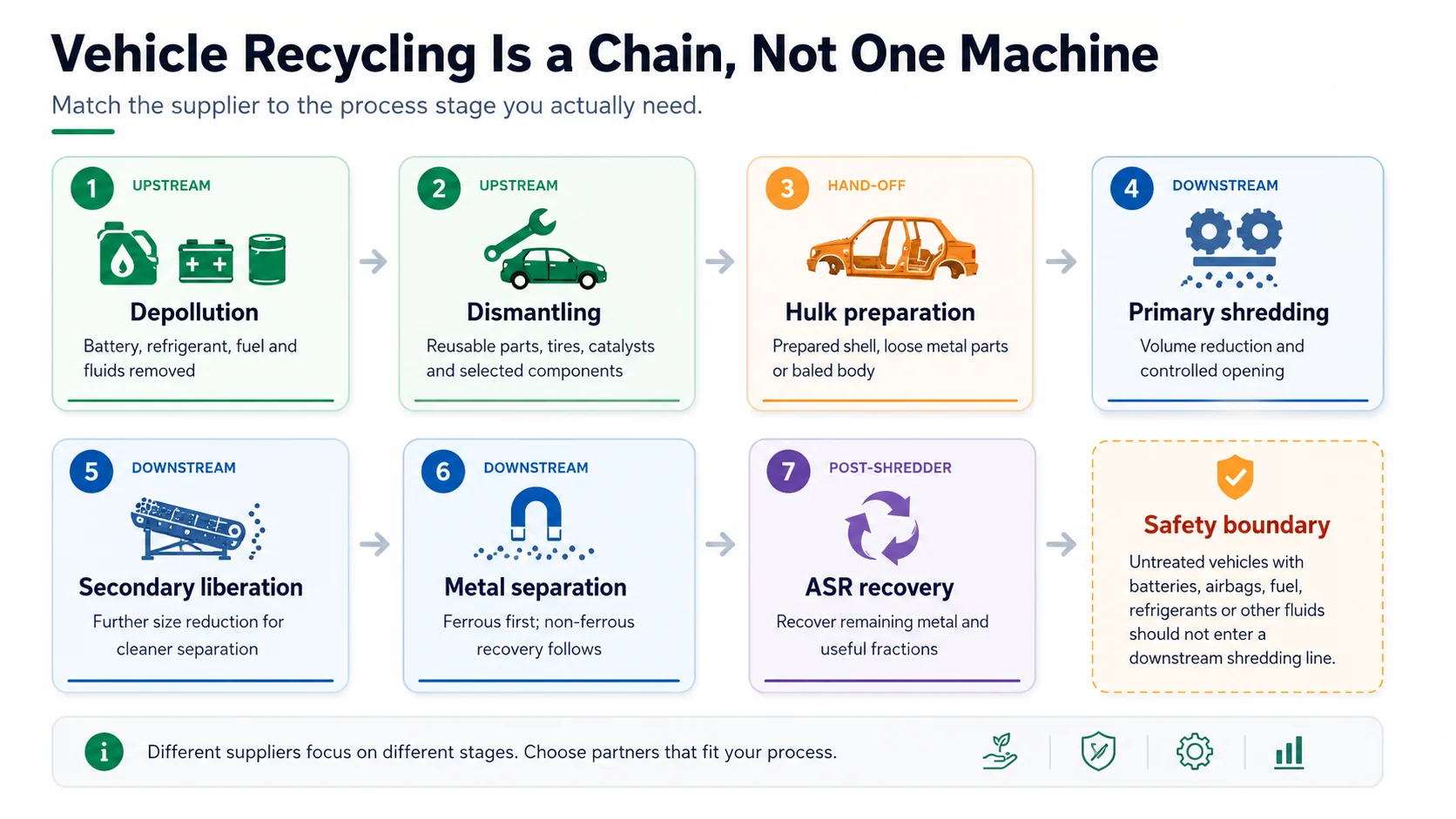
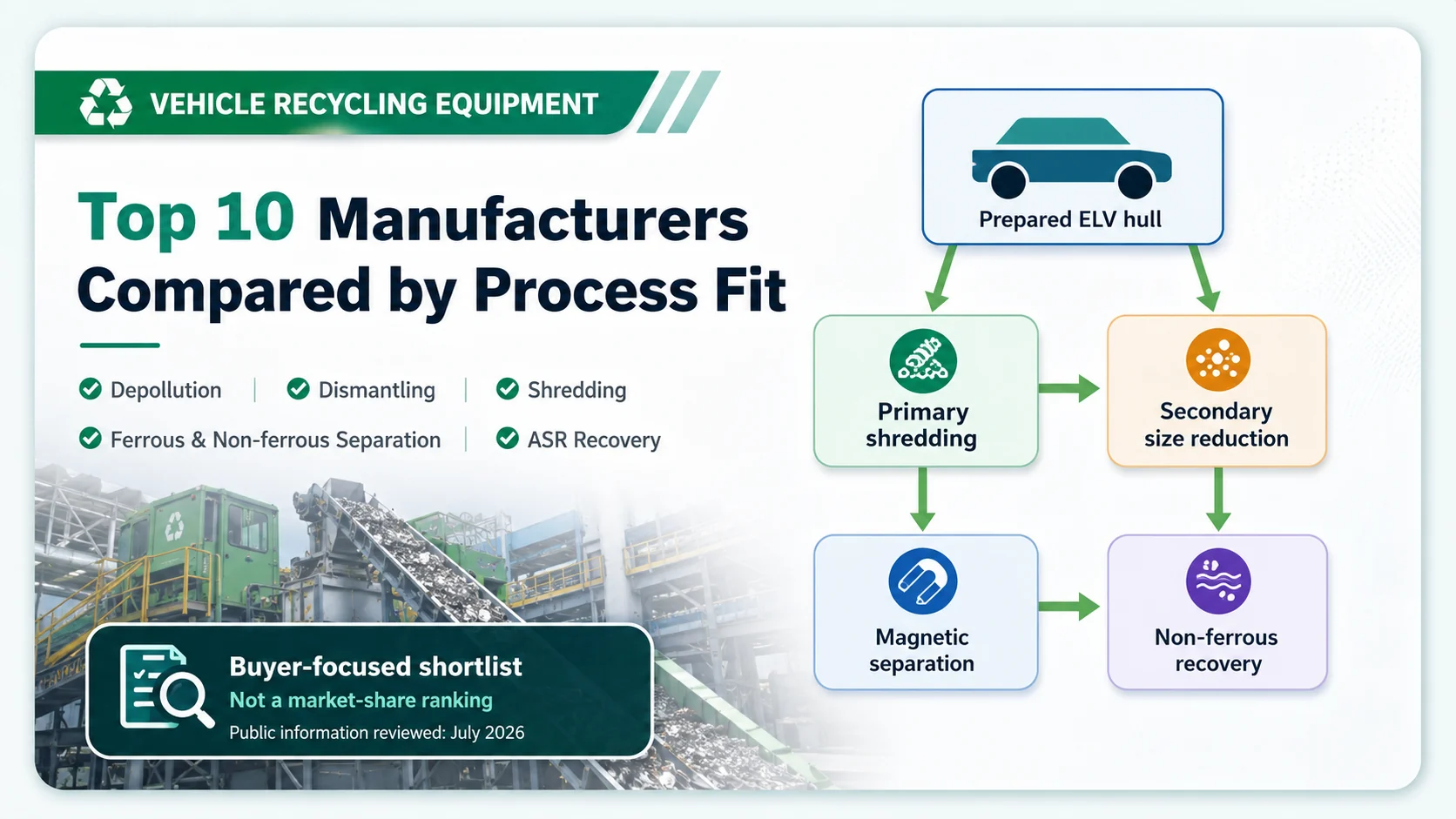
المرحلة الأولية
إزالة التلوث، والتفكيك، واستعادة قطع الغيار، والتعامل مع الجهد العالي، وتجهيز هياكل السفن.
المعالجة الأساسية
التقطيع الأولي، والتفكيك الثانوي، والغربلة، واستخلاص المعادن الحديدية، وفصل المعادن غير الحديدية.
ما بعد آلة التقطيع
استخلاص إضافي للمعادن والمكونات المفيدة من بقايا تكسير السيارات.
كيف اخترنا هذه الشركات المصنعة
تم إعداد القائمة المختصرة بهدف تمثيل العملية بأكملها، وليس لتضمين عشرة موردين لمطاحن المطرقة متشابهين تقريبًا. وقد تمت مراجعة الصفحات العامة الخاصة بالمصنعين من حيث تغطية العملية، وفئات المعدات، والتطبيقات المعلنة، وتكامل الأنظمة، والتخصيص، وأنظمة التحكم، والخدمات، والوثائق. ولم يتم إجراء أي تدقيق للمصانع، أو اختبارات أداء، أو التحقق من مراجع العملاء في إطار إعداد هذا المقال.
وكانت معايير التقييم كما يلي:
| المعيار | ما يجب على المشتري التحقق منه | لماذا هذا الأمر مهم |
|---|---|---|
| التوافق بين العملية والمرحلة | المركبات المنتهية العمر الافتراضي غير المعالجة، أو هياكل المركبات المُعدة للتخلص منها، أو الخردة المختلطة، أو ASR | قد يكون المورد متميزًا في مرحلة ما، لكنه غير مناسب لمرحلة أخرى. |
| التقطيع والتحرير | حالة التغذية، معدل الإنتاج الفعلي، نطاق الإنتاج، إعادة التدوير | السعة الاسمية وحدها لا تصف أداء الفصل. |
| فصل المعادن | الأهداف المتعلقة بجودة المعادن الحديدية والمعادن غير الحديدية الموصلة والمرحلة النهائية من التصنيع | تعتمد الإيرادات على الكميات القابلة للبيع، وليس فقط على الأطنان التي يتم تغذيتها. |
| إزالة التلوث والتفكيك | السوائل، والبطاريات، وأكياس الهواء، والمحفزات الكيميائية، والإطارات، وإجراءات السيارات الكهربائية | تأتي هذه المهام قبل عملية التقطيع اللاحقة. |
| تكامل المنشآت | أجهزة التحكم، والناقلات، وأنظمة معالجة الغبار، والأساسات، والمرافق | تؤدي الثغرات في الواجهة إلى حدوث تأخيرات وزيادة في عبء العمل وعدم وضوح المسؤوليات. |
| قابلية الصيانة | الأجزاء القابلة للتلف، الدعم المحلي، التشغيل الأولي، وتدريب المشغلين | يعتمد وقت التشغيل على عوامل أخرى غير الجهاز الرئيسي. |
| جودة الأدلة | الرسومات، واختبارات العينات، والمراجع، وأسس الأداء المكتوبة | ينبغي تحويل الادعاءات التسويقية إلى شروط تعاقدية. |
مقارنة سريعة بين أفضل 10
| # | الشركة المصنعة | القاعدة | الأفضل لـ | المرحلة الرئيسية من العملية | نقطة مهمة يجب التأكد منها |
|---|---|---|---|---|---|
| 1 | شركة YUXI للآلات | الصين | خطوط قابلة للتخصيص لتمزيق الهياكل المعدنية الجاهزة وفصل المعادن | التقطيع الأولي من خلال الفصل بين المعادن الحديدية وغير الحديدية | نطاق إزالة التلوث في المراحل الأولية والقدرة الخاصة بالمشروع |
| 2 | شركة ويندت | الولايات المتحدة | مصانع تكسير السيارات الكبيرة في أمريكا الشمالية | حلول متكاملة لعمليات التقطيع الثقيل وتكامل المنشآت | إجمالي نطاق التركيب، والمرافق، وحزمة العمليات اللاحقة |
| 3 | ليندمان | ألمانيا | خدمات التقطيع الأولي والتقطيع عالي الأداء، ودعم دورة الحياة الشاملة | تحضير الخردة وتقطيع السيارات | النطاق النهائي للفصل وترتيبات الخدمة المحلية |
| 4 | دانييلي سنترو ريسايكلينغ | إيطاليا | معالجة الخردة الحديدية وغير الحديدية المرتبطة بصناعة الصلب | مصانع المعالجة الثقيلة وعمليات تجهيز الخردة في المراحل النهائية | سواء كانت العملية تبدأ من الخردة المُعدة مسبقًا أو تشمل مراحل إضافية من معالجة المركبات المنتهية الصلاحية |
| 5 | ZATO | إيطاليا / الولايات المتحدة | تكوين مكون من وحدة التقطيع الأولي المعيارية، والمطحنة المطرقية، ووحدة الفرز | نظام تكسير المركبات المنتهية الصلاحية وشاحنات التعبئة | إعداد الأعلاف، والأهداف المتعلقة بالانبعاثات، والدعم الإقليمي |
| 6 | شركة «هاميل» لتقنيات إعادة التدوير | ألمانيا | المعالجة المتنقلة أو المعيارية لخردة المعادن الصلبة والمختلطة | آلة التقطيع الأولية/الثانوية والفرز المغناطيسي | نقاء المنتج الفعلي، والترخيص، والجوانب الاقتصادية للاتصالات الثابتة والمتنقلة |
| 7 | شركة إيلدان لإعادة التدوير | الدنمارك | استعادة ASR والجزء الخفيف من نواتج التقطيع | معالجة بقايا ما بعد التقطيع | اختبار المواد ونسب الإنتاج المضمونة |
| 8 | SEDA-Umwelttechnik | النمسا | عمليات إزالة التلوث من المركبات المنتهية الصلاحية (ELV)، والتفكيك، وسير العمل في مجال الجهد العالي | التحضير المسبق للمركبة | آلة التقطيع في المرحلة النهائية وواجهات فصل المعادن |
| 9 | إزالة التلوث باستخدام تقنية الدوامة | الولايات المتحدة | أدوات تصريف المياه من المركبات ومعالجة الساحات المخصصة للإنتاج | إزالة التلوث في المراحل الأولية ومعالجة المكونات | ما هي المعدات التي يتم تصنيعها مباشرةً، وأيها يتم توريدها من قبل الشركاء؟ |
| 10 | إيريس-ميك | إيطاليا | منصات قابلة للتكوين لإزالة التلوث والتفكيك | إصلاح وتفكيك المركبات المنتهية الصلاحية في مرحلة ما قبل المعالجة | الدعم المحلي، ومستوى الأتمتة، والتكامل الشامل للخط |
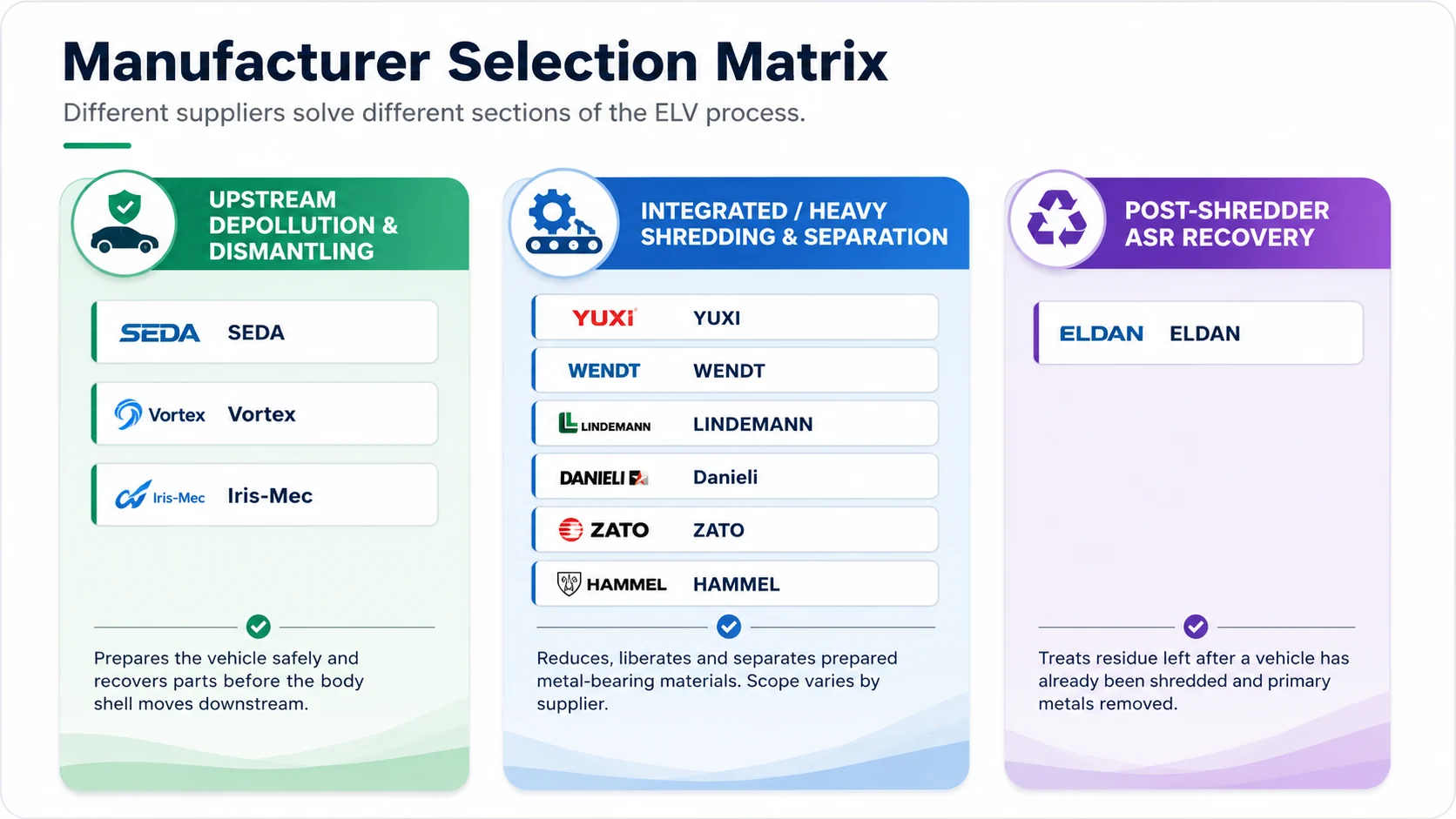
أفضل 10 شركات مصنعة لمعدات إعادة تدوير المركبات
1. شركة YUXI للآلات — الأفضل في مجال خطوط التقطيع والفصل القابلة للتخصيص
تحديد الموقع: تُعد YUXI خيارًا عمليًّا للمشاريع التي تتلقى هياكل مركبات جاهزة أو قطع معدنية نفايات، وتحتاج إلى مسار قابل للتخصيص بدءًا من عملية التخفيض الأولي للحجم وصولاً إلى فصل المعادن الحديدية والمعادن غير الحديدية الموصلة للكهرباء.
المسؤول خط إعادة تدوير سيارات الخردة في يوشي يقدم العملية على مراحل: كسارة ذات عمودين للتكسير الأولي، وكسارة معدنية من النوع المطرقية لمزيد من التفتيت، وفصل مغناطيسي للمواد الحديدية، وفصل بالتيارات الدوامة للمعادن غير الحديدية الموصلة، ونظام تحكم مركزي عبر وحدة التحكم المنطقية القابلة للبرمجة (PLC). وتشمل قائمة التطبيقات هياكل السيارات والعديد من قطع غيار المركبات المحتوية على معادن، بالإضافة إلى الدراجات النارية والدراجات الهوائية.
وتعد هذه السلسلة مفيدة من الناحية التجارية لأنها تعامل عملية التقطيع على أنها مرحلة تمهيدية للفرز. حيث تعمل الآلة الأولى على تقليل حجم المواد المدخلة الضخمة وتفتيتها؛ بينما تعمل المرحلة الثانوية على تغيير درجة انفصال الجسيمات؛ ثم تستهدف المرحلتان المغناطيسية ومرحلة التيارات الدوامة سلوكيات مختلفة للمواد. وبالتالي، يمكن للمشترين مناقشة خط الإنتاج من منظور المخرجات القابلة للبيع المطلوبة، بدلاً من الاكتفاء بالسؤال عن “الطن في الساعة” فقط.”
نقاط القوة الرئيسية
- عملية تقطيع متكاملة للمرحلتين الأولية والثانوية بدلاً من استخدام آلة واحدة منفصلة.
- يُشمل في مخطط التدفق المنشور فصل المعادن الحديدية والمعادن غير الحديدية الموصلة للكهرباء.
- يمكن مناقشة تكوين خط الإنتاج في ضوء المواد الواردة وأهداف المنتج النهائي.
- تدعم أنظمة التحكم المركزية عمليات التشغيل والإيقاف والتشابك المنسقة على طول الخط.
الأفضل لـ
تقوم ساحات الخردة بإضافة عمليات معالجة هياكل المركبات، ويخطط المستثمرون لإنشاء خط متكامل متوسط الحجم لاستعادة المعادن، بينما يرغب المشغلون في الاستعانة بمورد واحد لتنسيق عمليات التقطيع والنقل والفصل الأولي للمعادن.
النقاط التي يجب التأكد منها
لا تحدد صفحة الحلول العامة سعة موحدة أو قوة محرك أو حجم التفريغ أو معدل الاسترداد أو تكلفة التركيب. بل يجب تحديد هذه القيم هندسيًّا بناءً على حالة المواد الواردة، ومستوى التلوث، والكثافة، والناتج المطلوب، والمرافق المحلية. كما لا ينبغي تفسير الخط المنشور على أنه ورشة كاملة لإزالة التلوث من المركبات المنتهية الصلاحية (ELV) غير المعالجة. تتطلب البطاريات والوقود والسوائل ومواد التبريد وأكياس الهواء والمواد الخطرة الأخرى إجراءات مسبقة معتمدة. لإلقاء نظرة فاحصة على اختيار الماكينة الأساسية، راجع دليل آلة تقطيع هياكل السيارات المتوفر على الموقع.
2. شركة ويندت — الأفضل لمحطات تقطيع السيارات الكبيرة في أمريكا الشمالية
تحديد الموقع: تُعد شركة «ويندت» مرشحاً قوياً ضمن قائمة المرشحين النهائيين للمشاريع ذات رأس المال الضخم في أمريكا الشمالية التي تتطلب خدمات هندسة آلات تقطيع السيارات، وتكامل المنشآت، ودعم دورة الحياة.
تسلط الصفحة الرسمية لشركة «ويندت» المخصصة لعمليات تكسير السيارات الضوء على القدرات الكاملة للمصنع والدعم المقدم بدءًا من مرحلة التصميم وحتى نهاية عمر المصنع. ويركز تموضع منتجاتها على استخلاص المعادن والأنظمة المتكاملة، بدلاً من الاكتفاء بتوريد مطحنة مطرقة عادية. وهذا الأمر مهم للمشترين الذين يحتاجون إلى جهة واحدة لتنسيق المعدات الرئيسية وأنظمة التحكم والواجهات.
نقاط القوة الرئيسية
- مجموعة منشآت مخصصة لتقطيع السيارات.
- تركيز قوي على سوق أمريكا الشمالية والخدمات.
- إنشاء الهياكل الجاهزة التي يمكن أن تقلل من مخاطر التفاعل بين حزم المعدات الرئيسية للمصنع.
- مناسب للمشترين الذين يقارنون بين البنى التحتية الصناعية طويلة العمر بدلاً من آلة منفردة.
الأفضل لـ
مصانع معالجة الخردة ذات الإنتاجية العالية، والتي تتمتع بمصادر إمداد مضمونة، ومرافق خدمات كبيرة، والقدرة على الحصول على التراخيص اللازمة، وسوق للمعادن في مراحل التصنيع اللاحقة.
النقاط التي يجب التأكد منها
حدد ما يشمله مصطلح “تسليم المفتاح”: الأساسات، والمباني، والرافعات، وشبكات التوزيع الكهربائي، ومعالجة الغبار والانبعاثات، وأنظمة المياه، واستخلاص المعادن غير الحديدية في المراحل النهائية، والتشغيل التجريبي واختبار الأداء. كما يجب التأكد مما إذا كانت المواد الواردة عبارة عن هياكل سفن مفككة، أو بالات، أو خردة مختلطة، وكيف يؤثر هذا الأساس على السعة المذكورة في عرض الأسعار. مصدر رسمي.
3. LINDEMANN — الأفضل في عمليات التقطيع الأولي للوثائق ذات الأحمال الثقيلة ودعم دورة الحياة
تحديد الموقع: تُعد شركة «ليندمان» خيارًا متميزًا لشركات إعادة تدوير المعادن الصناعية التي تبحث عن معدات راسخة لتجهيز الخردة الثقيلة، وآلات تقطيع السيارات، وشبكة واسعة من خدمات الصيانة وقطع الغيار.
تتمتع الشركة بخبرة تزيد عن قرن في مجال إعادة تدوير المعادن، وتضم محفظة منتجاتها الورق المقطّع، والورق المقطّع مسبقًا، والقطع، والتعبئة والتغليف، والقوالب. وبالنسبة لمشروع المركبات المنتهية الصلاحية (ELV)، لا تقتصر القيمة على آلة التقطيع الرئيسية فحسب؛ فالمعالجة المسبقة والتحكم في التغذية يمكنهما تقليل الصدمات، وتحقيق استقرار الحمولة، وحماية المعدات اللاحقة في خط الإنتاج.
نقاط القوة الرئيسية
- تخصص عريق في مجال معدات إعادة تدوير المعادن.
- مجموعة من المعدات التي يمكنها تغطية عمليتي التقطيع الأولي والتقطيع الرئيسي.
- توفير قطع الغيار وخدمات ما بعد البيع لضمان عمر تشغيلي طويل للمعدات.
- ينطبق هذا على الشركات التي تتعامل مع درجات متعددة من الخردة، وليس فقط هياكل المركبات.
الأفضل لـ
مخازن الخردة الكبيرة، وموردو صناعة الصلب، والمشغلون الذين يولون الأولوية للمنشآت الثابتة عالية التحمل ودعم الخدمة على المدى الطويل.
النقاط التي يجب التأكد منها
استفسر عما إذا كانت عملية التعبئة المقترحة تشمل فقط تجهيز الخردة والورق المقطّع، أم أنها تشمل أيضًا الفرز الهوائي، والفصل المغناطيسي، وإعادة تدوير المعادن غير الحديدية، ومعالجة المخلفات. احصل على افتراضات مكتوبة بشأن قطع التآكل مرتبطة بالمواد الواردة الفعلية. مصدر رسمي.
4. دانييلي سنترو ريسايكلينغ — الأفضل في مجال صناعة الصلب — المعالجة المتكاملة للخردة
تحديد الموقع: تُعد شركة «دانييلي سنترو ريسايكلينغ» الخيار الأمثل عندما يكون تحضير خردة المركبات والخردة الحديدية المختلطة مرتبطًا ارتباطًا وثيقًا بجودة صناعة الصلب، والعمليات اللوجستية، ومتطلبات ورشة الصهر.
يصف دانييلي وحدة الأعمال هذه بأنها تشكل جسراً يربط بين معالجة الخردة وصناعة الصلب. ويمكن أن تكون هذه النظرة مفيدة عندما لا يقتصر هدف الشراء على مجرد تقليص حجم هيكل السيارة، بل يمتد ليشمل إنتاج إمدادات ثابتة من الخردة لعمليات الصهر في المراحل اللاحقة، وإزالة الشوائب، وإدارة معدلات الاستخدام العالية للمصنع.
نقاط القوة الرئيسية
- العلاقة المباشرة بين تجهيز الخردة ومتطلبات إنتاج الصلب.
- القدرة في مجال الهندسة الصناعية الثقيلة وتكامل المنشآت.
- نطاق معالجة المعادن الحديدية وغير الحديدية.
- مناسب للمشاريع الكبيرة التي تنطوي على متطلبات رسمية تتعلق بالأداء والقبول.
الأفضل لـ
شركات إنتاج الصلب، وكبرى شركات معالجة الخردة، والمشاريع التي تشكل فيها جودة الخردة المقطعة وكثافتها ودرجة تلوثها واللوجستيات المتعلقة بالأفران جزءًا من دراسة جدوى استثمارية واحدة.
النقاط التي يجب التأكد منها
توضيح حدود المواد الواردة. قد تفترض محطة معالجة خردة الصلب أن المركبات قد خضعت بالفعل لعملية إزالة الملوثات والتفكيك والتعبئة في بالات. كما يجب الفصل بين المراجع الخاصة بالمشروع لكل طراز على حدة وضمانات الأداء الخاصة بالموقع الجديد. مصدر رسمي.
5. ZATO — الأفضل لتكوينات آلات التقطيع الأولي المعيارية والمطاحن المطرقية
تحديد الموقع: تُعد «ZATO» أداة مقارنة مفيدة لشركات إعادة التدوير التي تقيّم جهاز التقطيع الأولي، والمطحنة المطرقية، وخط الفرز كنظام متكامل لمعالجة المركبات المنتهية الصلاحية، والسيارات المعبأة في بالات، وخردة المعادن المختلطة.
تتناول مواد ZATO المتعلقة بمركبات نهاية العمر الافتراضي (ELV) عملية إزالة التلوث قبل إعادة التدوير، وتقدم حلولاً للتقطيع المسبق وتقطيع السيارات. ويُعد اتباع نهج نظامي أمراً مهماً في الحالات التي قد تؤدي فيها الهياكل المضغوطة أو المواد المختلطة غير المتجانسة إلى حدوث أحمال قصوى في آلة التقطيع الرئيسية.
نقاط القوة الرئيسية
- هيكل واضح للعيان لآلة التقطيع الأولي والمطحنة المطرقية.
- تكوينات النظام لتطبيقات المركبات والخردة.
- تواجدها في أمريكا الشمالية بالإضافة إلى مقرها في إيطاليا.
- يُعتبر هذا الأمر مهمًّا عندما يمثل تجهيز الأعلاف جزءًا رئيسيًّا من استقرار المحطة.
الأفضل لـ
الشركات التي تتعامل مع عربات محملة بالبالات، أو الأعلاف المكثفة، أو الخردة المختلطة، وترغب في تقييم عملية التخفيض التدريجي قبل الفصل النهائي.
النقاط التي يجب التأكد منها
يرجى تحديد أبعاد البالات وكثافتها، والمواد الغريبة، والحجم المطلوب في المراحل اللاحقة، ومسار إعادة التدوير المقترح. يرجى التأكد من توفر قطع الغيار في المنطقة، وتحديد تقنيات الفرز المشمولة في نطاق العرض المقدم. مصدر رسمي.
6. شركة «هاميل» لتقنيات إعادة التدوير — الأفضل في مجال معالجة المعادن المتنقلة أو المعيارية
تحديد الموقع: تتميز شركة «هاميل» بتطبيق مفاهيم معالجة متنقلة ومعيارية لهياكل السيارات، والخردة المختلطة، وكتل المحركات، وغيرها من المواد المعدنية المدخلة في العملية.
تتضمن المواصفات الرسمية لمصنع المعالجة هذا عمليات التقطيع الأولي والثانوي، والناقلات، وفصل المواد المغناطيسية عن غير المغناطيسية. وقد تكون قابلية التنقل ميزة جذابة عندما تكون المواد الخام موزعة على مواقع مختلفة، أو عندما تكون الأراضي مستأجرة مؤقتًا، أو عندما ترغب شركة إعادة التدوير في زيادة طاقتها الإنتاجية دون الحاجة إلى إنشاء منشأة تقطيع كبيرة تقليدية على الفور.
نقاط القوة الرئيسية
- خيارات معالجة متنقلة وقابلة للتعديل.
- تشمل التطبيقات المنشورة هياكل السيارات وفئات متعددة من الخردة المعدنية.
- الفرز المغناطيسي المدمج ضمن مفهوم النظام.
- بديل مفيد لمحطة التقطيع الثابتة التقليدية للسيارات.
الأفضل لـ
الشركات الإقليمية المتخصصة في المعالجة، والمقاولون، ومشغلو المواقع المتعددة، والمشاريع التي يكون فيها الانتقال إلى موقع جديد أو الاستثمار على مراحل ذا قيمة حقيقية.
النقاط التي يجب التأكد منها
قارن الجدوى الاقتصادية لنظام التنقل مع محطة ثابتة على مدار ساعات التشغيل المتوقعة. تحقق من درجة نظافة الناتج الفعلي، ومتطلبات الوقود/الكهرباء، وتدابير التحكم في الغبار والضوضاء، والحماية من الحرائق، والتراخيص المحلية. مصدر رسمي.
7. شركة «إيلدان» لإعادة التدوير — الأفضل في استعادة بقايا التقطيع في صناعة السيارات
تحديد الموقع: ينبغي النظر في استخدام تقنية ELDAN عندما يكون المصنع ينتج بالفعل ASR أو الفصيلة الخفيفة الناتجة عن التقطيع ويحتاج إلى مزيد من عمليات التحرير والتصنيف الحجمي والفصل — وليس عندما يكون المطلب الأساسي هو إزالة التلوث من المركبات الكاملة أو تقطيعها.
تُعرّف شركة «إلدان» (ELDAN) «ASR» بأنه الجزء الخفيف المتبقي بعد تقطيع المركبات المنتهية الصلاحية (ELVs). ويُركز الحل الذي تقدمه الشركة للجمهور على تصميم المصانع وفقًا للاحتياجات المحددة، وعلى أهمية تقييم المواد الفعلية. ويُعد هذا نهجًا معقولًا لأن تركيبة «ASR» تتغير تبعًا لتنوع أنواع المركبات، وإعدادات آلة التقطيع الأولية، ومعدات الفصل المثبتة بالفعل.
نقاط القوة الرئيسية
- تخصص واضح في معالجة ASR/SLF.
- مجموعة من آلات التقطيع وآلات التحبيب ومعدات الفصل.
- التكوين القائم على المواد بدلاً من مخطط العمليات العام.
- مفيد لاستعادة قيمة إضافية بعد استخلاص المعادن الأولية.
الأفضل لـ
مشغلو آلات تقطيع السيارات، ومُعالِجو المخلفات المركزيون، والمشاريع التي تواجه ضغوطًا متعلقة بتكاليف مدافن النفايات أو أهداف الاسترداد.
النقاط التي يجب التأكد منها
يرجى إرسال عينات تمثيلية وتحديد المنتجات المطلوبة قبل مناقشة شروط الضمان. تأكد من محتوى الرطوبة، والمواد الدقيقة، والمواد المحتوية على النحاس، والبلاستيك، والزجاج، والأوساخ، بالإضافة إلى طرق التخلص من المخلفات المتبقية. مصدر رسمي.
8. SEDA-Umwelttechnik — الأفضل في مجال إزالة التلوث وتفكيك المركبات المنتهية الصلاحية (ELV)
تحديد الموقع: تُعد شركة SEDA متخصصة في المرحلة الأولية من العمليات، حيث تتولى توفير المرافق اللازمة لإزالة السوائل بأمان، وتفكيك المركبات، وتجهيز المركبات التقليدية وتلك التي تعمل بالجهد العالي قبل بدء معالجة المواد في المرحلة النهائية.
تقسم محفظة SEDA العامة أعمال إزالة التلوث والتفكيك وأعمال الجهد العالي إلى فئات مخصصة من المعدات. وتُقدَّم حلول ثابتة ومتنقلة، مما يتيح للمشترين تصميم ورشة العمل وفقًا لحجم المركبات ومعدات المناولة المتوفرة.
نقاط القوة الرئيسية
- أنظمة مخصصة لإزالة التلوث من المركبات المنتهية الصلاحية (ELV) وأجهزة فردية لإزالة السوائل.
- أدوات التفكيك والتصميمات المخصصة لورش العمل.
- الاهتمام الواضح بكيفية التعامل مع المركبات الكهربائية والمركبات ذات الجهد العالي.
- وهذا الأمر ذو صلة بعملية التسليم الحاسمة من الناحية الأمنية التي تتم قبل سحق أو تمزيق الغلاف.
الأفضل لـ
شركات التفكيك، ومنشآت المعالجة المرخصة، ومستودعات الخردة، والمصانع المتكاملة التي تحتاج إلى محطة تحضير رسمية في مرحلة ما قبل المعالجة.
النقاط التي يجب التأكد منها
تكمن ميزة نظام SEDA في مرحلة الإعداد الأولية؛ لذا سيتعين على المشترين تحديد موردي آلات التعبئة والضغط، والكسارات، وآلات التقطيع، وأنظمة فصل المعادن في المراحل اللاحقة. يجب التحقق من اللوائح المحلية المتعلقة بالجهد العالي، ومؤهلات المشغلين، ومتطلبات تخزين السوائل، ومتطلبات إدارة الحرائق. مصدر رسمي.
9. نظام «فورتكس» لإزالة التلوث — الأفضل لتصريف مياه المركبات في عمليات الإنتاج
تحديد الموقع: تُعد «فورتكس» خيارًا مناسبًا لورش أمريكا الشمالية التي تبحث عن أنظمة تصريف للمركبات تركز على المشغل، وأدوات معالجة، ومحطة عمل قابلة للتخصيص لإزالة التلوث.
يُدرج الموقع الإلكتروني الحالي للشركة أنظمة الممرات وأنظمة تصريف مياه المركبات، والأدوات المتنقلة، ومعدات التخزين، وأدوات المحولات الحفازة، ومعدات معالجة المحركات والأسلاك، وآلات ضغط السيارات ضمن محفظتها الواسعة من المنتجات. ويتمثل التركيز التصميمي المعلن للشركة في تسهيل وصول المشغلين وتكييف الأنظمة مع ساحة العميل.
نقاط القوة الرئيسية
- معدات مخصصة لتصريف مياه المركبات ومفاهيم خلايا العمل.
- الأدوات الموضوعة حول المشغل وتسلسل العمل.
- يمكن لمعدات الساحات ذات الحجم الأكبر أن تُسهّل عملية الشراء على المشغلين الصغار.
- يُذكر أن عمليات التصميم والتصنيع تتم في الولايات المتحدة على الموقع الحالي.
الأفضل لـ
شركات إعادة تدوير السيارات، ومخازن قطع الغيار الشاملة الخدمات، ومرافق معالجة الخردة التي تنتقل من طرق تصريف السوائل المرتجلة إلى محطة إنتاج محددة.
النقاط التي يجب التأكد منها
يجب الفصل بين المعدات التي تصممها وتصنعها شركة «فورتكس» والمنتجات التي يوزعها الشركاء، ثم تحديد مسؤوليات الضمان والخدمة بوضوح. ولا تحل محطة التصريف محل عمليات تجهيز الهياكل المعدنية في المراحل اللاحقة، أو التقطيع، أو فصل المعادن غير الحديدية. مصدر رسمي.
10. Iris-Mec — الأفضل في مجال منصات إزالة التلوث والتفكيك القابلة للتخصيص
تحديد الموقع: تُعد شركة «إيريس-ميك» خيارًا مناسبًا للمشترين الذين يبحثون عن منصات إزالة التلوث من المركبات المنتهية الصلاحية (ELV) المدمجة أو القابلة للتخصيص، ومعدات تصريف السوائل والوقود، والرافعات، وأنظمة التفكيك.
تضم مجموعة المنتجات المعروضة رسميًا أنظمة تصريف كاملة، ومعدات تصريف السوائل والوقود، ورافعات، وأدوات خاصة. وتناسب هذه البنية المنتجية المشترين الذين يحتاجون إلى إنشاء محطة معالجة أولية وفقًا للمساحة المتاحة، وحجم المركبة، ومستوى التفكيك الذي يتم إجراؤه قبل مغادرة الهيكل للساحة.
نقاط القوة الرئيسية
- مجموعة واسعة من معدات استرداد السوائل وتفكيك المركبات المنتهية الصلاحية (ELV).
- حوامل قابلة للتعديل، ورافعات، وأنظمة تصريف كاملة.
- تركيز على إعادة تدوير المركبات المصممة خصيصًا لهذا الغرض.
- مناسب لتطوير ورش العمل على مراحل.
الأفضل لـ
شركات تفكيك المركبات الصغيرة والمتوسطة الحجم، ومنشآت المركبات المنتهية الصلاحية الإقليمية، والمشاريع التي تحتاج إلى محطة عمل أولية قابلة للتكوين بدلاً من محطة تكسير ثقيلة.
النقاط التي يجب التأكد منها
تأكد من تغطية الوكيل المحلي، ومسؤولية التركيب، وقطع الغيار، وكيفية ترابط المحطة الأولية مع عمليات التعبئة أو التقطيع. بالنسبة للسيارات الكهربائية، اطلب سير عمل موثقًا منفصلاً بدلاً من الافتراض بأن معدات إزالة التلوث التقليدية تغطي إزالة البطاريات والمركبات المتضررة ذات الجهد العالي. مصدر رسمي.
كيفية اختيار الشركة المصنعة حسب نوع المصنع
لا تصبح قائمة المرشحين النهائيين مفيدة إلا عندما تكون مرتبطة بنموذج عمل محدد. ابدأ بحالة السيارة الواردة والمنتج الذي يتم بيعه من الموقع.
| نوع المصنع | المواد الأولية النموذجية | المعدات ذات الأولوية | ملف تعريف المورد الذي يجب إعطاؤه الأولوية |
|---|---|---|---|
| ساحة تفكيك تعتمد على قطع الغيار | مركبات منتهية العمر الافتراضي (ELV) غير المعالجة بالكامل | الجرد، والرفع، واستعادة السوائل، وإزالة المكونات بأمان | شركات متخصصة في أعمال ما قبل المعالجة من نوع SEDA أو Vortex أو Iris-Mec |
| ساحة تجهيز وشحن سفن «هولك» | الأصداف المُطهرة | مقصات أو مكابس أو آلات تكسير لزيادة كثافة الشحن | الموردون الذين أثبتوا قدرتهم على التحضير والتعبئة |
| خط متكامل لإعادة تدوير المعادن | القذائف الجاهزة والأجزاء المعدنية | آلة التقطيع الأولية، عملية الفصل الثانوية، الفصل المغناطيسي وفصل التيارات الدوامة | YUXI أو غيرها من الشركات الموردة لأجهزة التقطيع والفصل المتكاملة |
| مصنع كبير لتصنيع آلات تمزيق السيارات | هيكل جاهز الصنع، ونظام تغذية للنفايات الخفيفة المجمعة والمختلطة، وآلة التقطيع الأولي/المطحنة المطرقية، ونظام التحكم في الغبار، وعملية الفصل المكثفة في المرحلة النهائية | مورد معدات ثقيلة من طراز ويندت أو ليندمان أو دانييلي أو زاتو | |
| معالج إقليمي متنقل | هياكل السيارات المتناثرة والخردة المختلطة | المعالجة الأولية/الثانوية المتنقلة والفصل المغناطيسي | مورد معدات متنقلة أو معيارية من طراز «هاميل» |
| محطة استخلاص ASR | الجزء الخفيف من نواتج التقطيع | تكسير الحجم القائم على العينات، والغربلة، والفصل متعدد المراحل | متخصص في أنظمة ما بعد التقطيع من نوع «إلدان» |
للحصول على شرح أكثر تفصيلاً لأدوار المعدات وعمليات التسليم، يرجى الرجوع إلى دليل معدات إعادة تدوير المركبات المتوفر على الموقع قبل إصدار طلب عرض الأسعار.
لا تقارن عروض الأسعار بناءً على سعر الشراء وحده
يمكن تعويض انخفاض سعر الماكينة عن طريق استبعاد عناصر مثل الناقلات، والأساسات، واللوحات الكهربائية، وأنظمة الحماية من الحرائق، ومعالجة الغبار، والرافعات، والدوارات الاحتياطية، وقطع الغيار القابلة للتآكل، وتكاليف تركيب العمالة، أو عمليات الفرز اللاحقة. قارن بين النطاق الإجمالي للتركيب والمنتجات المضمونة من الخط. كما يجب أن يفصل النموذج المالي الواقعي بين الطاقة الإنتاجية التصميمية والإنتاج السنوي القابل للبيع؛ حيث يمكن أن تؤثر عوامل مثل معدل الاستخدام وتكلفة المواد الأولية وأسعار المعادن والتخلص من المخلفات والصيانة بشكل كبير على النتيجة. ويمكن استخدام إطار عائد الاستثمار لمصنع إعادة تدوير المركبات في الموقع لاختبار تلك الافتراضات.
أسئلة يجب طرحها قبل طلب عرض أسعار
المواد والطريقة
- هل المركبات غير معالجة، أم تمت إزالة التلوث منها، أم تم تسطيحها، أم تم تجميعها في بالات، أم تم تفكيكها جزئيًا؟
- ما هي أكبر أبعادها وكثافتها الظاهرية النموذجية؟
- ما هي المكونات الخطرة التي تمت إزالتها؟
- ما هي أنواع الخردة غير المتعلقة بالمركبات التي سيتم خلطها مع العلف؟
- هل التقطيع هو الخطوة النهائية أم أنه مرحلة تمهيدية لعملية الفصل والصهر؟
المخرجات والجوانب الاقتصادية
- ما هي الأجزاء القابلة للبيع المطلوبة؟
- ما هي حدود التلوث التي يفرضها المشترون؟
- كيف سيتم التعامل مع ASR والغرامات أو التصرف فيها؟
- ما هي ساعات العمل ومعدلات الاستخدام التي يمكن اعتبارها واقعية؟
- ما الذي تشمله تكلفة التركيب واختبارات التسليم؟
الموقع والمرافق
- القدرة المتاحة، والجهد الكهربائي، وحدود الطلب؟
- الأساسات، وارتفاع المبنى، وإمكانية وصول الرافعة؟
- المتطلبات المتعلقة بالغبار والضوضاء ومياه الأمطار والحرائق؟
- هل يتوفر مساحة كافية للصيانة وإزالة الدوار؟
- حركة الشاحنات وتخزين المواد؟
التحقق من الموردين
- هل يمكن للمورد إجراء اختبار على عينة تمثيلية من المواد؟
- ما هي قيم الأداء التي ستكون ملزمة بموجب العقد؟
- أين يتم تخزين قطع الغيار القابلة للتآكل؟
- من الذي يشرف على عملية التركيب والتدريب؟
- ما هي الاستثناءات التي يمكن أن تؤدي إلى إبطال الضمان؟
أين يمكن استخدام خط إعادة تدوير سيارات النفايات من YUXI
بالنسبة لشركة “يوشي”، فإن الرسالة التسويقية الأكثر وضوحًا ليست «نقوم بإعادة تدوير كل جزء من كل مركبة». فالرسالة الموثوقة أضيق نطاقًا وأكثر فائدة: بعد إزالة التلوث من المركبة وتجهيزها بشكل سليم، يمكن لشركة YUXI تكوين خط إنتاج لاحق يجمع بين التقطيع الأولي، واستخلاص المعادن بشكل إضافي، واستعادة المعادن الحديدية، وفصل المعادن غير الحديدية الموصلة، والتحكم المركزي.
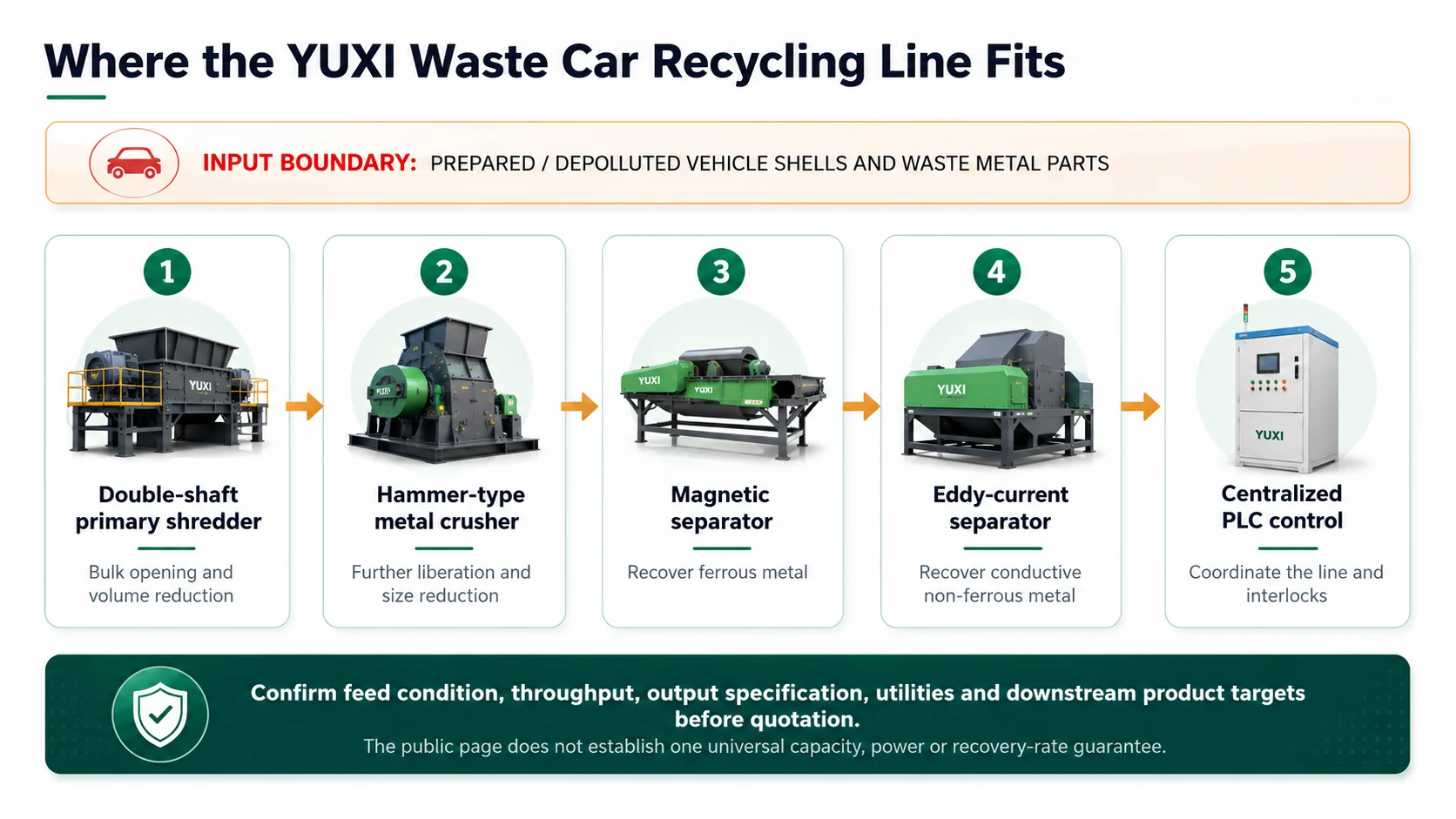
لذلك، يجب أن يبدأ عرض الأسعار الجاد الخاص بنظام YUXI بتقديم أدلة: صور أو مقاطع فيديو للمواد، وحالة إزالة التلوث، والأبعاد القصوى للمواد الواردة، والكميات المتوقعة في الساعة وسنويًّا، والنسب المطلوبة للمخرجات، وأهداف إزالة التلوث، والجهد الكهربائي في الموقع، وقيود المساحة المتاحة، وبلد المقصد. وبذلك يمكن للفريق الهندسي تحديد ما إذا كان التسلسل الكامل المنشور مطلوبًا أم أن المشتري يحتاج فقط إلى مراحل محددة.
الأسئلة الشائعة
من هو أفضل مصنع لمعدات إعادة تدوير المركبات؟
لا يوجد مورد واحد يُعتبر الأفضل على الإطلاق. ويختلف اختيار المصنع المناسب وفقًا لما إذا كان المشروع يتطلب إزالة التلوث، أو التفكيك، أو تجهيز الهيكل، أو التقطيع الشديد، أو فصل المعادن، أو إعادة تدوير ASR، فضلاً عن حجم المصنع وموقعه ومتطلبات الخدمة.
هل يمكن إدخال سيارة كاملة مباشرةً إلى آلة تقطيع المركبات؟
ليس كقاعدة عامة. فالبطاريات والوقود ومواد التبريد والسوائل وأكياس الهواء والمكونات الخطرة الأخرى تتطلب إجراءات مسبقة متوافقة مع المعايير. وينبغي أن يتلقى مورد آلة التقطيع مواصفات تغذية محددة بوضوح ومعدة مسبقًا.
ما هي المعدات اللازمة لإنشاء محطة إعادة تدوير كاملة للسيارات الهالكة؟
قد تشمل المحطة الكاملة عمليات الاستلام والجرد، وإزالة التلوث، والتفكيك، ومناولة الأجزاء، وتجهيز الهياكل، والتكسير الأولي والثانوي، وفصل المعادن الحديدية وغير الحديدية، ومكافحة الغبار والحرائق، ومعالجة المخلفات. ولا يقوم كل موقع بتنفيذ جميع المراحل.
ما الفرق بين كسارة السيارات وآلة تقطيع السيارات؟
تُستخدم آلة التكسير أو آلة التعبئة بشكل أساسي لتقليل الحجم لأغراض التخزين والنقل. أما آلة التقطيع فتقوم بتفتيت المواد وتفكيكها تمهيدًا لعمليات الفصل اللاحقة. وتستخدم بعض المشاريع كلا الجهازين لأن كثافة النقل وتفكيك المواد يمثلان هدفين مختلفين.
كيف ينبغي للمصنعين إثبات قدرتهم الإنتاجية؟
يجب أن ترتبط السعة بالمواد المراد معالجتها، وأبعاد المواد المدخلة وكثافتها، والتلوث، وحجم المخرجات، وظروف التشغيل، والخط الإنتاجي بأكمله. ولا تكفي القيمة المحددة في الكتالوج في حالة عدم التحميل أو القيمة العامة لتخطيط الاستثمار.
متى تكون هناك حاجة إلى جهاز الفصل بالتيارات الدوامة؟
يُستخدم عادةً بعد عملية تقليل الحجم وإزالة المعادن الحديدية لفصل المعادن غير الحديدية الموصلة للكهرباء مثل الألومنيوم. ويعتمد الأداء على حجم الجسيمات، ومعدل فصلها، وحمل الحزام، وتركيب المادة المتبقية.
هل تُعد معدات ASR جزءًا من كل خط تكسير للمركبات؟
لا. قد تتوقف المحطات الأساسية بعد الاستخلاص الأولي للمعادن الحديدية وغير الحديدية. أما المعالجة الأكثر تطوراً باستخدام تقنية ASR فهي عملية منفصلة في مرحلة لاحقة، يتم تصميمها بناءً على طبيعة المخلفات الفعلية والمنتجات المطلوبة.
ما هي المعلومات التي يجب أن أرسلها إلى YUXI لاختيار الخط؟
يرجى إرسال صور أو مقاطع فيديو للمواد، وحالة إزالة التلوث، والحجم الأقصى للتغذية، والإنتاجية المستهدفة، وفئات المخرجات المطلوبة، والاستخدام النهائي، ومصدر الطاقة، وقيود الموقع، والبلد المقصود. ويجب تأكيد السعة والتكوين الدقيقين من قِبل القسم الهندسي.
ملاحظات حول المصادر والتحقق من صحة المعلومات
- المفوضية الأوروبية: المركبات — سياق السوق والأسس المنطقية للإدارة البيئية.
- وكالة حماية البيئة الأمريكية (EPA): معالجة المركبات المنتهية العمر الافتراضي — إزالة التلوث والتعامل مع المواد الخطرة.
قم بإعداد عرض أسعار قابل للتنفيذ من الناحية الهندسية
يرجى إرسال معلومات حول حالة المواد الواردة، وحالة إزالة الملوثات، والأبعاد القصوى، والإنتاجية المستهدفة بالساعة وسنويًّا، وفئات المخرجات المطلوبة، والجهد الكهربائي في الموقع، والمساحة المتاحة، والبلد المقصود. وبذلك يمكن لشركة YUXI تحديد مراحل التقطيع والفصل التي يتطلبها المشروع.