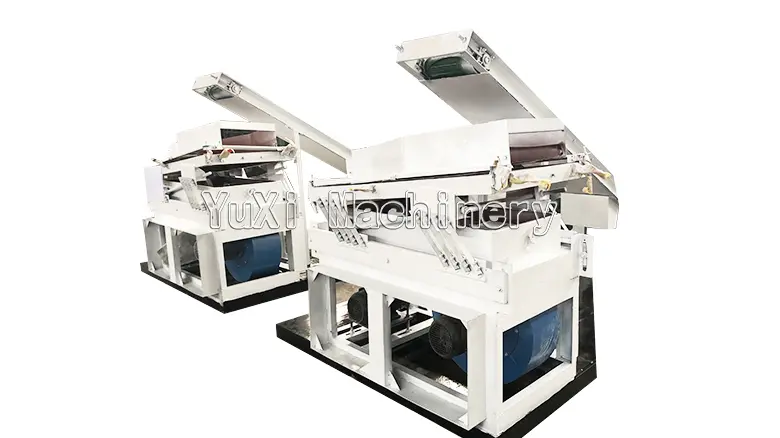
Recover valuable non-ferrous metals (aluminum, copper) from shredder material, municipal waste, e-scrap, and more using the Eddy Current Separator. Maximize resource recovery in recycling processes.
Description
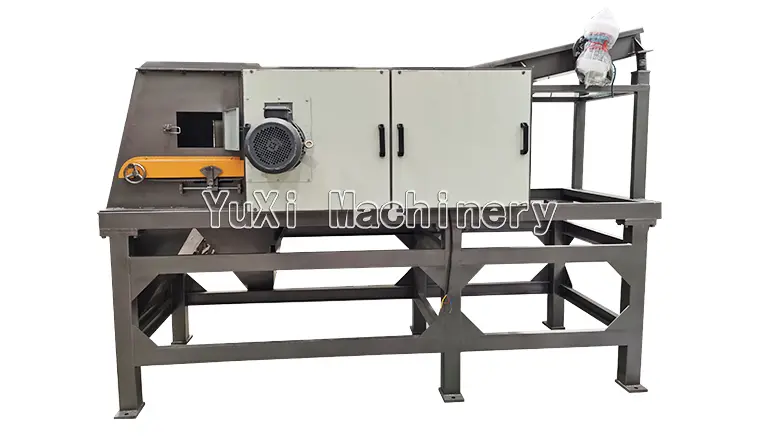
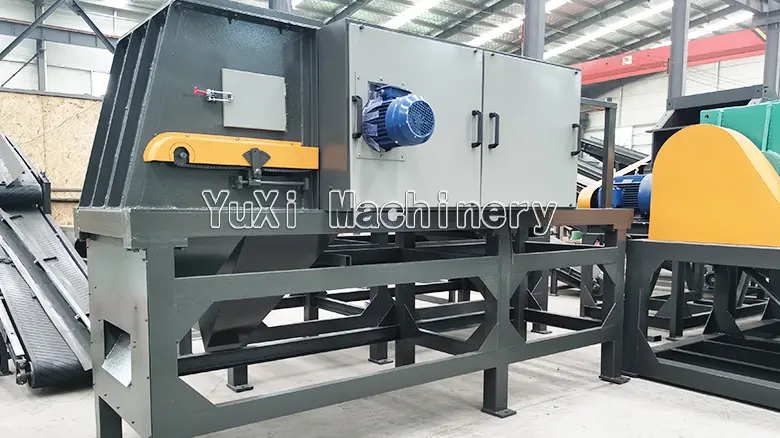
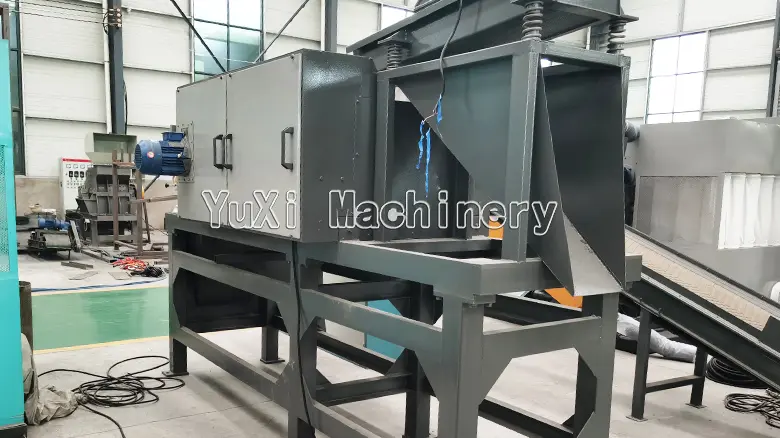
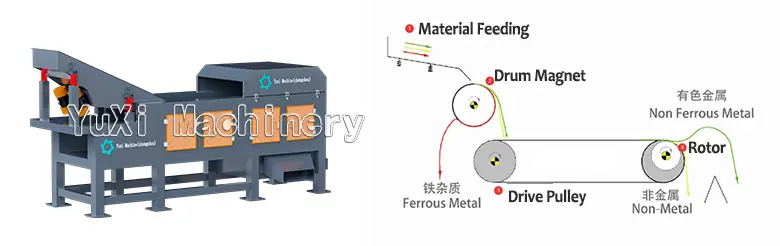
The Eddy Current Separator designed to separate valuable non-ferrous metals wherever non-ferrous metals have to be recovered or separated, e.g.where shredder material, municipal waste,WTE bottom ash, electronic scrap,wood chips, glass, batteries or foundry sand are processed.
Application
The application scenarios include electronic waste recycling, scrap car dismantling, Cable recycling, aluminum-plastic separation ,construction waste treatment and other fields.
Working Principle
Material fed onto the conveyor belt of the eddy current separator,which moves it across the magnetic rotor where separation occurs.The magnetic rotor is surrounded by(but not attached to) a wear shell which supports the conveyor belt. This allows the rotor to spin independently and at a much higher speed than the wear shell and belt.
When a piece of nonferrous metal, such as aluminum, passes over the separator, the magnets inside the rotor rotate past the aluminum at high speed.
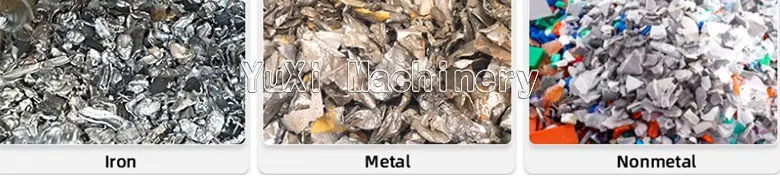
This forms eddy currents in the aluminum which in turn create a magnetic field around the piece of aluminum. The polarity of that magnetic field is the same as the rotating magnet, causing the aluminum to be repelled away from the magnet. This repulsion makes the trajectory of the aluminum greater than that of the non-metallic, allowing the two material streams to be separated.
Advantage
It has a high sorting efficiency, can accurately separate various non-ferrous metals, and improve the purity of recovery.
It is suitable for materials of various particle size ranges and has a wide processing range.
Sorting parameters such as magnetic field intensity and material conveying speed can be adjusted as needed to meet different sorting requirements.





 Request Quote