


 Request Quote
 Nominal Force
The series covers 630–2000 kN. Higher force can support denser or more difficult material, but force alone does not determine hourly output or finished-bale quality.

YUXI YXJD hydraulic metal baling machines compress loose steel, iron, aluminum, copper, cans, wire, profiles and metal shavings into compact bales for storage, transport and downstream recycling. The six-model range covers 630–2000 kN nominal force and 0.4–5.0 t/h. Model selection is based on the actual scrap form, maximum feed size, loading method, required bale and available handling equipment.
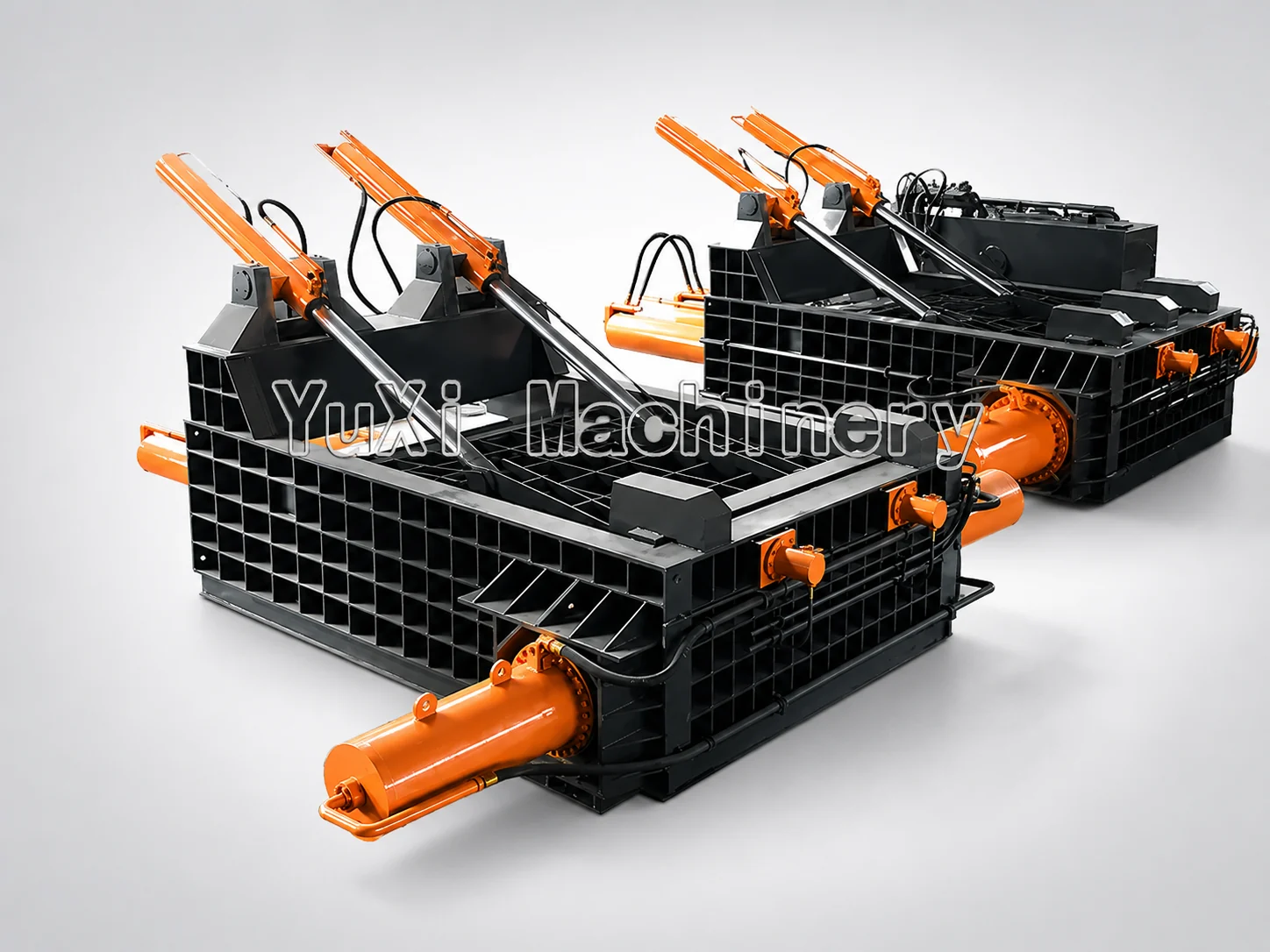
A scrap metal baler is a hydraulic machine that compresses loose metal into compact blocks. For overseas buyers, the key selection points are the material form, largest regular piece, required throughput, compression-chamber size, bale cross-section, bale weight and the equipment available to receive the side-pushed bale.
A scrap metal baler machine is hydraulic recycling equipment that compresses loose metal into compact, manageable blocks. Its practical value is not simply “making scrap smaller.” A correctly selected baler changes how material is stored, moved, loaded and prepared for later processing or smelting. The machine has to be matched to material form, feed size, hourly volume and the finished bale that the site can safely handle.
Use the sections below to compare model specifications, confirm material suitability and prepare the information required for an accurate quotation.
YXJD hydraulic metal balers compress prepared ferrous and non-ferrous scrap into regular bales for storage, loading, resale or downstream processing.
Model selection should start with the actual feed: material type, maximum regular piece, hourly volume, loading method and required bale. Aluminum cans, sheet offcuts, profiles, wire and shavings can have similar weight but behave very differently inside the chamber.
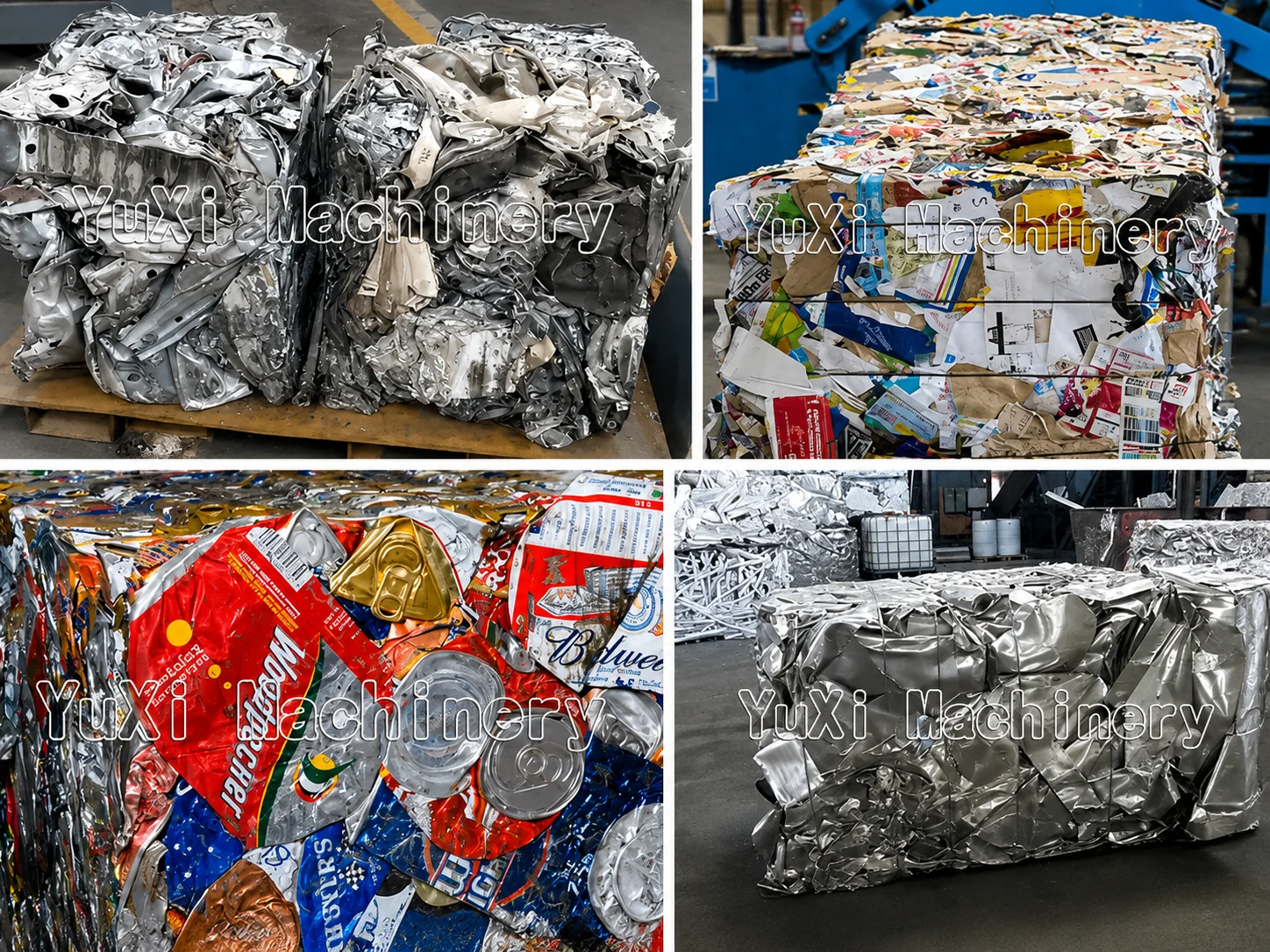
The six YXJD models cover 630–2000 kN nominal force and reference capacities from 0.4 to 5.0 t/h. Chamber size, bale cross-section, bale weight, capacity and motor power should be compared together.
| Model | Nominal Force (kN) | Compression Chamber / Feed Box (L × W × H, mm) | Nominal Bale Cross-Section (W × H, mm) | Bale Weight (kg) | Capacity (t/h) | Motor Power (kW) |
|---|---|---|---|---|---|---|
| YXJD-63 | 630 | 1000 × 600 × 500 | 190 × 190 | 15–30 | 0.4–0.8 | 7.5 |
| YXJD-100 | 1000 | 1000 × 700 × 550 | 230 × 230 | 30–40 | 0.6–1.2 | 11 |
| YXJD-125 | 1250 | 1200 × 700 × 600 | 300 × 300 | 50–75 | 1.2–1.5 | 15 |
| YXJD-135 | 1350 | 1400 × 600 × 600 | 600 × 240 | 60–80 | 1.5–2.8 | 22 |
| YXJD-160 | 1600 | 1600 × 1000 × 800 | 400 × 400 | 110–150 | 2.2–3.0 | 22 |
| YXJD-200 | 2000 | 1800 × 1400 × 900 | 450 × 450 | 210–300 | 3.0–5.0 | 2 × 22 |
Published values are for preliminary model comparison. Final dimensions, electrical configuration and performance conditions are confirmed in the technical proposal.
Suitable as a starting range for lower-volume projects requiring smaller bales. Confirm that the largest regular piece fits the chamber before selecting by daily tonnage.
A middle-capacity range for projects requiring larger chambers and 50–80 kg reference bales. Compare feed geometry and bale requirements, not only the force rating.
The higher-capacity range reaches 5.0 t/h and 210–300 kg reference bale weight. Side-discharge space and lifting equipment must be included in the site layout.
The model table is a starting point for selection. Final performance depends on the actual scrap stream, how the chamber is loaded and the required finished bale.
The series covers 630–2000 kN. Higher force can support denser or more difficult material, but force alone does not determine hourly output or finished-bale quality.
This is the internal L × W × H loading and compression space. The largest regular piece must enter without unsafe forcing or repeated manual repositioning.
The listed two-dimensional value is the nominal W × H cross-section of the bale. Bale length varies with material, charge amount and operating settings.
The reference range rises from 15–30 kg to 210–300 kg. Actual weight changes with metal type, bulk density, charge volume and spring-back.
The listed 0.4–5.0 t/h is a reference range. Actual throughput depends on bulk density, feed preparation, loading speed, cycle consistency and interruptions.
Motor power is stated in kW: 7.5, 11, 15, 22, 22 and 2 × 22 kW. The YXJD-200 uses two 22 kW motors, for 44 kW total motor power.
A quotation should state the assumed feed, maximum piece size, loading method and target bale. A capacity figure for prepared sheet offcuts cannot be applied directly to tangled wire, low-density cans or oily shavings.
YXJD metal balers can be configured for prepared steel, iron, aluminum, copper, lead, stainless steel, cans, wire, wire mesh, profiles, sheet offcuts, metal shavings and dismantled light-metal parts. Material form still determines whether cutting, draining, sorting or other preparation is required before baling.
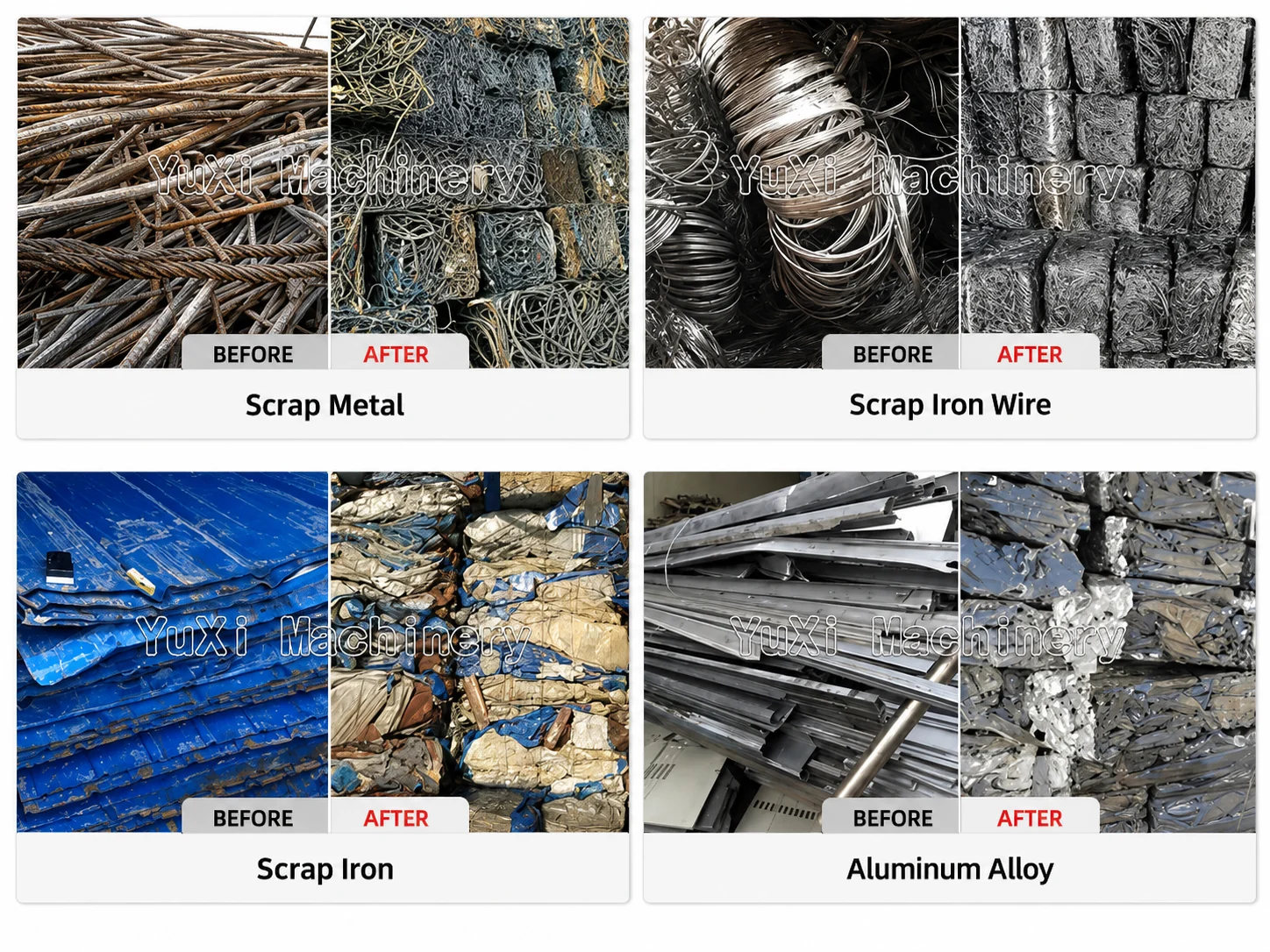
For ferrous scrap, the main preliminary checks are largest piece size, thickness, rigidity and whether long items will bridge across the chamber.
Non-ferrous material can be valuable and lightweight. The buyer may care as much about clean separation and a consistent bale as maximum pressure.
These materials can require specific confirmation, inspection or preparation before they are treated as routine feed.
Prepared scrap is loaded into the chamber, compressed by hydraulic cylinders and discharged from the side as a finished bale. The final control arrangement and operating sequence are confirmed in the technical proposal.
Remove sealed or hazardous items and load the chamber evenly by hand, grab, loader or conveyor.
Long or protruding pieces must not obstruct the closing path. Oversized scrap should be cut or repositioned.
The hydraulic system drives the ram to compact the charge into the specified bale cross-section.
The charge is held as required to reduce spring-back and stabilize the bale.
The finished bale is pushed out from the side, where it can be collected by a forklift, crane or receiving table.
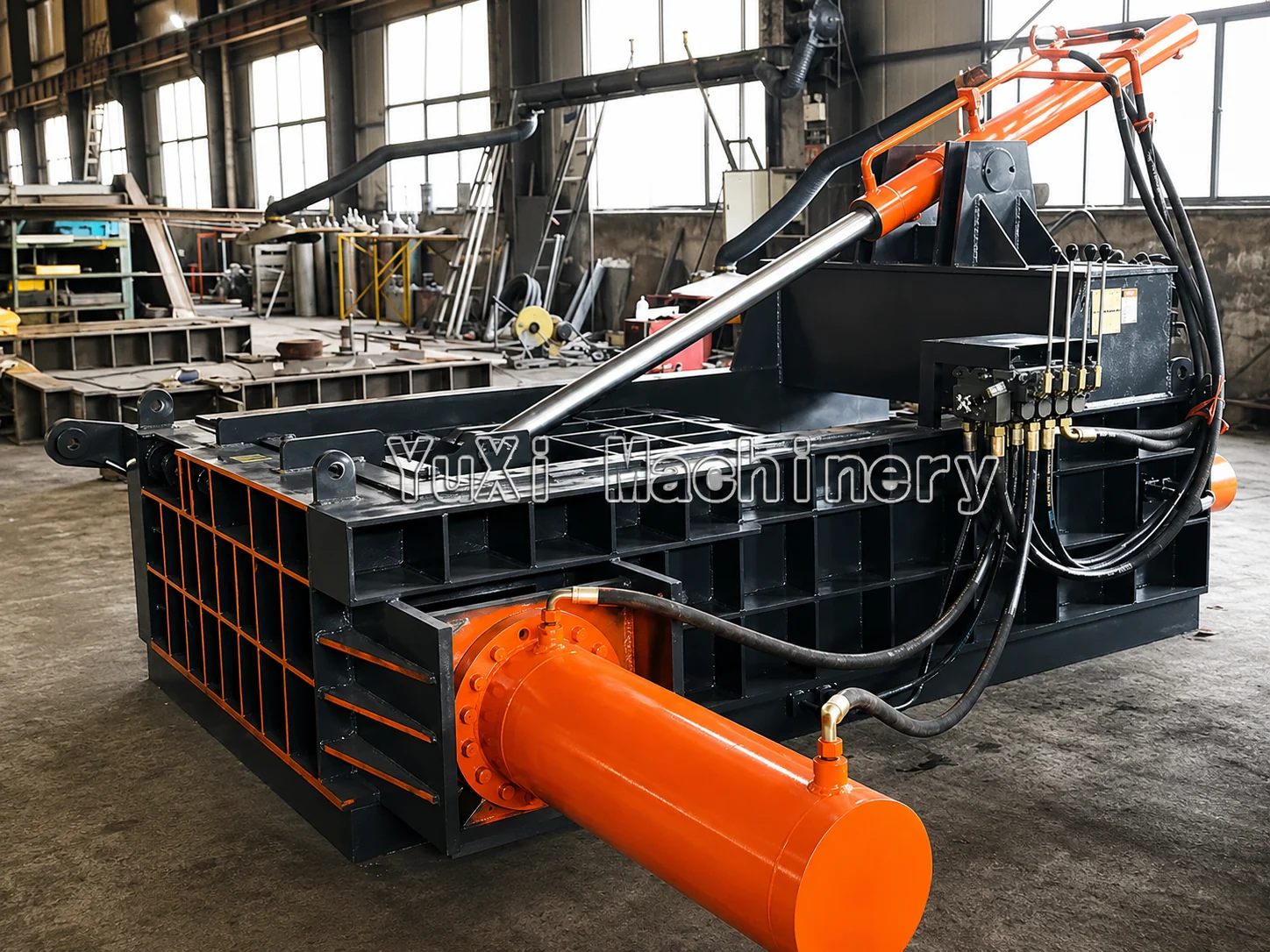
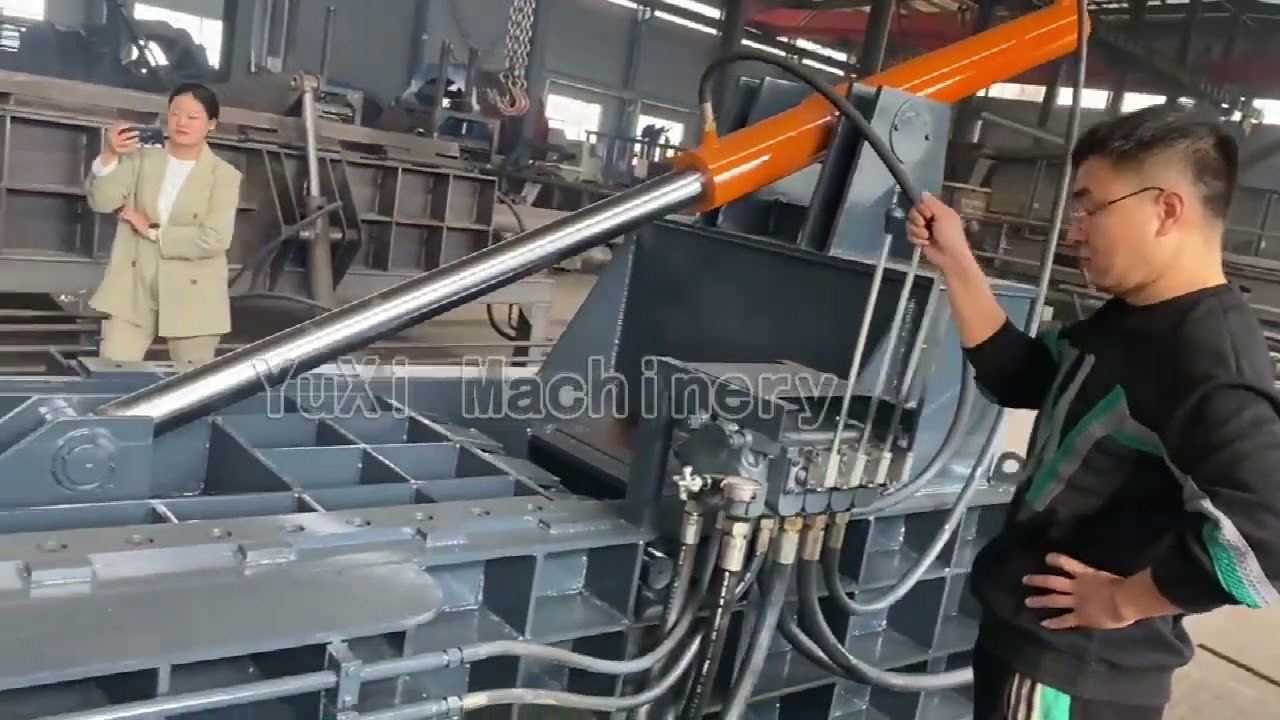
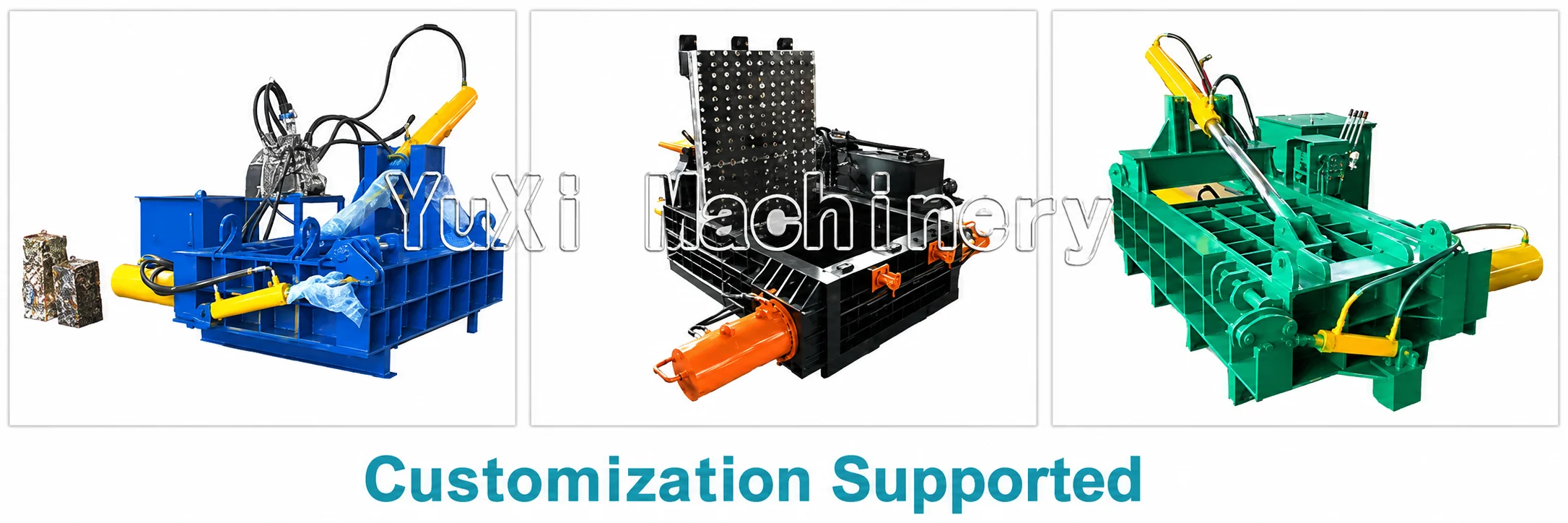
Metal balers are available with different compression arrangements and production layouts. The suitable structure depends on material form, required bale density, throughput and line integration. Not every configuration shown below is standard on every YXJD model.
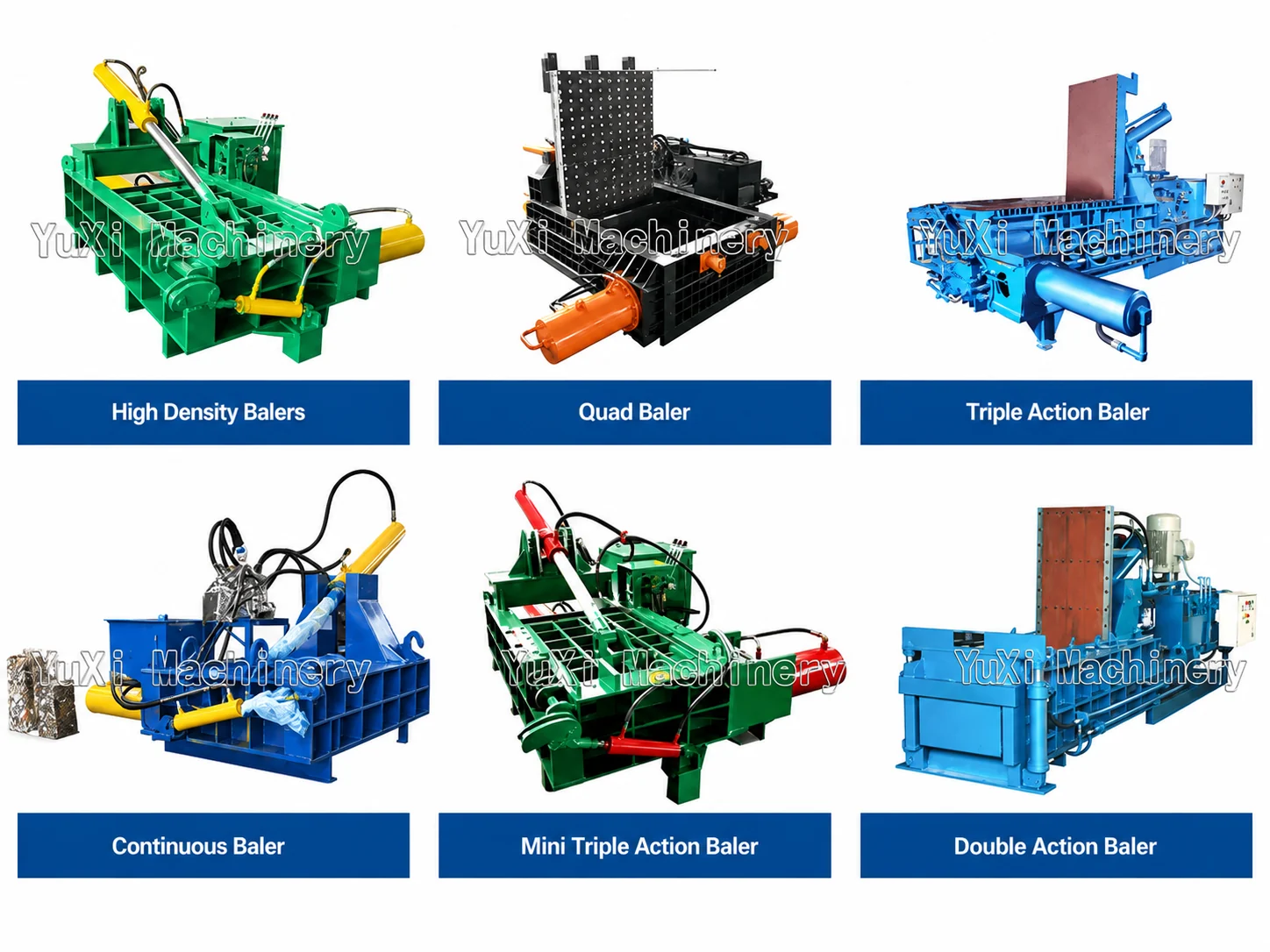
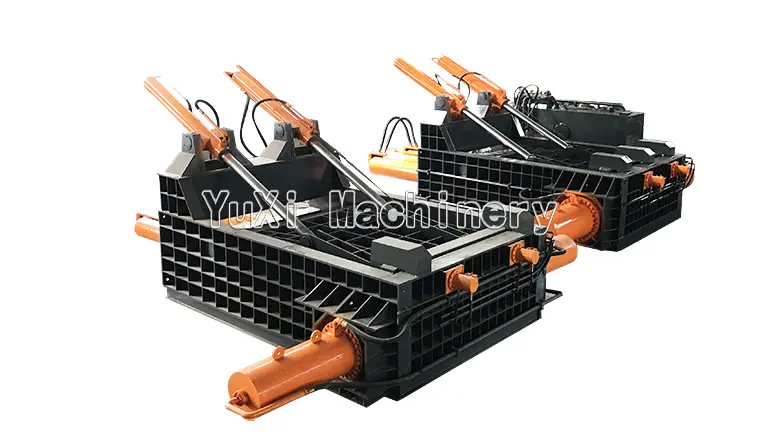
A horizontal chamber is practical for batch loading of prepared loose metal. The reinforced frame and hydraulic cylinders form the bale, which is then pushed out from the side.
Compression from two directions can improve bale formation for some scrap streams. The benefit depends on material behavior and chamber geometry.
Additional compression directions can produce a more regular block. The added structure should be justified by the feed and finished-bale requirement.
A high-density configuration is considered when the buyer needs tighter, heavier bales. The required density should be defined for a specific material.
Multi-direction compression is used for demanding projects that require controlled bale shape or density. Availability is confirmed project by project.
Continuous systems are suited to organized production lines with matched feeding and bale handling. The conveyor and discharge layout form part of the system design.
YXJD metal balers on this page use side-push bale discharge. The installation layout must provide clear side space for the bale to leave the chamber and for a forklift, crane or receiving table to collect it safely.
The difference between a 15–30 kg bale and a 210–300 kg bale changes the required lifting equipment, floor space and storage plan. Confirm bale handling before the machine layout is finalized.
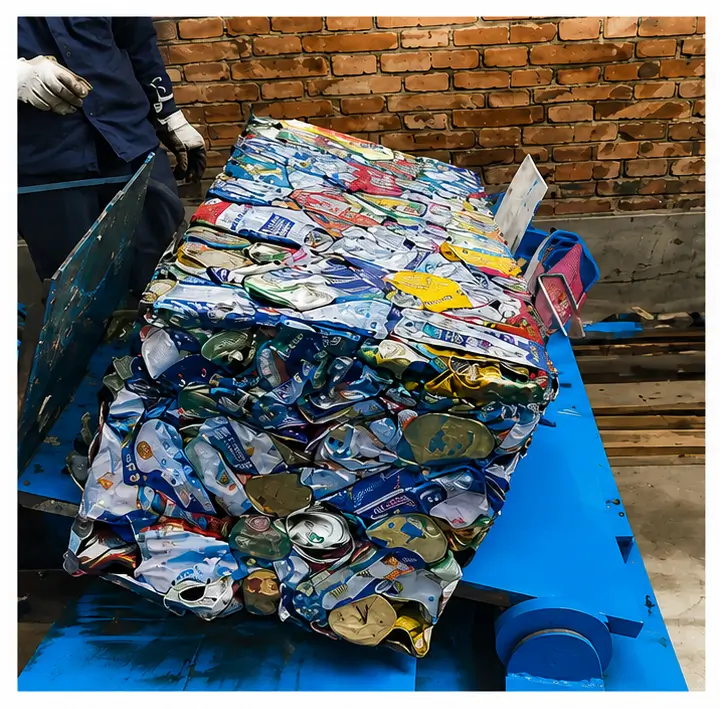
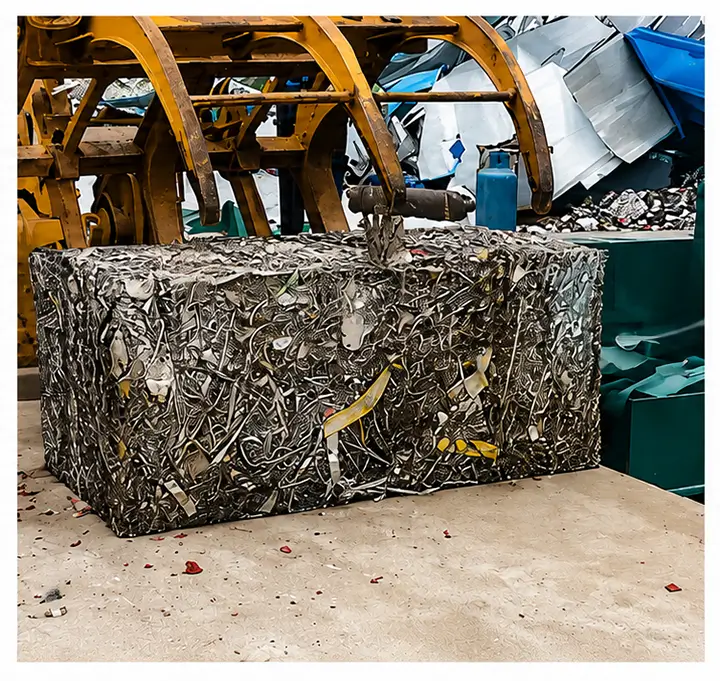
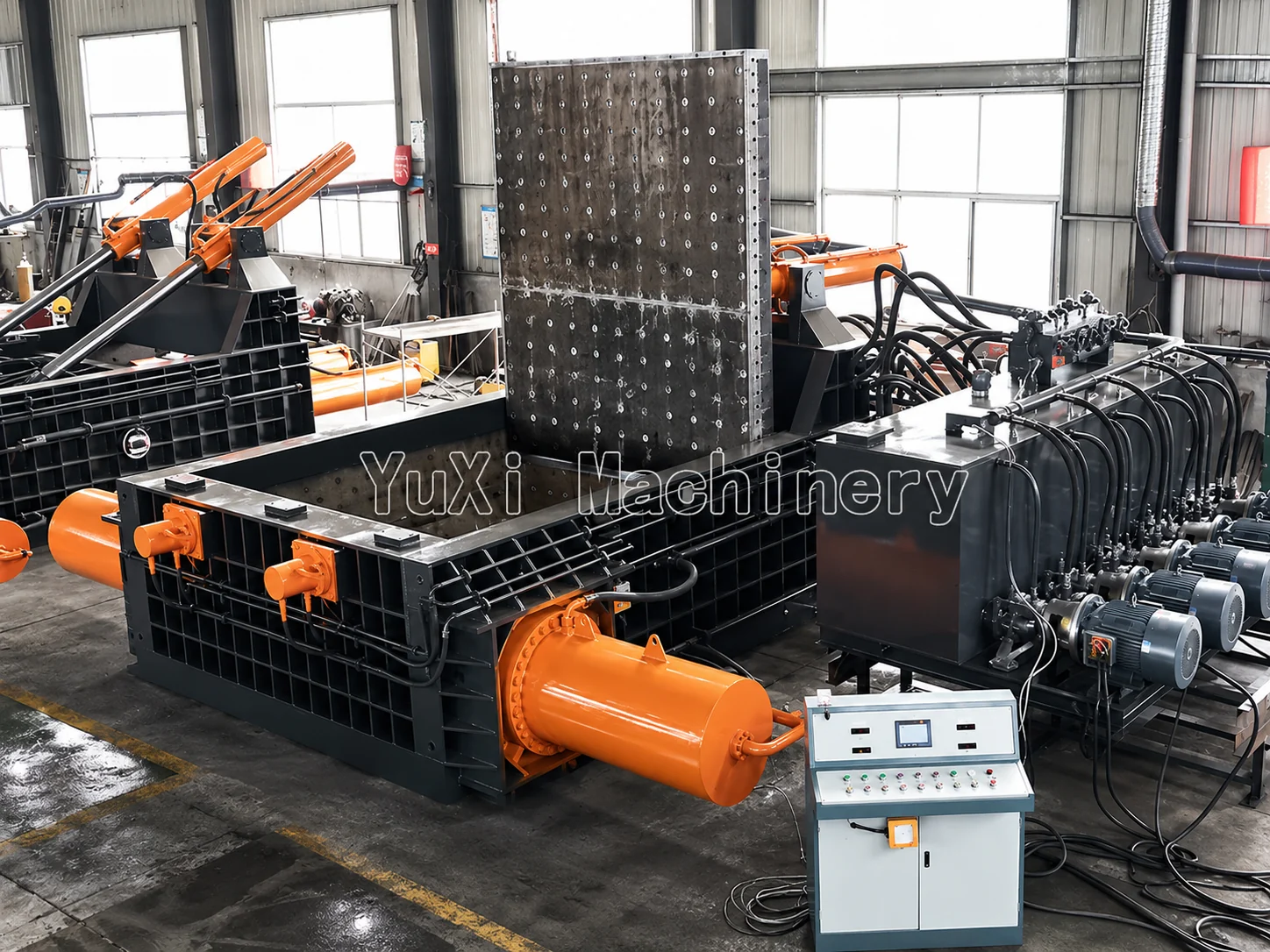
Compare the complete machine structure—not nominal force alone. The final proposal should clearly show the chamber, hydraulic system, motor arrangement, electrical controls, safety devices and service access.
The welded frame and compression chamber carry the pressing load and contain irregular scrap. Ask about reinforcement, wear surfaces and replaceable parts.
Confirm the main cylinders, pump unit, valves, oil tank, filtration and cooling arrangement for the expected working hours.
The exact control mode, operating sequence, interlocks and emergency protection should be stated in the technical specification.
Filters, valves, wiring, cylinders and high-wear areas should remain accessible for inspection and routine service.
Published capacity is useful for comparing models, but real output depends on how the scrap behaves in the chamber and how consistently the machine is supplied. These four conditions should be confirmed before the final model is selected.
Loose cans fill the chamber quickly but contain less weight than compact steel offcuts. For lightweight scrap, provide both tonnage and loose volume.
A long or rigid piece can delay loading or prevent the chamber from closing even when the average scrap is easy to handle.
Wire, mesh and shavings can expand after pressure is released. Material form affects bale stability, length and expected weight.
The baler cannot reach its expected output if it waits for a loader, conveyor or operator. Feeding and bale collection must match the cycle.
Compress sorted loose metal into regular bales for storage, truck loading and resale.
Handle sheet offcuts, stamping remnants, wire and other prepared production scrap near the source.
Compact separated aluminum, copper, stainless steel and used beverage cans while maintaining material-category control.
Bale prepared light shells and dismantled metal pieces after hazardous components and oversized items are removed.
A baler forms compact blocks; it does not replace inspection, cutting, shredding or separation.
Use the table to narrow the range, then confirm the machine from actual material evidence and site requirements.
List the main scrap forms and provide the largest regular length, width and thickness.
State tons per hour or per day, working hours and the planned loading method. For light scrap, also provide loose volume.
Define the required cross-section, acceptable length, target weight and downstream use.
Confirm voltage, frequency, installation environment and available electrical capacity.
Reserve clearance and confirm the forklift, crane, receiving table or conveyor used to collect the bale.
Compare chamber size, cylinders, hydraulic unit, motor power, controls, safety devices, commissioning and spare parts.
Review the process before baling when long or oversized metal cannot enter safely, when the required output is small separated pieces, or when the feed contains sealed, pressurized, hazardous or unidentified components.
A clear project brief is more useful than requesting a model by pressure alone. Prepare the following before technical discussion.
Compare 630–2000 kN nominal force, different chambers, bale sections and motor powers.
Reinforced chambers, hydraulic cylinders and power units are configured for scrap-baling duty.
The defined discharge direction makes bale receiving and lifting space easier to plan.
The model is matched to material, feed size, capacity, target bale, site utilities and handling method.
Typical feed includes prepared steel, iron, aluminum, copper, stainless steel, cans, sheet offcuts, profiles, wire, mesh and metal shavings. Maximum piece size, thickness, contamination and spring-back must be checked before model selection.
The three-dimensional value is the internal compression chamber or feed-box size. The two-dimensional value is the nominal bale cross-section. Bale length varies with material, charge volume and operating settings.
The six YXJD models cover 630–2000 kN nominal force and reference capacities from 0.4 to 5.0 t/h. Actual output depends on the material, loading method, preparation and cycle consistency.
Motor power ranges from 7.5 to 22 kW on the first five models. The YXJD-200 uses two 22 kW motors, giving 44 kW total motor power. Voltage and frequency are confirmed for the installation country.
The YXJD models on this page use side-push bale discharge. Clear space is required beside the machine for the bale to exit and for a forklift, crane or receiving table to collect it.
Send material photos or video, maximum piece dimensions, required capacity, working hours, loading method, target bale, side-discharge handling plan, installation country, voltage and frequency.
Send your material mix, representative photos, maximum piece dimensions, required capacity, loading method, target bale and side-discharge handling plan. YUXI will recommend a suitable YXJD model and project configuration.
Send the material mix, representative photos, largest dimensions, required capacity, planned loading method and finished-bale requirements. The model should be selected from the full project brief—not from pressure or price alone.