




 Request Quote

Product Center
-
- Biomass Shredding and Recycling Line
- OCC Paper Dry Pulping & Cardboard Recycling Line
- Scrap Aluminum Recycling Line
- Waste Car Recycling Line
- Waste Refrigerator Recycling Line
- Copper Aluminum Radiator Recycling Line
- Motor Rotor Recycling Line
- Copper Wire Recycling Line
- Waste Ink Cartridge Recycling Line
- Aluminum UBC Scrap Recycling Line
Get a Quote
Contact Us


Metal Baling Machine Buying Guide
How to Choose the Right Metal Baling Machine
A metal baler should be selected around the scrap entering the chamber and the bale leaving it—not around the largest pressure figure in a brochure. This guide shows how to compare material form, real capacity, chamber dimensions, compression structure, feeding, hydraulics, site conditions and supplier testing before you order.
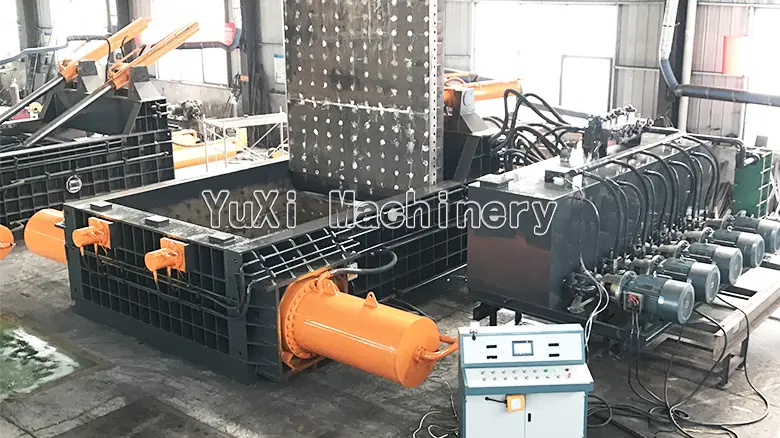
How do you choose the right metal baling machine?
Start with the material and production routine. Then match the machine to the real feed size, hourly volume, required bale and site conditions.
1. Define the scrapMetal type, maximum size, thickness, shape, contamination and spring-back.
2. Calculate real outputUse effective operating hours and peak feeding periods—not daily tonnage alone.
3. Match the configurationChamber, press force, compression directions, feeding and bale ejection must work together.
4. Verify before orderingCheck site power, maintenance access, trial results, scope of supply and acceptance criteria.
Start with the scrap, not the machine catalogue
Two balers can carry similar pressure labels and still behave very differently on aluminum cans, long steel offcuts or springy turnings. A supplier cannot make a useful recommendation from “mixed metal, five tons a day.” The material must be described in the form in which it will actually reach the machine.
Identify the metal type
Ferrous and non-ferrous materials do not fill a chamber in the same way. Light iron sheet and empty cans occupy a large volume for relatively little weight. Copper offcuts are valuable and are usually kept separate. Stainless steel can be stiff and springy. Long profiles may be easy to bend but difficult to load. Metal shavings can bridge across the chamber or expand after pressure is released.
Do not group every material under “scrap metal.” List the normal percentage of steel, iron, aluminum, copper, stainless steel, wire, turnings, cans and dismantled pieces. If material changes by season or production shift, say so.
Record the maximum size and thickness
The average piece is not the item that causes a stoppage. Record the largest length, width and thickness that appears in normal production. Note whether long parts can be bent or cut before loading. A chamber that accepts most of the feed but rejects the largest recurring pieces is not correctly sized.
Describe form and spring-back
Flat sheet, hollow cans, extrusions, wire coils and curled turnings have different loading behavior. Springy material may need more controlled filling, additional compression directions or a different bale-handling plan. The problem is not always insufficient force; sometimes the chamber is being filled poorly.
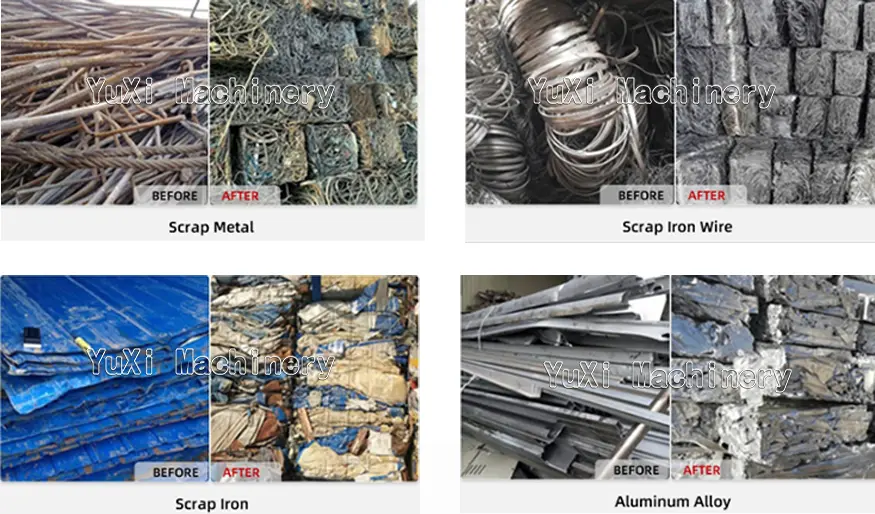
Safety and contamination checkSealed drums, gas cylinders, batteries, pressurized containers, flammable residues and unknown liquids must not be treated as ordinary feed. A baler is not a substitute for inspection, drainage, dismantling or material separation.
Calculate the real capacity requirement
Published capacity is useful for shortlisting, but it is not a universal promise. The same machine may process very different tonnes per hour when switching between cans, sheet offcuts and dense steel pieces.
Convert daily volume into effective hourly demand
Divide daily material by the hours in which the baler will actually receive and process scrap. An eight-hour shift does not provide eight full compression hours. Breaks, material sorting, crane waiting, bale removal, changeovers and routine checks reduce effective time.
Practical calculationRequired hourly capacity = daily scrap volume ÷ effective baling hours. Add a realistic margin for peak periods, but do not double the machine size for an expansion plan that has not been defined.
Find the bottleneck before increasing machine size
Output can be limited by manual loading, an undersized grab, slow upstream sorting, a chamber that needs repeated filling, a long compression cycle or a forklift that is not available when the bale exits. A larger baler will not fix a feeding system that cannot keep it supplied.
Ask the supplier to state the assumptions behind capacity: material, feed density, loading method, cycle, bale dimensions and continuous operating time.
Field noteA plant producing four tonnes in one short production window may need a different configuration from a yard receiving the same four tonnes gradually throughout the day. Average tonnage hides the feed pattern.
Choose the baler type around the production method
More compression directions do not automatically mean a better purchase. The correct structure is the one that handles the feed consistently and produces the required bale without unnecessary complexity.
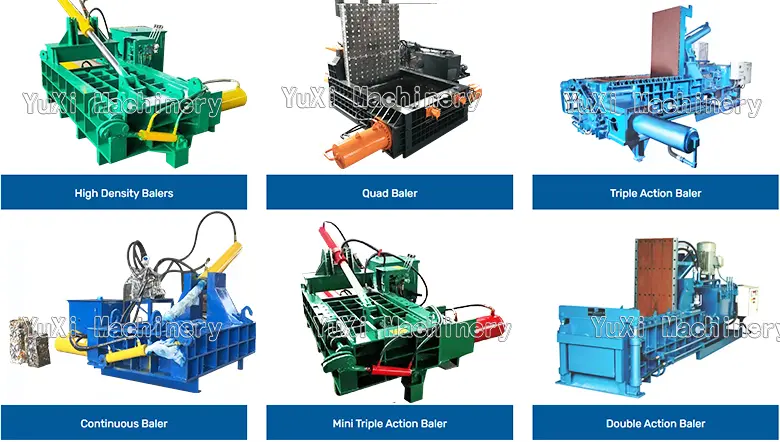
Lid-type baler
A lid-type machine suits batch loading of light sheet, profiles and irregular scrap. Check the opening, lid movement and whether long pieces can protrude or interfere with closing. Oversized recurring material may need preparation before loading.
Hopper-fed or continuous baler
This arrangement is often considered for small, consistent material such as cans or prepared light scrap. It only delivers continuous output when the upstream conveyor or hopper supplies material evenly. Automation cannot compensate for irregular feed.
Double-action baler
Two-direction compression can provide a practical balance between bale formation, machine complexity and maintenance for many recycling yards. Confirm how the machine handles the most difficult recurring feed, not only clean demonstration material.
Triple-action baler
A third compression direction can improve control of bale shape and density where the downstream process needs a more regular package. The additional cylinders, valves and sequence also create more components to inspect and maintain.
High-density or quad baler
Consider these configurations when the material and required bale genuinely justify the added structure. They should not be selected merely because the name sounds heavier or because another buyer uses one.
Dedicated application baler
Complete car bodies, very fine metal chips and other unusual feeds may require a dedicated vehicle baler, briquetting press or upstream size-reduction system rather than a standard scrap baler.
Understand press force without being misled by it
Nominal force is one part of a hydraulic system
Press force is normally stated in kN or tonnes-force. It should not be confused with the hydraulic pressure shown in bar or MPa. Compression force depends on hydraulic pressure and effective cylinder area, while cycle speed depends heavily on pump flow and the hydraulic circuit.
Two machines advertised with similar force can differ in chamber volume, cylinder arrangement, pump flow, return speed, cooling and the length of time they can maintain a productive cycle.
Peak pressure is not continuous performance
A machine may reach a high pressure briefly and still work slowly when oil temperature rises or the feed requires repeated loading. Ask how the machine performs over a realistic production period, not only whether it can complete one bale.
Do not use more force to solve the wrong problem
If long material bridges across the chamber, if the opening is too small, or if a grab cannot feed the machine fast enough, increasing nominal force does not remove the bottleneck. The feed may need cutting, the chamber may need to be longer, or the loading method may need redesign.
Buyer mistakeComparing quotations only by “tonnage” encourages suppliers to compete on one large number while the chamber, pump flow, cycle, cooling and bale requirements remain undefined.
The current YUXI scrap metal baler machine range publishes different pressure and capacity bands. Use those figures for initial screening, then confirm the final selection against actual material.
Match the compression chamber to the feed
Chamber opening
The opening must accept the largest recurring material and the chosen loading equipment. A grab needs room to release the load without striking the lid, frame or hoses. Manual loading requires safe access without encouraging operators to push material into a dangerous area.
Chamber volume
Low-density material can require a large chamber even when hourly tonnage is modest. Cans and thin sheet may need several loading passes before enough weight is present to form the bale. Chamber volume influences loading time and therefore real output.
Chamber length
Profiles, strips and vehicle sheet benefit from sufficient length. If the feed must be cut solely to fit the chamber, include that labor and equipment in the project cost.
Wear liners and service access
Ask which chamber surfaces are replaceable, how liners are fixed, and whether the most heavily worn areas can be serviced without major disassembly. A wear plate is only useful when it can be inspected and replaced economically.

Define the bale before choosing the machine
The final bale connects the baler to storage, transport, resale and melting. A machine is not correctly selected until the downstream user can handle the bale it produces.
Bale dimensions
Confirm forklift clearance, truck and container loading, warehouse stacking and furnace opening. A compact bale can still be unsuitable if it does not match the downstream route.
Bale weight
Steel, aluminum and mixed light scrap will not produce the same weight at the same external size. Treat published bale weights as material-dependent ranges, not fixed outputs.
Bale density and stability
Density is affected by material thickness, chamber filling, compression directions, holding time, spring-back and machine condition. A visually neat bale is not proof that every batch will be stable.
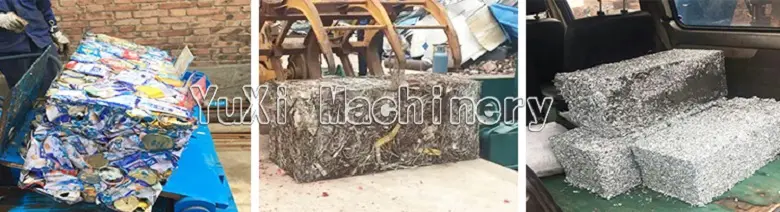
Handling checkA small bale may be moved by pallet truck or light forklift. A bale above 200 kg requires a planned mechanical route. Confirm how it will leave the machine before approving the discharge arrangement.
Choose the feeding method before finalizing capacity
Manual loading
Suitable for intermittent use and light, manageable pieces. It limits throughput and creates variation between operators. Safety distance and the position of controls must be considered from the beginning.
Hydraulic grab or loader
Common in scrap yards. Check chamber opening, grab size, swing radius, operator visibility and floor loading. A grab that delivers oversized batches can slow the cycle instead of improving it.
Conveyor feeding
Useful for consistent, prepared material. Confirm belt width, feed rate, drop height, hopper design, anti-bridging measures and control interlocks. The conveyor should not overwhelm the chamber.
Select the bale-ejection and strapping arrangement
Turn-out discharge
The bale is tipped or turned out of the chamber. This can be practical for moderate-size equipment, but the landing and pickup area must remain clear.
Side push-out
Side ejection can support a flexible factory layout and may connect to a bale conveyor or forklift pickup zone. Check the required side clearance and bale path.
Forward push-out
A forward route may suit heavier bales and a straight material-flow layout. The receiving floor or conveyor must withstand repeated impact and load.
Is strapping required?
Some metal bales remain stable through compression alone; springy or mixed material may need tying depending on bale handling and downstream requirements. Do not assume that automatic strapping is included with every baler.
Confirm in the quotationSpecify ejection direction, whether a bale chute or conveyor is included, whether tying is manual or automatic, and who supplies consumables.
Evaluate the hydraulic system for the real duty cycle
Pump flow and cycle speed
Pump flow influences fast approach, compression, return and lid movement. A high-force cylinder driven by insufficient flow may complete the bale but take too long for the required throughput.
Valve block and hose layout
Look for accessible valves, protected hoses and logical pipe routing. Scrap edges should not be able to damage exposed lines. Ask whether commonly replaced seals, valves and filters are available locally.
Oil tank, filtration and cooling
Continuous operation and hot climates increase the importance of tank capacity, filtration and oil cooling. A machine used for two hours a day does not have the same thermal requirement as one operating across two shifts.
Duty cycle
State the planned hours per shift, number of shifts and expected loading pattern. “Automatic” does not mean the hydraulic system can operate indefinitely without temperature control or maintenance.
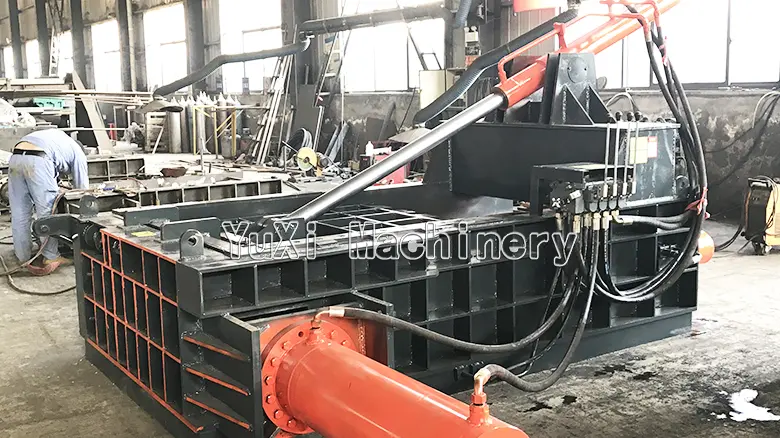
Check frame construction and cylinder protection
Main frame and chamber
Review reinforcing ribs, critical welds, chamber alignment and the way compression loads transfer through the frame. Ask where wear is expected and how deformation is checked during service.
Plate thickness is useful only when considered with structural design and load path. A heavier-looking machine is not automatically the stronger machine.
Cylinders, piston rods and hoses
Confirm how rods are protected from sharp scrap and how seals can be replaced. Hoses should be routed away from loading impact and rubbing points. Check whether maintenance can be completed without removing unrelated assemblies.
Surface coating helps in wet and dirty yards, but cleanliness, inspection and drainage remain necessary.
Match motor power and local electricity
Motor power does not equal production capacity
A larger motor can support higher flow or pressure, but capacity still depends on chamber filling, cycle sequence, feed and bale removal. Compare how the power is used, not only the kW figure.
Confirm voltage, frequency and phase
Provide site voltage, 50 or 60 Hz frequency and three-phase supply details before the electrical design is finalized. Confirm transformer capacity, starting current and whether local regulations require specific components.
Check energy use per tonne
Installed power is not the same as actual energy consumed per tonne. A machine with a short, well-fed cycle may process more material during the same operating period than a poorly matched larger machine.
Site checkElectrical upgrades discovered after delivery can delay commissioning and change the project budget. Include the machine, hydraulic cooling, conveyor and supporting equipment in the load calculation.
Plan the complete site—not only the machine footprint
Loading space
Allow for grab swing, loader approach, conveyor access and safe operator visibility.
Foundation and floor
Confirm bearing capacity, machine anchoring, hydraulic-unit support and finished-bale impact.
Height clearance
Check lid opening, grab height, installation lifting and overhead structure.
Maintenance access
Leave working space around cylinders, pumps, filters, valves and the electrical cabinet.
Bale route
Define how each bale moves from ejection to weighing, storage, truck or furnace.
Supporting equipment
Include shears, shredders, grabs, conveyors, cooling and forklifts in the layout.
Compare automation levels carefully
Manual control
Useful for simple, intermittent production where an experienced operator manages each movement. It lowers control complexity but does not remove the need for guards and interlocks.
Semi-automatic cycle
The operator loads material and starts a programmed compression, ejection and return sequence. This is often practical where feed remains manual or crane-fed.
Fully automatic system
May coordinate conveyor feeding, compression, bale discharge, counters and alarms. It is valuable only when upstream sorting and feeding are stable enough to support the sequence.
Selection noteBuy automation for a defined labor or throughput problem. Do not pay for a sophisticated control system while the plant still relies on irregular hand sorting and intermittent feed.
Review safety, maintenance access and spare parts
Safety functions to confirm
- Emergency stops in accessible positions
- Electrical overload and short-circuit protection
- Hydraulic pressure protection
- Door, lid or access interlocks where required
- Safe distance between operator and loading chamber
- Isolation and lockout provisions for maintenance
Maintenance and parts questions
- Which filters, seals and hoses are routine service items?
- Are pump, valve and electrical brands identified?
- Which chamber liners or plates are replaceable?
- What tools are needed for common maintenance?
- Which spare parts are supplied with the machine?
- How quickly can critical parts be dispatched?
Ask for a representative material trial
A successful demonstration bale is useful, but the test only has value when the material and operating conditions represent the project. The trial should produce measurements that can be written into the technical agreement.
Send representative material
Include normal scrap, the largest recurring pieces and material that is difficult to load or prone to spring-back. A test using only clean, flat and easy-to-compress samples can hide the problem that will dominate daily production.
Record the test conditions
| Trial item | Record | Why it matters |
|---|---|---|
| Feed material | Type, dimensions, form and condition | Confirms the test matches the actual project. |
| Input weight | Weight loaded per cycle or batch | Connects chamber filling with bale output. |
| Cycle time | Loading, compression, holding, ejection and return | Shows where production time is spent. |
| Finished bale | Dimensions, weight, appearance and spring-back | Checks transport and downstream requirements. |
| Continuous run | Number of cycles, oil temperature and alarms | Provides evidence beyond one demonstration cycle. |
| Operator intervention | Repositioning, cutting, clearing or manual tying | Reveals hidden labor and bottlenecks. |
Confirm the final configuration in writing
The signed proposal should state model, nominal force, published chamber or packing dimensions, motor, hydraulic system, control mode, ejection arrangement, voltage, included accessories, spare parts, documentation, delivery boundary and acceptance conditions. Videos and sales messages are not substitutes for the agreed technical scope.
Calculate total cost, not only the machine price
Initial system cost
Include the baler, feeding equipment, ejection conveyor, electrical cabinet, cooling, guards and any required material-preparation machine.
Delivery and installation
Add freight, unloading, foundation, electrical work, hydraulic oil, lifting, commissioning, travel and local permits where applicable.
Operating cost
Estimate electricity, labor, oil, filters, seals, wear plates, strapping consumables, planned maintenance and the cost of production stops.
A lower purchase price can become expensive when the machine needs frequent manual preparation, cannot keep up with the feed, or uses components that are difficult to replace. Conversely, a larger automated system is poor value when the plant cannot supply it consistently.
When a metal baling machine is not the first machine you need
Use a shear first when
Long or thick steel cannot fit the chamber, structural sections need shortening, or controlled cutting is the main requirement. A crocodile shear can prepare suitable smaller scrap before baling.
Use a shredder first when
Bulky mixed material needs size reduction, components must be released for separation, or the process requires a smaller particle size rather than a compact block. Review the metal shredder process before specifying the baler.
Use a briquetting or dedicated baler when
Fine oily chips require liquid recovery and very dense small briquettes, or complete vehicle shells require a machine designed for their length and preparation status.
Common metal baler buying mistakes
Choosing by pressure alone
Force does not define chamber size, cycle speed, cooling or feeding performance.
Giving daily tonnage without operating hours
The supplier cannot see the required hourly rate or peak production window.
Ignoring maximum feed size
The largest recurring piece—not the average—determines whether loading is practical.
Treating capacity as material-independent
Low-density cans and heavy steel do not produce the same tonnes per hour.
Failing to define the finished bale
A bale that cannot be moved, stacked or accepted downstream is not a useful output.
Forgetting the feeding bottleneck
A large machine cannot reach its output when the grab or conveyor is undersized.
Assuming every option is standard
Automatic tying, cooling, conveyors and specific discharge systems must be confirmed.
Ignoring local service conditions
Uncommon components and poor maintenance access increase downtime.
Buying without a representative trial
One easy demonstration bale does not prove performance on normal production scrap.
Planning only for the machine footprint
Loading, bale removal, maintenance and supporting equipment need additional space.
Information to send before requesting a quotation
A detailed inquiry saves time and makes quotations comparable. The following information is more useful than asking for “a heavy-duty baler.”
- Material names and ferrous/non-ferrous classification
- Clear photos and short videos
- Maximum piece dimensions and typical thickness
- Material form: sheet, cans, profiles, wire, turnings or mixed pieces
- Contamination, oil, moisture or residual liquid
- Hourly and daily material quantity
- Effective operating hours per shift
- Current and future production plan
- Required bale dimensions
- Preferred bale-weight range
- Manual, grab, loader or conveyor feeding
- Planned bale-handling equipment
- Local voltage, frequency and phase
- Installation country and ambient conditions
- Available floor area and height
- Required scope: machine only or complete system
Metal baling machine selection checklist
| Selection item | Buyer should confirm | Why it matters |
|---|---|---|
| Material | Type, size, thickness, form and contamination | Determines chamber, structure and preparation. |
| Capacity | Real t/h, effective hours and peak feed | Prevents an undersized machine or idle oversizing. |
| Chamber | Opening, length and volume | Controls loading efficiency and acceptance of large pieces. |
| Bale | Dimensions, weight, density and handling | Connects the machine to logistics and downstream use. |
| Compression structure | Lid, double, triple, continuous or dedicated | Matches material behavior and bale requirements. |
| Feeding | Manual, grab, loader, hopper or conveyor | Often determines real output. |
| Ejection | Turn-out, side or forward push | Changes layout, labor and bale route. |
| Hydraulics | Pump flow, tank, filtration and cooling | Controls cycle and continuous-duty reliability. |
| Electrical | Power, voltage, frequency and local capacity | Prevents commissioning delays. |
| Service | Maintenance access, parts and documentation | Reduces future downtime. |
| Trial | Representative material and recorded results | Validates the proposed configuration. |
Final selection advice
The right metal baling machine is not the model with the highest pressure or the longest specification sheet. It is the machine that accepts your normal scrap without constant preparation, keeps up with the real feeding rate, produces a bale your downstream process can handle, and can be maintained with the people and parts available at your site.
Before ordering, compare quotations against the same material description, capacity assumptions, finished-bale target and scope of supply. When a proposal leaves these items undefined, the price comparison is incomplete.
Frequently asked questions
How do I determine the right metal baler capacity?
Calculate the quantity that must be processed during effective baling hours, then include peak feed periods and a practical margin. Do not divide daily tonnage by total shift length without allowing for loading, bale removal, sorting, changeovers and routine checks.
How much press force does my scrap metal need?
Required force depends on material strength, thickness, shape, chamber size, compression directions and the required bale. Pressure should be assessed together with pump flow, cycle time and a representative material trial rather than selected from material name alone.
Is a triple-action baler always better than a double-action baler?
No. Triple-action compression may improve bale shape and density for some materials, but it also adds cylinders, valves and sequence complexity. A double-action machine may be more economical and easier to maintain when it already meets the bale requirement.
How do I choose the right chamber size?
Use the largest recurring feed dimensions, the selected loading method and the bulk volume of the material. The chamber should accept normal feed without constant cutting while still filling efficiently enough to support the required cycle and bale.
What bale size should I request?
Choose dimensions that match forklift capacity, truck or container loading, warehouse stacking, furnace opening and downstream buyer requirements. Bale weight will vary by material even when external dimensions remain the same.
Can one metal baler process steel, aluminum and copper?
A suitable baler may handle several metals, but capacity and bale weight will change. Valuable non-ferrous material is normally kept separate, and long, springy or contaminated feed may require a different chamber, sequence or preparation method.
When should scrap be sheared or shredded before baling?
Shear material when long or thick sections cannot fit the chamber. Shred material when bulky mixed assemblies need size reduction or separation. Fine oily chips may be better suited to briquetting rather than conventional baling.
What information should I send to a metal baler manufacturer?
Send material names, photos or video, maximum dimensions, thickness, hourly and daily volume, operating hours, required bale, feeding plan, bale-handling method, site voltage, installation country and available space.
Request a configuration based on your actual scrap
Prepare photos, maximum material dimensions, hourly volume, operating hours and the bale you need. A useful proposal should explain the chamber, pressure, feeding, ejection, hydraulics and site requirements—not simply provide a model name.
Online Message