




 Request Quote



In this guideQuick answerProduct analysisYUXI contextProcess stepsMachine selectionFeed matrixU.S. safetyFAQ
Quick answer: what is the steel scrap shredding process?
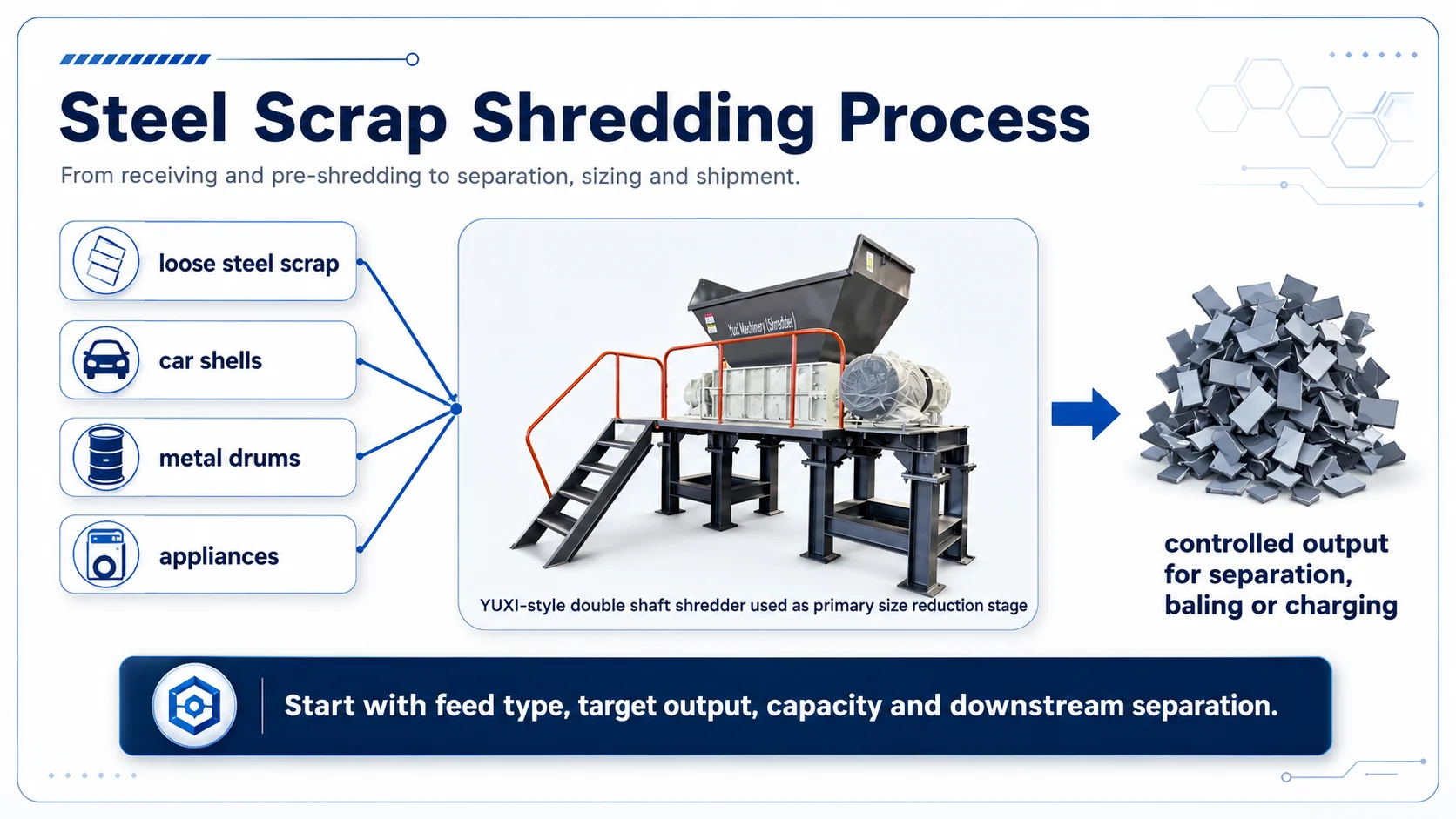
The steel scrap shredding process usually begins with receiving and inspection, and then feeds the material into a low-speed, high-torque shredder. The double-shaft shredder grabs bulky steel scrap, tears it and cuts it into rough pieces, and discharges the material onto the conveyors. After that, the line may use magnetic separation, secondary crushing, vibrating screening, air separation, eddy current separation, baling or direct shipment depending on the material mix and the buyer’s output target.
For light steel scrap, steel drums, color steel tiles, car shells, appliances and mixed industrial scrap, the most important process decision is not only the shredder model. The real decision is the whole sequence: feed control → primary shredding → separation → size control → safe maintenance → clean output.
Content distillation from the analyzed double-shaft shredder page
The product page provided for cluster analysis positions a double-shaft shredder as a low-speed, high-torque primary shredding machine for bulky and mixed materials. Its core messaging is built around metal scrap, plastic drums, tires, e-waste, wood pallets, MSW and other difficult materials. The page also emphasizes dual counter-rotating shafts, high-torque cutting force, automatic overload detection and reverse protection.
That search intent is very useful for this article. A buyer searching “Steel Scrap Shredding Process” is usually not asking for a simple definition. They want to know the position of the double-shaft shredder in the steel recycling line, what happens after shredding and what information the supplier needs before recommending a suitable machine. The analyzed product page also shows that the double-shaft shredder is usually a pre-shredder, not a final precision-sizing machine. Its job is to open, reduce and stabilize the feed before separation, crushing, screening, baling or further recycling.
Distilled angle: For this cluster page, the strongest answer is process-first. Explain the line from receiving to shipment, then show how the double-shaft shredder connects with magnetic separation, eddy current separation, screens, crushers and plant controls.
How YUXI product information fits the process
YUXI’s metal shredder is described for light scrap metals such as car shells, refrigerators, metal drums, waste color steel tiles, metal buckets, scrap steel and steel furniture. The published product description says the machine reduces large metal materials into smaller pieces for transportation and recycling, using shredding blades inside the box to tear, squeeze and shear the material before discharge.
For buyers building a steel scrap line, the most relevant YUXI details are:
- Primary size reduction: YUXI metal shredders are positioned to reduce bulky light metal scrap before transportation and recycling.
- Blade system: the moving knife material is described as special alloy tool steel forging blanks with precision machining, multiple heat treatments and low-temperature treatment.
- Replaceable knife choices: the YUXI product page lists knife thickness options such as 15 mm, 20 mm, 40 mm, 50 mm, 75 mm and 100 mm, with thickness and claw count selected according to material.
- Machine protection: YUXI notes overload or foreign-object protection in which the rotor can stop and reverse to reduce damage risk.
- Complete line thinking: YUXI’s Aluminum UBC Scrap Recycling Line shows a full layout using a double-shaft shredder, magnetic separator, vibrating screen, eddy current separator and central control system.
This article uses those public YUXI details to frame the steel scrap process as a system, not as an isolated shredder purchase.
Steel scrap shredding process: step-by-step
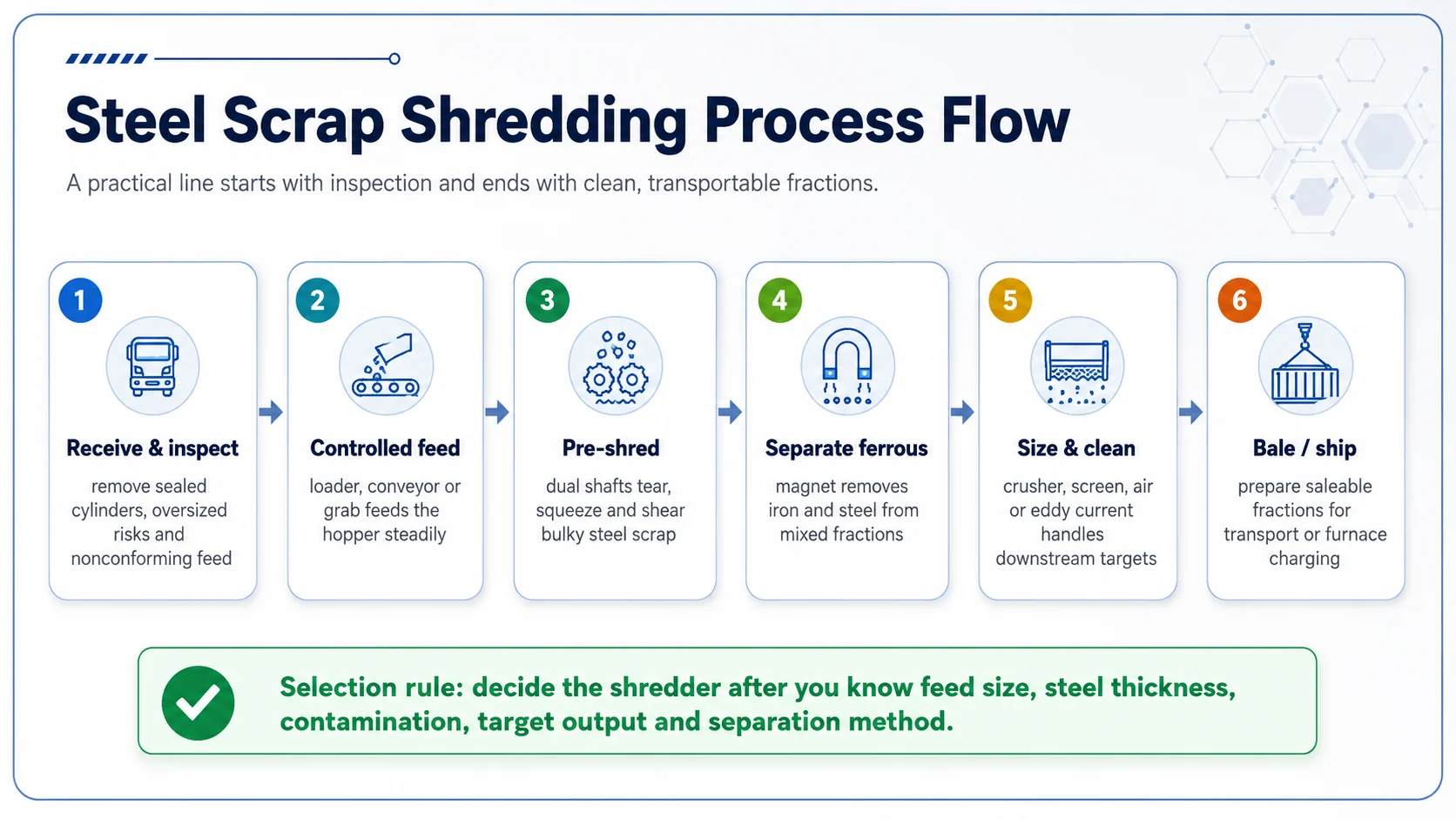
1. Receiving and feed inspection
The process starts before the shredder runs. Material type, size, wall thickness, contamination, closed containers, non-shreddable debris and high-risk objects should be visually checked. Steel barrels and buckets need special attention because residues can create fire, vapor or pollution hazards. Mixed industrial scrap may include castings, rubber, plastics, wire, non-ferrous metals, sealed cylinders or oversized parts.
Good inspection also protects the commercial value of the output. Clean ferrous scrap is easier to sell, easier to separate and less likely to damage downstream equipment.
2. Sorting and feed preparation
Before shredding, plants may sort material into light steel, car body scrap, appliances, drums, sheet scrap, mixed industrial scrap and non-ferrous-rich streams. Oversized material may need cutting, flattening or loader handling. The goal is not perfect sorting at this stage; the goal is stable feeding and risk control.
3. Controlled feeding into the double-shaft shredder
Steel scrap can be fed by loader, grab, conveyor or controlled hopper. For bulky materials, stable feeding is more important than repeatedly relying on overload protection. If too much material enters the hopper at once, the shredder may reverse frequently, heat the drive system, increase blade wear and reduce hourly output. A controlled feeding rhythm protects the cutter stack and improves downstream consistency.
4. Primary shredding: grip, tear, squeeze and shear
In a double-shaft shredder, two counter-rotating shafts pull steel scrap into the cutting chamber. Cutter discs and hooks grip irregular pieces and tear, squeeze and shear them into rough fragments. This low-speed, high-torque action is well suited to steel scrap. The goal is to open bulky material so magnets, screens, eddy current separators, crushers and balers can work efficiently.
5. Discharge and conveying
After pre-shredding, material exits the machine to a conveyor or discharge point. At this stage, the output may still be rough. That is normal for a primary double-shaft shredder. The plant should decide whether the next step is magnetic separation, secondary crushing, screening, baling or direct transport.
6. Magnetic separation for ferrous recovery
Steel scrap lines commonly use a magnetic separator after shredding to remove ferrous material from a mixed stream. In aluminum-rich or appliance-rich streams, a magnet can remove iron and steel before the line uses eddy current separation, air separation or manual quality control.
7. Secondary sizing, screening and non-ferrous recovery
If the buyer needs a smaller or cleaner product, the line may add a hammer mill metal crusher, vibrating screen, air flow separator or eddy current separator. YUXI’s public UBC recycling line is a good example of this system logic: double-shaft shredding, magnetic separation, vibrating screening, eddy current separation and central control. For steel scrap, the same logic applies: choose downstream equipment after defining the output goal.
8. Baling, storage or shipment
The final material may be baled, loaded loose, sold as a prepared ferrous fraction, or moved to smelting/charging preparation. The best process is the one that meets the buyer’s size, purity, density, handling and transportation requirements at the lowest practical cost per ton.
How to select the shredder for steel scrap
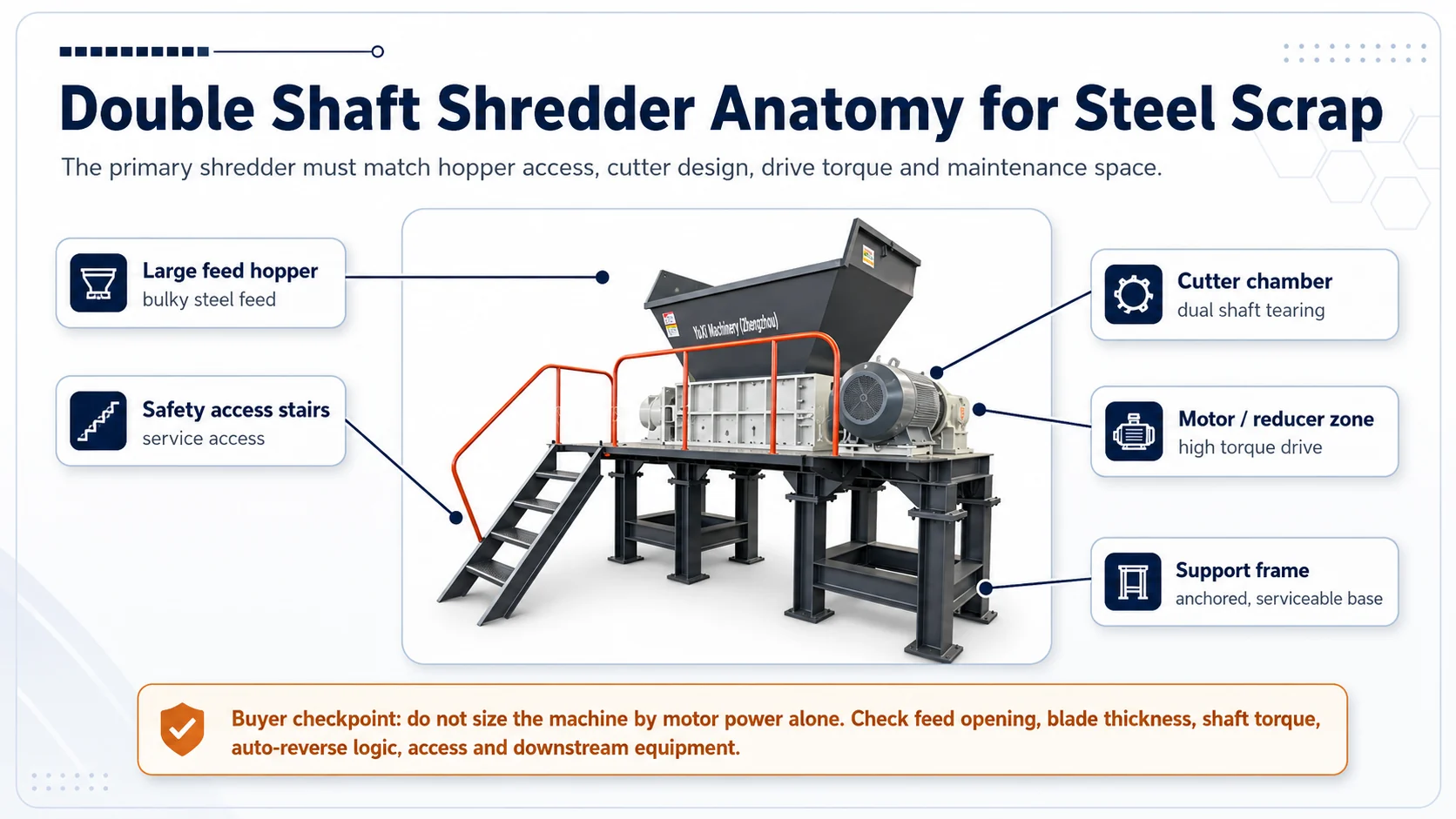
For steel scrap, do not select a shredder by motor power alone. Motor power is only one part of the system. The plant should also confirm:
- Feed opening and hopper design: car shells and appliances need different access than loose sheet scrap.
- Shaft torque and reducer design: tough, folded or mixed scrap requires torque reserve.
- Blade thickness and tooth count: light sheet, drums, appliances and mixed scrap may need different cutter geometry.
- Automatic reverse behavior: overload detection and reverse cycles help reduce jam damage but should not replace proper feed control.
- Maintenance access: blade inspection, cleaning, lifting and replacement need safe room around the machine.
- Downstream line equipment: magnets, crushers, screens, eddy current separators, air systems and balers should be planned together.
YUXI’s product photo also shows a practical point that many spec sheets miss: access stairs and service space are part of the equipment decision. A shredder that looks powerful on paper can become expensive to operate if maintenance access is difficult.
Steel scrap process matrix by material stream
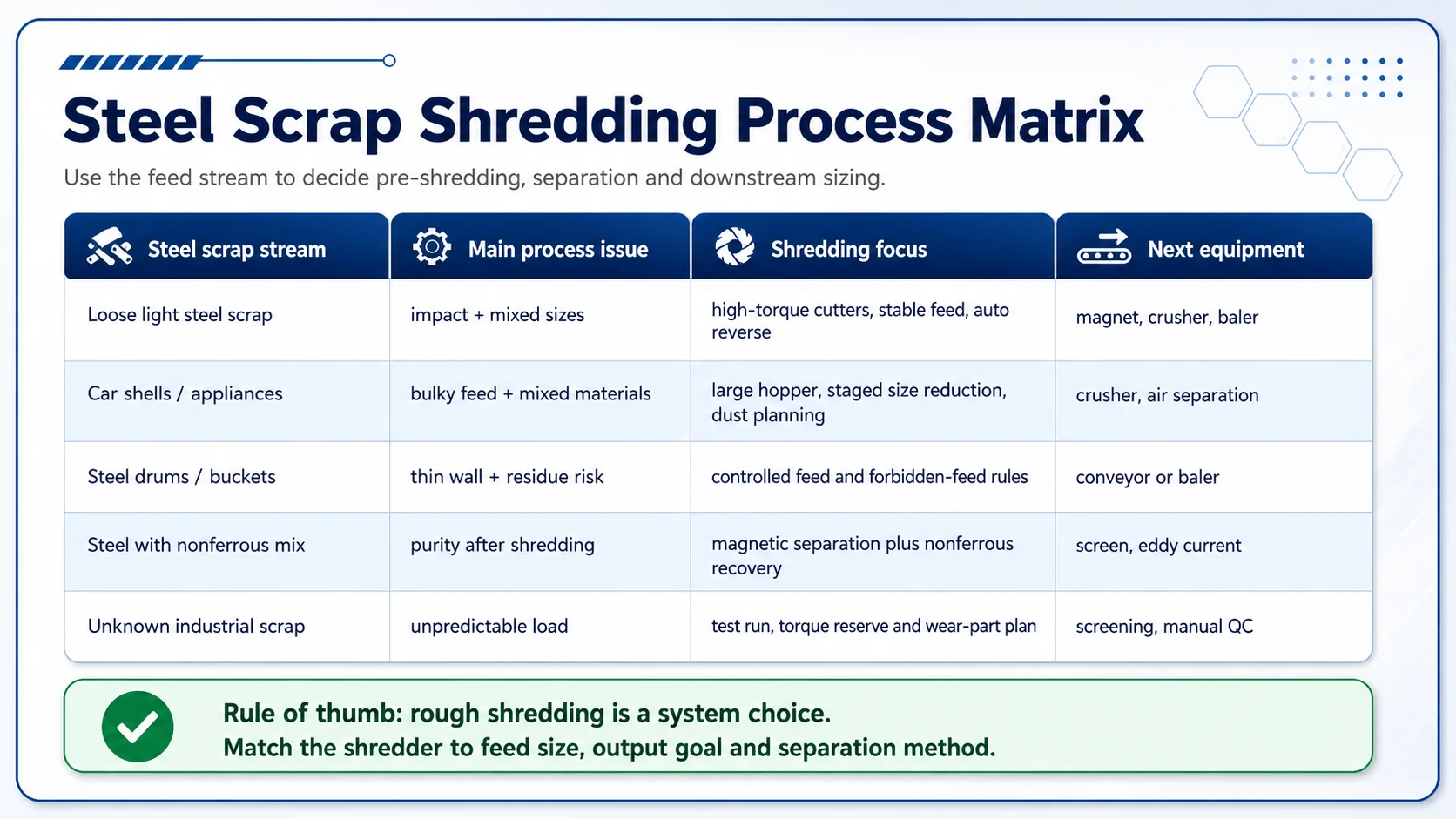
| Steel scrap stream | Main process issue | Shredding focus | Likely next equipment |
|---|---|---|---|
| Loose light steel scrap | Impact and mixed sizes | High-torque cutters, stable feed, auto reverse | Magnet, crusher, baler |
| Car shells / appliances | Bulky feed and mixed materials | Large hopper, staged reduction, line control | Crusher, air separation, dust removal |
| Steel drums / buckets | Thin wall and residue risk | Controlled feed and forbidden-feed rules | Conveyor or baler |
| Steel mixed with non-ferrous material | Purity after shredding | Magnetic separation plus non-ferrous recovery | Screen, eddy current separator |
| Unknown industrial scrap | Unpredictable load | Test run, torque reserve, wear-part plan | Screening, manual quality control |
The rule of thumb is simple: rough shredding is a system choice. Match the shredder to feed size, output goal and separation method.
What determines steel scrap output quality?
Output quality depends on more than the shredder. A good steel scrap process controls:
- Feed pollution: rubber, plastics, insulation materials, non-ferrous metals, dirt and sealed items will change the process.
- Particle size: rough debris may be enough for transportation or packaging; smaller materials may need a crusher or hammer crusher.
- Ferrous purity: magnets are critical when the stream contains aluminum, copper, stainless steel or plastic.
- Downstream capacity: the shredder should not overload conveyors, screens, separators or balers.
- Operating records: overloads, jams, blade wear and foreign-object incidents reveal whether the process is stable.
World Steel Association materials describe ferrous scrap recycling as one of the world’s largest recycling activities. That scale is the reason process quality matters. Every extra contamination problem or unplanned shutdown affects transportation, grading, furnace preparation and recovery value.
U.S. safety and maintenance checkpoints
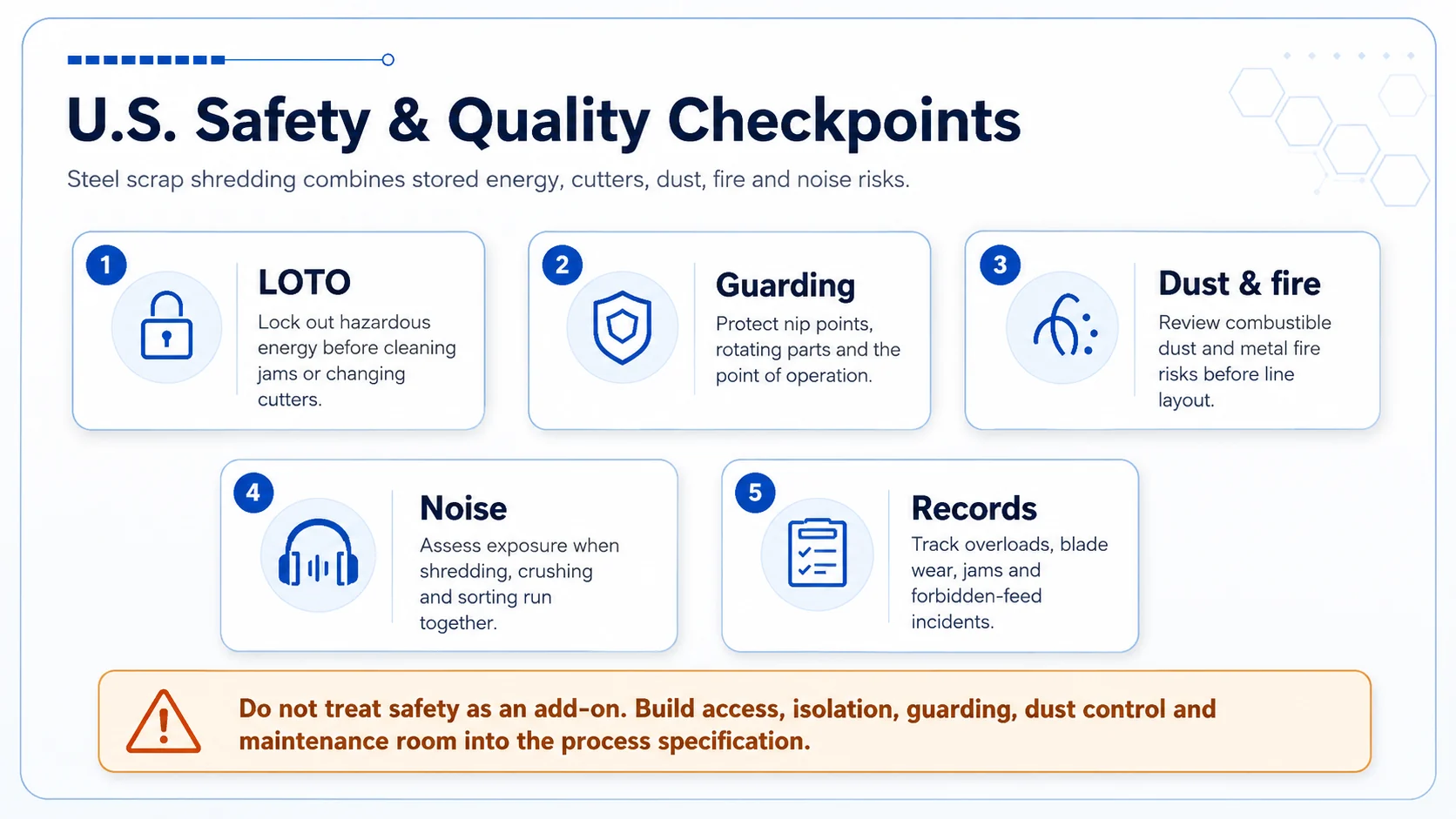
Steel scrap shredding combines high torque, sharp cutters, stored energy, suspended loads, moving conveyors, dust, fire risk and noise. For U.S. facilities, safety should be built into the process specification rather than added after installation.
OSHA’s scrap metal recycling resources highlight hazards including moving machinery, unexpected startup, combustible dust, falls and mobile equipment. OSHA’s lockout/tagout standard, 29 CFR 1910.147, applies to servicing and maintenance where unexpected energization, startup or release of stored energy could injure workers. OSHA’s machine-guarding standard, 29 CFR 1910.212, requires protection from hazards such as points of operation, ingoing nip points, rotating parts, flying chips and sparks.
Noise also needs attention. NIOSH recommends an exposure limit of 85 dBA averaged over eight hours. If shredding, crushing, conveying and sorting operate together, evaluate the line as a combined noise environment. Fire and dust planning is also important, especially where aluminum, magnesium or fine metal dust may be generated. Review NFPA 484 together with applicable fire codes and insurer requirements.
Practical safety instructions: before commissioning or maintenance, define lockout points, guarding, access platforms, cleaning methods, prohibited feed, emergency stops, dust collection, fire response, blade-lifting tools and maintenance permits.
Quote checklist: what to send YUXI before choosing the process
A useful quotation should be based on your real material, not only a generic capacity request. Prepare the following information before asking for a steel scrap shredding process proposal:
- Feed material photos or short video.
- Material type: car shells, steel drums, sheet scrap, appliances, color steel tiles, mixed industrial scrap or other.
- Largest feeding size and average wall thickness.
- Hourly or daily capacity target.
- Target output size and whether rough output is acceptable.
- Required output routes: conveyor, crusher, magnet, screen, eddy current separator, baler or furnace charging.
- Pollution details: non-ferrous metals, plastics, rubber, dirt, insulation materials, sealed containers or residues.
- Factory voltage, footprint, dust/noise requirements and automation preferences.
- Maintenance access limits, spare-blade plan and operator skill level.
Need a steel scrap shredding process proposal?
YUXI can help configure the shredder and downstream equipment around your feed material, output goal and site conditions. For the fastest recommendation, send feed photos or video, maximum feeding size, target capacity, target output size and whether the line needs magnetic separation, eddy current separation, screening, crushing, dust control or baling.
Frequently Asked Questions: Steel Scrap Shredding Process
What is the first step in the steel scrap shredding process?
The first step is receiving and inspection. Operators check material type, size, contamination, sealed items, residues and non-shreddable objects before controlled feeding into the shredder.
Why use a double-shaft shredder for steel scrap?
A double-shaft shredder is useful when the first task is to open bulky, mixed or irregular steel scrap. Its low-speed, high-torque action grips and shears the material into rough pieces for downstream separation, crushing, baling or transport.
Is magnetic separation always needed after steel scrap shredding?
Magnetic separation is common when the shredded stream contains mixed materials or the plant needs a cleaner ferrous fraction. The exact layout depends on the feed and the required output quality.
What output size should a steel scrap shredder produce?
A primary double-shaft shredder usually produces rough output rather than a precise particle size. If a smaller or more uniform size is required, the line may need a secondary crusher, hammer mill or screen.
What information is needed for a steel scrap shredding line quote?
Send feed photos or video, material type, largest feeding size, capacity target, target output size, downstream equipment needs, contamination details, plant voltage and available footprint.
Sources and authority references
- Double Shaft Shredder product page analyzed for cluster intent — low-speed, high-torque positioning, dual counter-rotating shafts, primary shredding stage and overload/reverse protection messaging.
- YUXI Metal Shredder product page — applications, working principle, blade details, knife thickness options and overload protection context.
- YUXI Aluminum UBC Scrap Recycling Line — double-shaft shredder, magnetic separator, vibrating screen, eddy current separator and central control system context.
- YUXI Eddy Current Separator — non-ferrous recovery and separation principle context.
- OSHA Scrap Metal Recycling — U.S. scrap recycling hazards and precautions.
- OSHA 29 CFR 1910.147 — control of hazardous energy during servicing and maintenance.
- OSHA 29 CFR 1910.212 — general machine-guarding requirements.
- CDC/NIOSH Occupational Hearing Loss — hazardous noise and the NIOSH 85 dBA recommended exposure limit.
- NFPA 484 — combustible metals standard development page.
- World Steel Association scrap fact sheet — ferrous scrap recycling context.