




 Request Quote



In this guideQuick answerProduct analysisWorking principleSelection factorsRecycling line designU.S. safety notesFAQ
Quick answer: what is an industrial metal shredder?
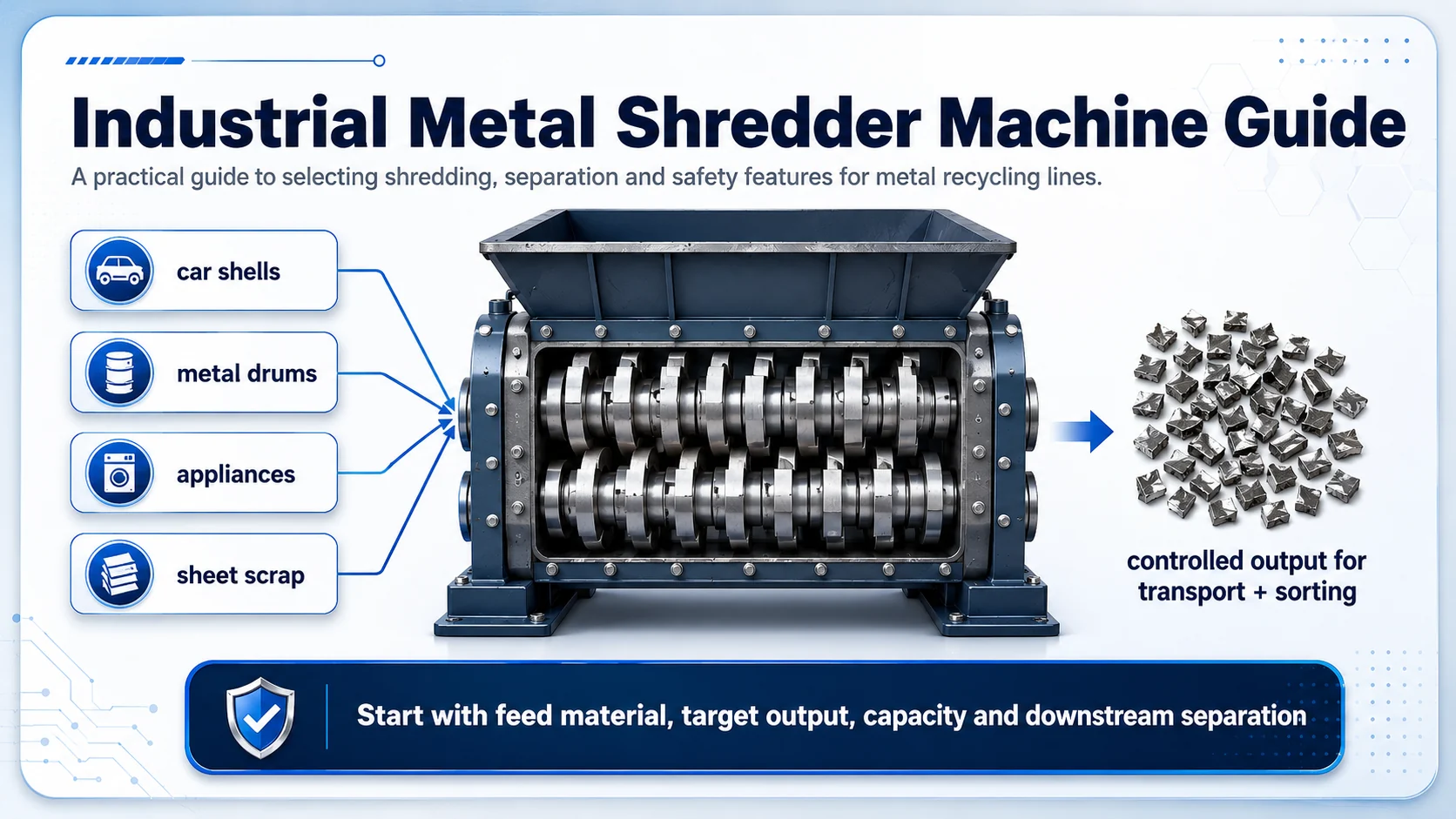
An industrial metal shredder is a heavy-duty size-reduction machine. It uses high-torque cutter shafts and wear-resistant blades to tear, squeeze and cut metal scrap into smaller pieces for transportation, separation or recycling. In most scrap plants, it is not a stand-alone “magic box.” It is the first stage of a process that may include conveyors, magnetic separation, eddy current separation, hammer mill crushing, screening, dust removal and baling.
For light and medium metal recycling, the most common starting point is a double shaft metal shredder. It accepts large or irregular feed, grips material between two counter-rotating shafts, and produces rough shredded pieces. If the plant needs more uniform output, the shredder is usually followed by a crusher, hammer mill, screen or sorting system.
Product analysis: what buyers are really looking for
The analyzed product page for a double shaft shredder presents the machine as a low-speed, high-torque industrial shredder for bulky waste reduction and mixed material recycling. It highlights metal scrap, plastic drums, tires, e-waste, wood pallets, MSW and bulky waste; it also emphasizes dual counter-rotating shafts, high torque cutting force, automatic overload detection and reverse protection. That tells us the search intent is not only “metal shredder price.” The buyer is likely comparing a primary shredder for a recycling line.
Content distillation from the page suggests five buyer concerns:
- Machine role: Is the shredder a primary pre-shredder or a final sizing machine?
- Feed tolerance: Can it handle bulky, irregular, dirty or mixed material?
- Output expectation: Is rough 30–100 mm reduction acceptable, or does the line need secondary crushing or screening?
- Protection: How does the machine respond to overload, jam or foreign objects?
- Line integration: What comes after shredding: magnetic separator, eddy current separator, baler, crusher, granulator, tire line or RDF system?
This article turns those questions into a practical selection guide for YUXI’s metal recycling equipment cluster.
YUXI metal shredder product context
YUXI’s published metal shredder page positions the equipment for light scrap metals such as car shells, refrigerators, metal drums, waste color steel tiles, metal buckets, scrap steel and steel furniture. The working principle is direct: material enters the shredding box through the feeding system, the box carries shredding blades, and the material is reduced through tearing, squeezing and shearing before being discharged from the lower part of the box.
Several YUXI details are especially important for industrial buyers:
- Blade material: the moving knife is described as special alloy tool steel forging blanks with precision machining, multiple heat treatments and low-temperature freezing heat treatment.
- Blade thickness options: 15 mm, 20 mm, 40 mm, 50 mm, 75 mm and 100 mm, with knife thickness and claw count selected according to material.
- Overload protection: when the cutting unit is overloaded or foreign matter enters it, the rotor can automatically stop and reverse to reduce the risk of excessive feeding and damage.
For buyers, these points are more important than the name of a single model. The correct industrial metal shredder depends on the material flow, blade configuration, shaft strength, hopper design, feeding method, required output size and downstream recycling process.
How does the industrial metal shredder work?
A double-shaft metal shredder pulls material into two counter-rotating cutter shafts. The cutting hooks grip bulky scrap, pull it into the cutting chamber and reduce it through high-torque shearing and tearing. This is different from the high-speed hammer mill, which uses impact and repeated hammering to crush the material more aggressively.
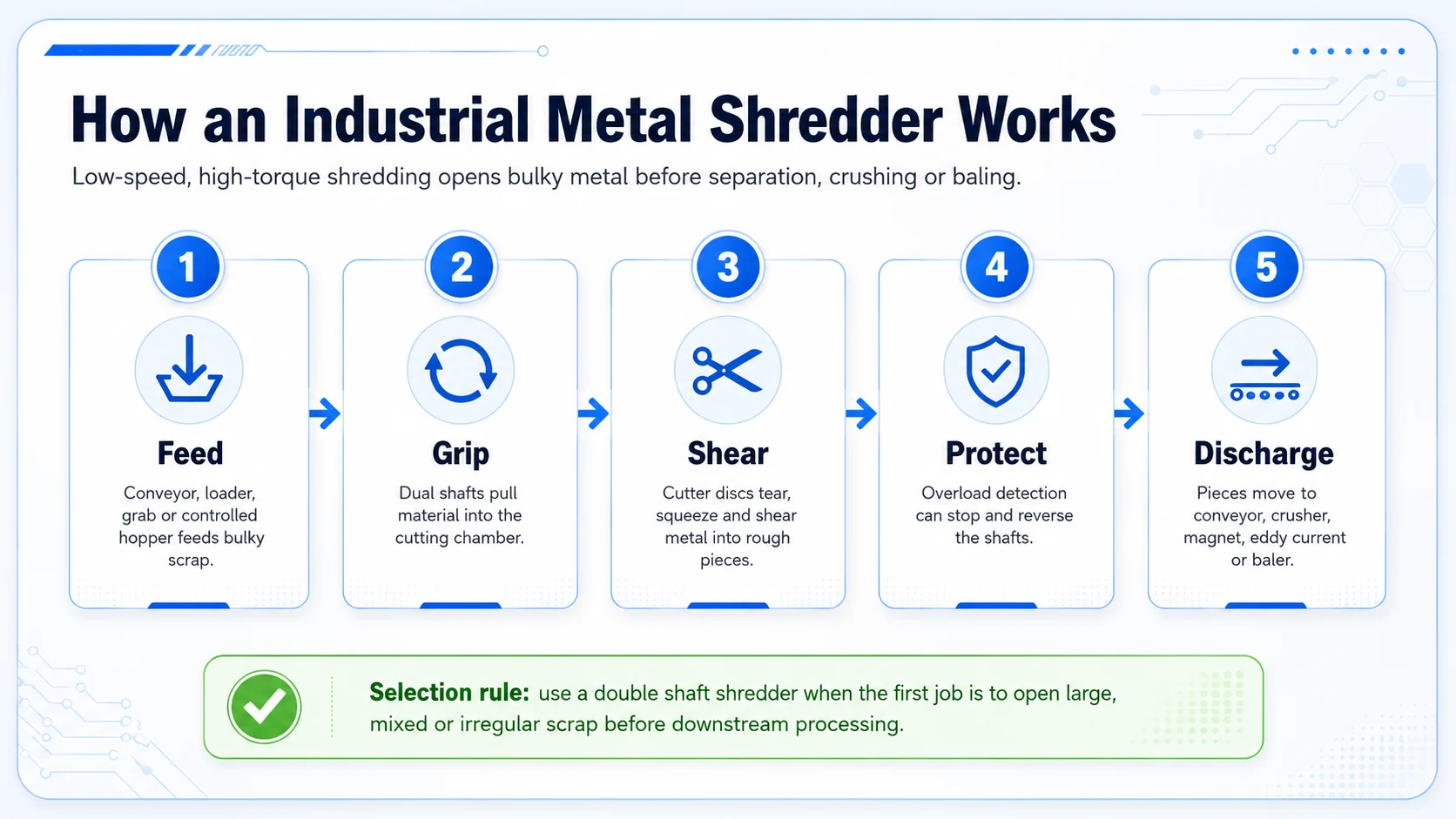
The working sequence is usually:
- Feed: scrap is loaded by conveyor, grab, loader or controlled hopper.
- Grip: the two shafts rotate toward each other and pull material downward.
- Shear: cutter discs, spacers and counter blades tear and squeeze the material.
- Protect: when torque rises too high, a PLC-controlled system may stop and reverse the shafts.
- Discharge: shredded pieces fall to a conveyor or into downstream equipment.
The output is usually rougher than a screen-controlled single shaft or four shaft shredder. That is not a weakness when the main goal is to open bulky material before separation. For metal recycling, rough pre-shredding often improves conveyor feeding, magnetic separation and secondary crushing efficiency.
How to choose an industrial metal shredder machine
Do not start with motor power alone. A practical specification starts with the material. A 200-liter drum, a refrigerator shell, a flattened car body panel, aluminum UBC bales and mixed industrial scrap may all need different blade thickness, cutter hooks, shaft torque and downstream layouts.
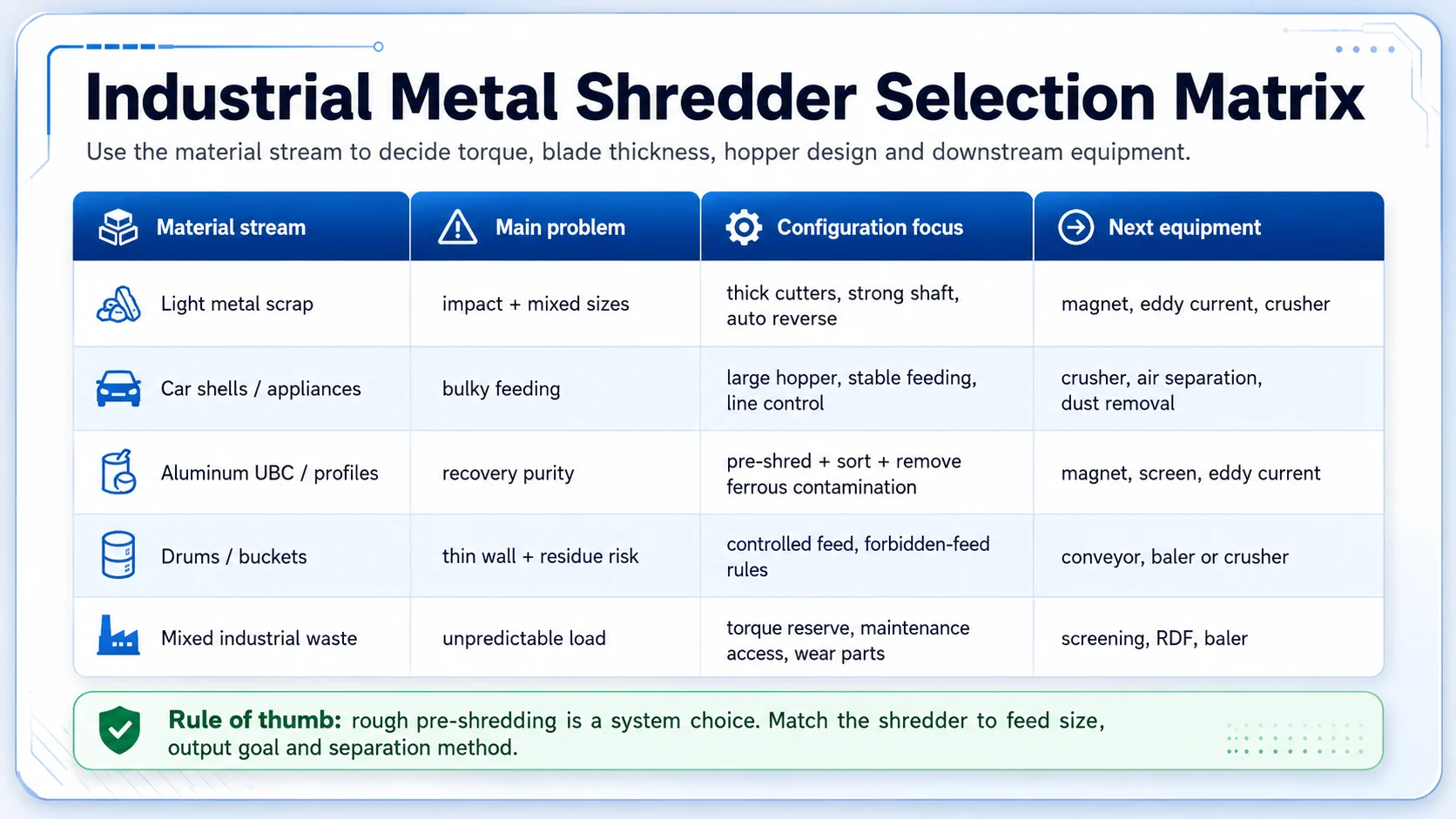
| Selection factor | Why it matters | What to send YUXI |
|---|---|---|
| Material type | Determines blade profile, torque reserve, hopper design and wear rate. | Material name, photos and a short feeding video. |
| Largest feed size | Controls hopper opening, chamber width and feeding method. | Maximum length, width, thickness and bulk density. |
| Target output size | Double shaft shredders make rough output; uniform sizing may need crusher or screen. | Required range, final use and downstream equipment. |
| Capacity | Hourly and daily throughput affect model size, motor power and conveyor design. | Expected tons per hour, shift length and working days. |
| Downstream process | Metal recovery depends on magnets, eddy current separators, screens, crushers and balers. | Ferrous/nonferrous recovery target and final sale form. |
| Site conditions | Voltage, footprint, foundation, dust, noise and maintenance access affect final layout. | Plant drawings, voltage, feeding method and local requirements. |
Double shaft, single shaft and four shaft metal shredders
Buyers often compare the name of the shredder, but a better comparison is the work performed by each machine.
| Machine type | Best role | Output control | Typical use |
|---|---|---|---|
| Double shaft shredder | Primary size reduction for bulky or mixed scrap | Rough output, mostly controlled by blade thickness and material behavior | Car shells, drums, appliances, aluminum scrap, light metal scrap, pallets, MSW |
| Single shaft shredder | Controlled secondary sizing | More uniform, screen-controlled output | Plastic, rubber, timber, paper and selected preprocessed scrap |
| Four shaft shredder | Higher reduction ratio and finer shredding | Screen-controlled output with internal recirculation | E-waste, composite packaging and applications requiring more uniform sizing |
| Hammer mill metal crusher | Secondary crushing and liberation after pre-shredding | Smaller, more liberated output | Scrap metal cleaning, separation and smelting preparation |
For many metal projects, the best layout is not “one machine only.” A double shaft shredder opens the material; then a hammer mill metal crusher, magnetic separator, air separator or eddy current separator improves recovery and product quality.
Industrial metal shredder in a complete recycling line
YUXI’s Aluminum UBC Scrap Recycling Line shows how a shredder can fit into a larger process. The line is described as an integrated system for shredding, crushing, screening and sorting scrap metal, designed to recover ferrous, non-ferrous and non-metallic materials. Its working process includes a double shaft shredder, magnetic separator, vibrating screen, eddy current separator and central PLC control system.
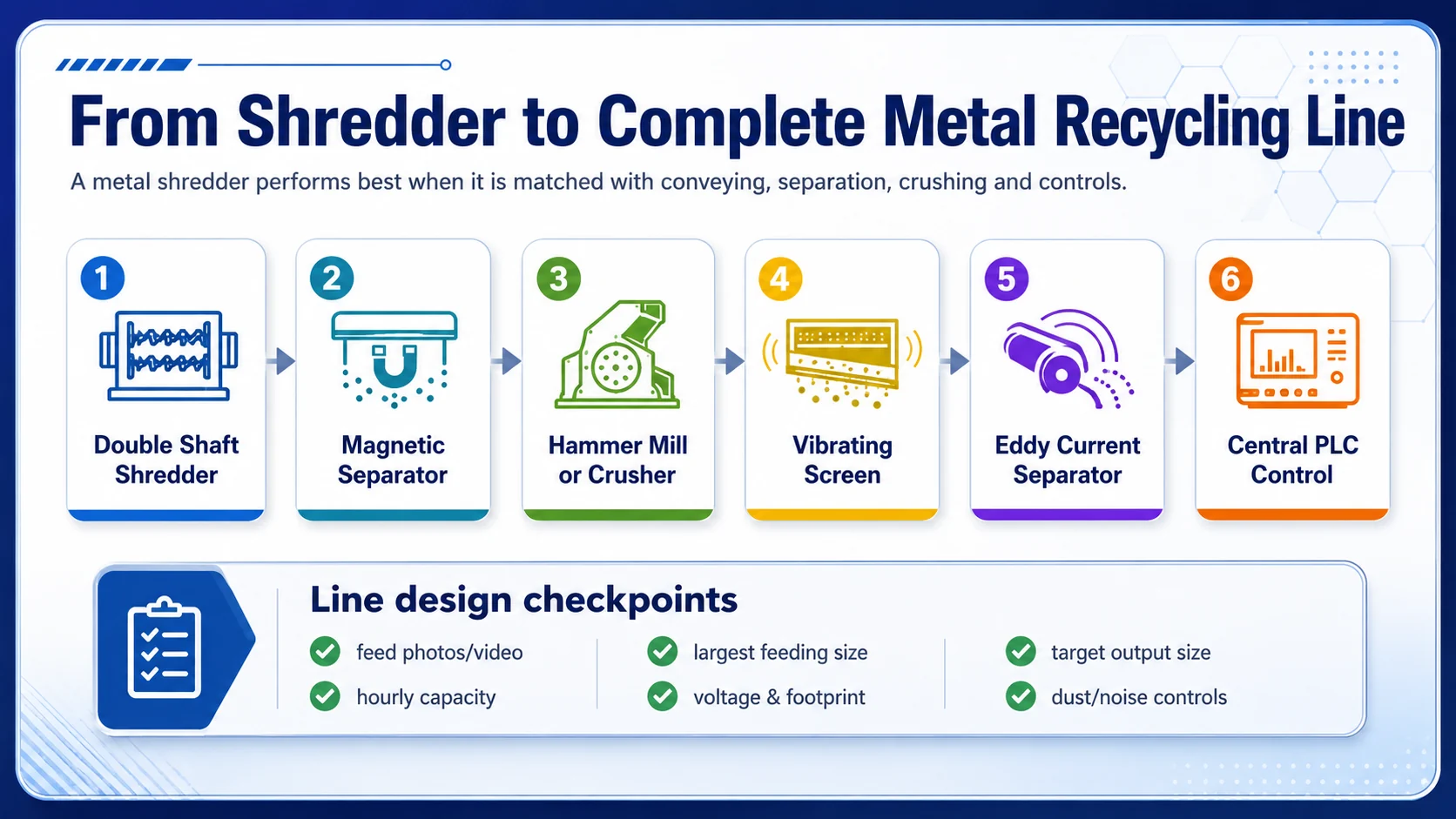
This line-design mindset also applies to car shell, refrigerator, drum and light scrap metal recycling. The shredder should prepare material for the next step rather than trying to solve every problem alone. A good industrial metal shredder specification should answer:
- Will the shredded material go to a magnetic separator immediately?
- Does the plant need eddy current separation for aluminum and copper recovery?
- Is a hammer mill crusher needed to improve metal liberation?
- Should dust removal be designed into the line from the beginning?
- How will the operators access the blades, shafts, gearboxes, guards and conveyors for maintenance?
Safety and compliance for U.S. recycling facilities
Industrial metal shredders involve stored energy, rotating shafts, pinch points, sharp knives, flying chips, heavy maintenance parts, dust and noise. In the United States, this guide should be read together with applicable OSHA requirements, fire codes, insurer requirements and local regulations.
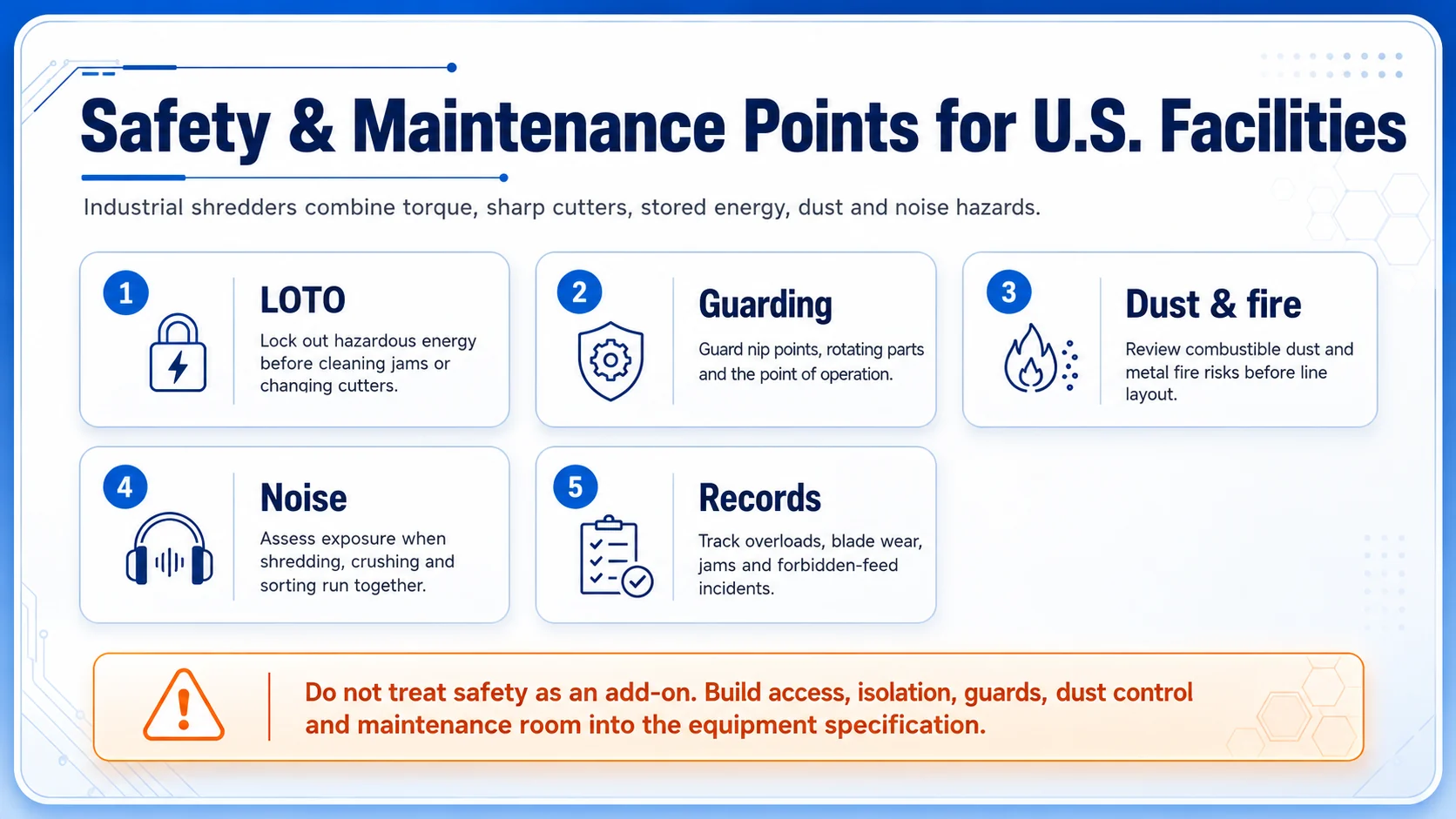
Key safety planning points include:
- Lockout/tagout: cutter inspection, unjamming, cleaning, lubrication and blade replacement may expose workers to unexpected startup or stored energy.
- Machine guarding: feeding openings, rotating parts, nip points, drive components, discharge conveyors and maintenance access points need appropriate guarding and procedures.
- Flammable dust and fire risk: aluminum, mixed metals, coatings and residues should be examined during dust collection and housekeeping design.
- Noise: shredding, crushing, conveying and sorting may be combined into hazardous exposure, so measurement and controls should be planned.
- Maintenance access: A machine that cannot be safely opened, lifted, isolated and cleaned will eventually cause downtime and unsafe shortcuts.
Where this article fits in the metal shredder topic cluster
This guide should serve as the broad cluster entry page for industrial metal shredder buying intent. It can link down to more specific support articles:
- How Does a Metal Shredder Work?
- Metal Shredder Maintenance Guide
- Metal Shredder Blade Materials
- Types of Metal Shredders
- Metal Shredder Machine Price Guide
- Metal Shredder vs Hammer Mill Crusher
The product CTA should point to YUXI’s metal shredder and relevant recycling line pages, while support articles answer long-tail questions about blades, maintenance, working principle, price and application.
Need an industrial metal shredder recommendation?
Send YUXI the material name, photos or video, largest feed size, target output size, required capacity, working hours, voltage, country, downstream process and site layout. For metal recycling projects, include whether the goal is volume reduction, ferrous recovery, nonferrous recovery, furnace preparation or a complete sorting line.
FAQ: Industrial metal shredder machine guide
What is the best industrial metal shredder machine?
The best machine depends on the material flow, feed size, capacity, target output and downstream process. Double-shaft shredders are usually the first choice for bulky or mixed metal scrap that needs rough pre-shredding.
Can industrial metal shredders process cars and refrigerators?
YUXI positions its metal shredder for light scrap metals including car shells, refrigerators and metal drums. Model size, blade thickness, shaft strength and downstream equipment should be confirmed before purchase.
Does a metal shredder need a hammer mill after it?
Not always. If rough volume reduction is enough, a shredder may discharge to a conveyor, magnet or baler. If better liberation and smaller output are required, a hammer mill metal crusher or secondary crusher may be added.
What information is needed for a shredder quotation?
Prepare material name, photo or video, maximum feed size, target output size, hourly capacity, working time, voltage, country, site layout and downstream sorting requirement.
Is the double-shaft shredder better than the single-shaft shredder?
It is more suitable for bulky, mixed or difficult feed that needs to be roughly pre-chopped. When the project requires a more uniform screen-controlled output, a single-shaft shredder is usually more suitable.
Sources and authority references
- Double Shaft Shredder Machine product page — analyzed for product positioning, buyer intent, applications, working principle, model-selection logic and content gaps.
- YUXI Metal Shredder — product applications, working principle, blade material, knife thickness options and overload reverse protection.
- YUXI Aluminum UBC Scrap Recycling Line — integrated shredding, crushing, screening, sorting and PLC control context.
- OSHA Scrap Metal Recycling — U.S. scrap recycling hazards including moving parts, unexpected startup, combustible dust, fire and explosion.
- OSHA 29 CFR 1910.147 — management of dangerous energy sources while machines undergo servicing and maintenance.
- OSHA 29 CFR 1910.212 — baseline safety guard standards for all mechanical equipment.
- CDC/NIOSH Occupational Hearing Loss — hazardous noise and NIOSH 85 dBA recommended exposure limit.
- NFPA 484 — combustible metals standard development reference.