




 Request Quote



Many buyers mix up metal shredder, hammer mill and scrap metal crusher when inquiring equipment. In real recycling projects, they are not the same machine.
A metal shredder is usually the first machine used to reduce bulky scrap. It grabs, tears and shears material at low speed with high torque. A hammer mill crusher works differently. It uses high-speed impact to break already sized material into smaller, denser pieces.
So the real question is not which machine is “better”. The real question is: what material are you processing, what output size do you need, and where will the machine sit in your recycling line?
This guide compares both machines from a buyer’s point of view. We’ll look at working principle, applications, output size, maintenance, energy use, full line configuration and how to choose the right option for your scrap metal recycling project.
Quick Answer: Shred First, Hammer Mill Second
Most scrap yards shred bulky mixed scrap first; hammer mills follow for finer, denser finished material.
This is why many complete metal recycling lines do not choose one machine only. They use both machines in sequence. The shredder protects the downstream equipment by reducing large scrap first. The hammer mill then refines the pre-shredded material when the project needs smaller and cleaner output.
What Is a Metal Shredder?
Metal shredders are low-speed high-torque shear machines for bulky scrap. Double-shaft models suit mixed scrap best.
Two counter-rotating shafts with alloy blades draw scrap into the chamber, tearing and shearing it. It handles big hollow, oddly shaped and mixed metal scrap really well.
It handles steel barrels, appliance casings, car panels, aluminum extrusions, thin metal sheets, mixed scrap and factory waste scraps. If your material won’t feed smoothly into fast-running equipment, start with a metal shredder for reliable processing.
YUXI’s Metal Shredder Machine is designed for scrap steel, aluminum scrap, steel barrels, refrigerators, vehicle panels and mixed metal waste. It can work as a standalone machine or as part of a complete metal recycling line.
What Is a Hammer Mill Crusher?
It’s a high-speed impact crusher. Fast spinning hammers strike and smash scrap instead of slow shearing. Screens or sorting gear adjust final fragment size.
Hammer mills are common for pre-shredded scrap that needs to be crushed down smaller. They can improve material density and help prepare scrap for separation or smelting preparation.
However, a hammer mill does not like every type of feed. Large hollow drums, full appliance shells or irregular car panels can create feeding and impact problems if they are not pre-shredded first. That’s why hammer mills always sit downstream of shredders, never the other way around.
Metal Shredder vs Hammer Mill Crusher: Key Differences
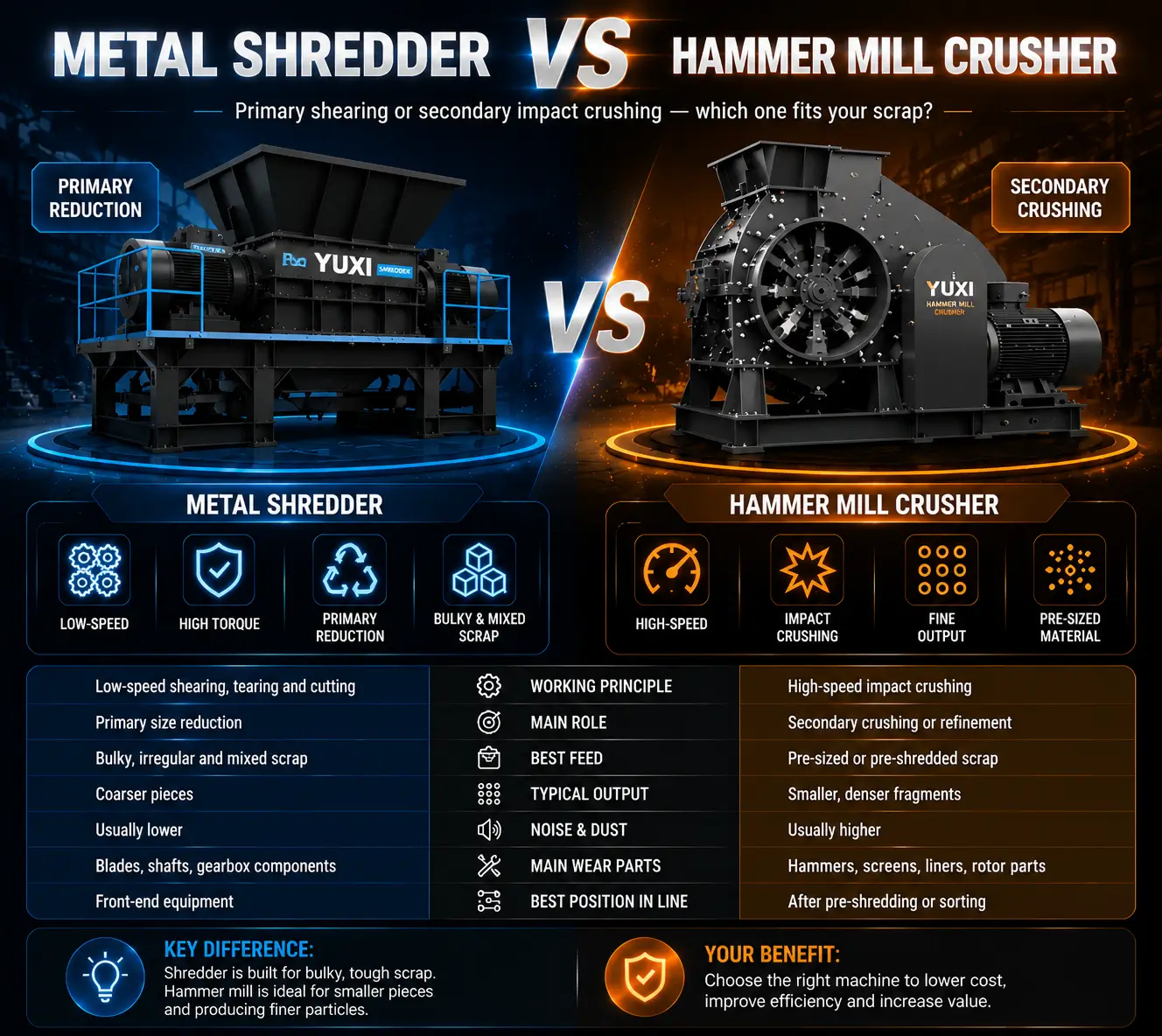
| Item | Metal Shredder | Hammer Mill Crusher |
|---|---|---|
| Working principle | Low-speed shearing, tearing and cutting | High-speed impact crushing |
| Main role | Primary size reduction | Secondary crushing or refinement |
| Best feed | Bulky, irregular and mixed scrap | Pre-sized or pre-shredded scrap |
| Typical output | Coarser pieces | Smaller, denser fragments |
| Noise and dust | Usually lower | Usually higher |
| Main wear parts | Blades, shafts, gearbox components | Hammers, screens, liners, rotor parts |
| Best position in line | Front-end equipment | After pre-shredding or sorting |
Working Principle Comparison
The difference starts from the way each machine applies force.
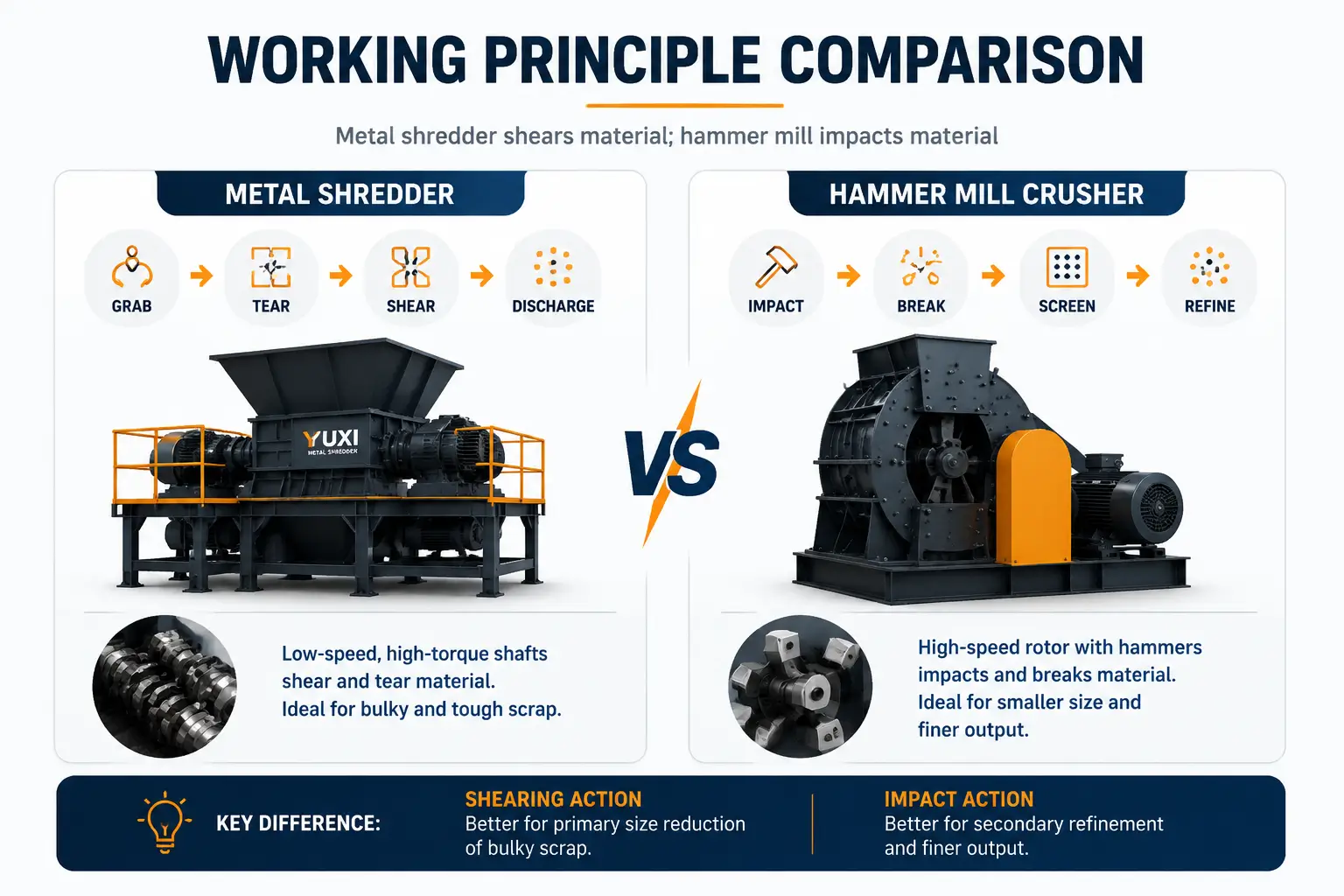
Metal Shredder: Grab, Tear and Shear
A metal shredder uses hooks or teeth on the blades to grab material. Once the material is pulled into the chamber, the rotating shafts apply strong shear force. The material is not smashed at high speed. It is pulled apart and cut down step by step.
That’s why shredders work great for hard-to-feed stuff like empty metal barrels, old appliance frames, car body sheets and all kinds of mixed scrap.
Hammer Mill Crusher: Smash, Crush & Refine
Hammer mills rely on fast impact force. Its rotor spins rapidly, and the hammers keep pounding the scrap nonstop. The metal gets smashed up when hitting hammers, inner liners and the screen mesh.
This is useful when you need finer output, better density or more prepared material for further separation.
Which Machine Fits Your Material?
The easiest way to choose between a metal shredder and a hammer mill crusher is to look at your feed material.
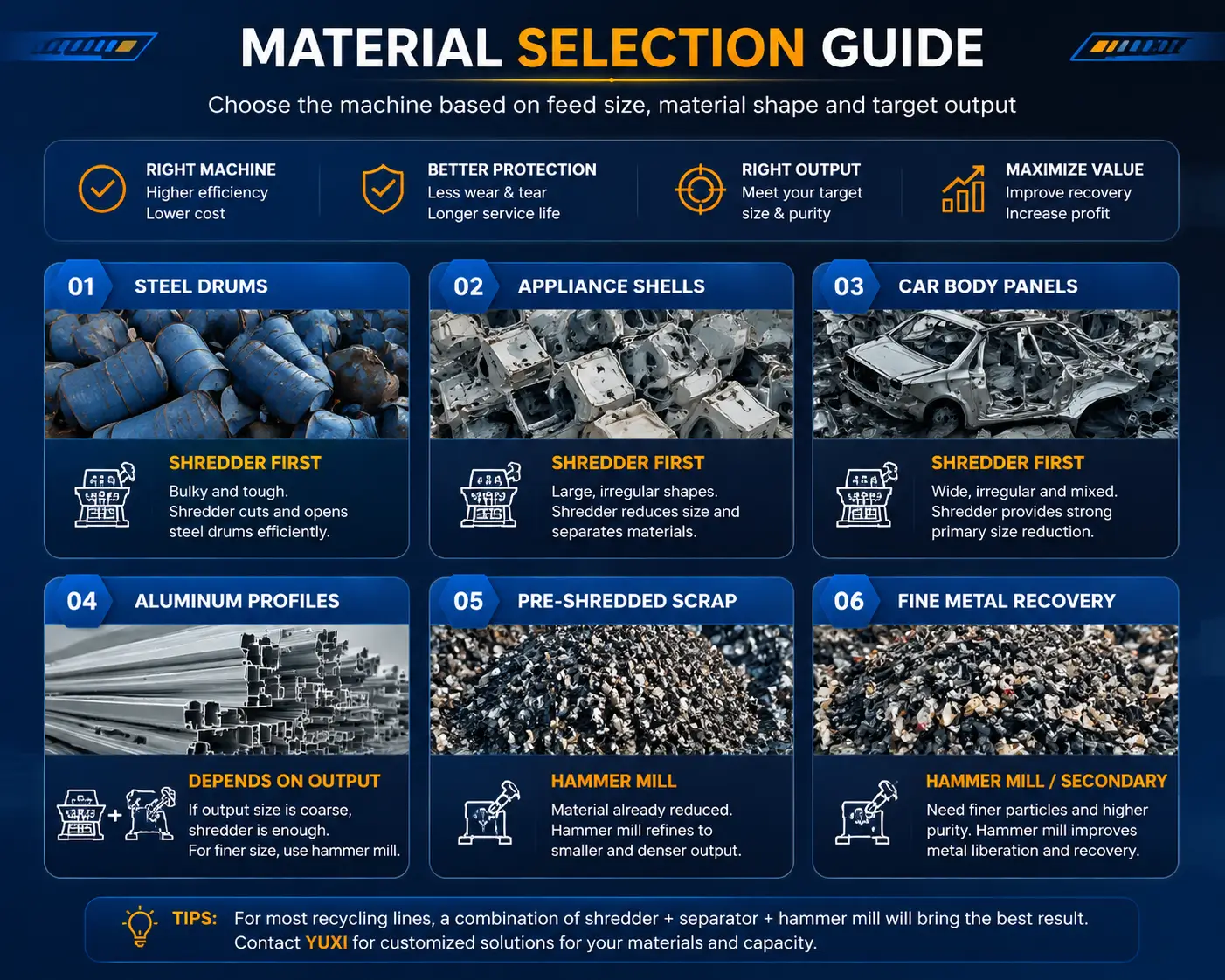
Steel Drums
Start with a metal shredder. Drums are hollow and can fold during processing, so high torque and strong grabbing force are important.
Appliance Shells
Use a shredder first. Refrigerators and washing machines contain mixed materials that need opening before separation.
Car Body Panels
Use a shredder first. Large panels are bulky and irregular, making them difficult to feed directly into a hammer mill.
Aluminum Profiles
Either machine may be used depending on output size. If the material is long and bulky, start with a shredder.
Pre-Shredded Scrap
A hammer mill crusher may be suitable when the material is already reduced and finer output is required.
Mixed Scrap Yard Waste
Start with a shredder. Mixed scrap changes every day, so a more flexible primary machine is usually safer.
Output Size and Material Quality
Output size is one of the most important differences. A metal shredder usually creates coarse, irregular fragments. This is often enough for volume reduction, transport, magnetic separation and further processing.
A hammer mill crusher usually produces smaller and denser material. This can be useful when the project requires better downstream separation, higher bulk density or smelting preparation.
However, smaller output is not always better. Finer crushing creates extra dust, faster part wear, higher power bills and more frequent maintenance. Match your scrap output size to your next recycling process.
Power, Noise, Dust & Upkeep
Both machines need regular care, but their worn-out parts aren’t the same.
Metal Shredder Upkeep
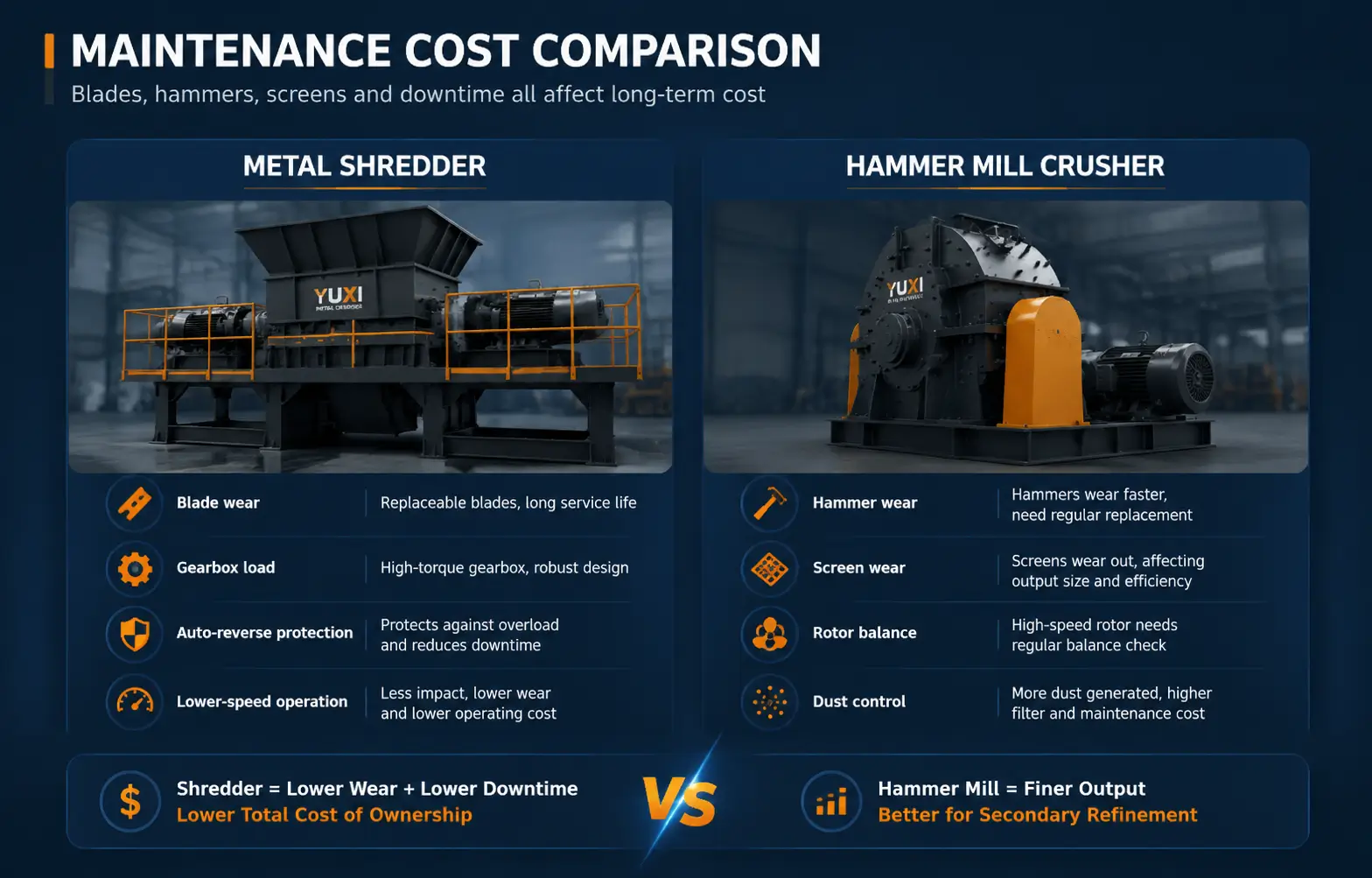
Key service parts: blades, shaft seals, bearings, gearboxes, hydraulics, electric components and overload guards. Shredders operate slower with much less harsh impact wear than hammer mills, but tough blades are a must.
Hammer Mill Maintenance
Hammer mills operate at higher speed, so hammers, screens, liners and rotor balance become important. Dust collection and noise control may also be more important in hammer mill systems.
Operating Cost Reality
Cheap machines don’t save money long-term. Frequent jams, quick wear and production shutdowns push up overall costs. Always check total ownership cost instead of just the base price.
Do You Need One Machine or a Complete Line?
In many scrap metal recycling plants, the answer is not “shredder or hammer mill”. The better question is how both machines fit into the full process.
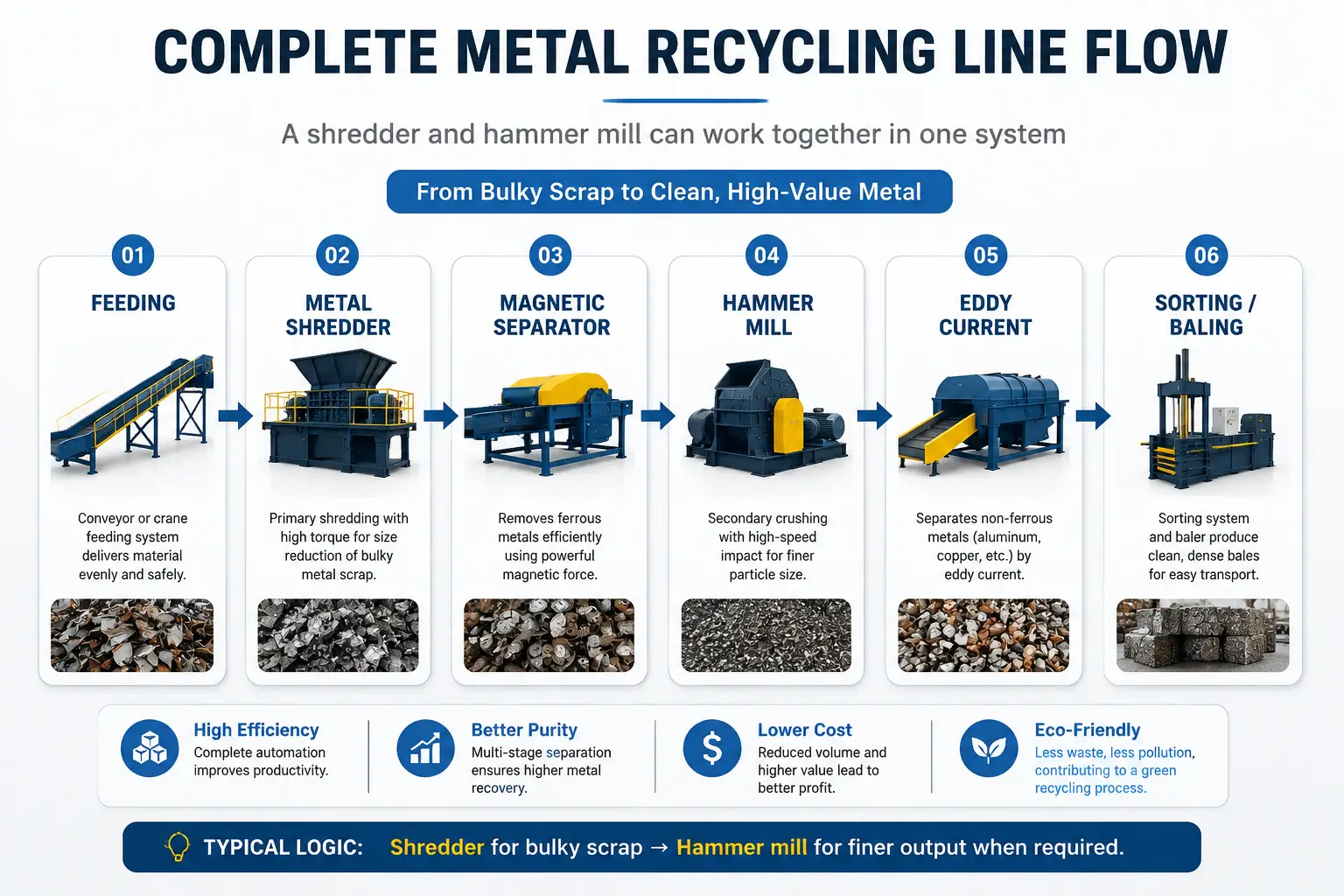
A typical system may include feeding equipment, primary metal shredder, magnetic separator, optional hammer mill crusher, eddy current separator, sorting platform and baling or smelting preparation system.
If your project only needs volume reduction, a standalone shredder may be enough. Full processing lines deliver better long-term value for cleaner separation and smaller finished scraps.
How to Choose the Right Machine
Before asking for a price, prepare the basic project information. This helps suppliers avoid guessing and helps you avoid buying the wrong machine.
| Question | Why It Matters |
|---|---|
| What material will you process? | Determines whether you need primary shearing or impact crushing. |
| What is the maximum feed size? | Determines chamber size, hopper design and feeding method. |
| What capacity do you need? | Determines motor power, shaft size and line configuration. |
| What output size do you want? | Determines whether secondary crushing is required. |
| Do you need separation equipment? | Determines whether the project should be a complete recycling line. |
| What is your plant layout? | Determines conveyors, discharge height and installation plan. |
Need help choosing between a shredder and hammer mill?
Send YUXI your material type, feed size, capacity target and output requirement. Our engineers can recommend a suitable machine or complete recycling line configuration.
Request a Project Recommendation →Why Choose YUXI Metal Shredder Machine
YUXI focuses on practical scrap metal recycling projects. For many customers, the starting point is not a hammer mill. It is a reliable double shaft metal shredder that can handle bulky, mixed and irregular scrap.
Our Metal Shredder Machine can be configured for scrap steel, steel drums, aluminum profiles, household appliance shells, car body panels and mixed metal waste.
Heavy-Duty Double Shaft Design
High torque and low-speed operation help the machine grab and tear bulky scrap more steadily.
Alloy Steel Blades
Blade thickness and structure can be selected according to material type and expected output size.
Overload Protection
Automatic reverse and overload protection help reduce jamming and protect core components.
Complete Line Support
YUXI can supply standalone shredders or help configure conveyors, magnetic separation, eddy current sorting and downstream handling equipment.
Final Recommendation
If your material is bulky, mixed, hollow or hard to feed, start with a metal shredder. If your material has already been reduced and you need finer, denser output, a hammer mill crusher may be the next step.
For many recycling plants, the best solution is not choosing one machine over the other. It is placing each machine in the correct position in the recycling line.
A shredder protects the line by handling difficult feed first. A hammer mill can then refine pre-sized material when the project requires it. The right choice depends on your raw material, capacity target, output size and downstream recovery plan.
FAQ
What’s the key difference between a metal shredder and hammer mill crusher?
Metal shredders cut bulky scrap slowly with huge torque for initial breakdown. Hammer mills spin fast and bash pre-shredded metal into finer pieces.
Which one runs first on metal recycling lines?
Shredders go first for most mixed scrap jobs, as they easily process big odd-shaped materials. Hammer mills get added later for smaller output sizes.
Can hammer mills handle steel drums?
Hammer mills only work on pre-processed scrap. Steel drums are bulky hollow items, so shredders handle them much better for steady feeding.
Can a hammer mill process car bodies?
A hammer mill is generally not the first choice for full car bodies or large vehicle panels. These materials usually need pre-shredding before secondary impact crushing.
Which machine produces smaller output?
Hammer mills churn out smaller, tighter scrap chunks than primary metal shredders, especially with built-in screen grates.
Which machine costs less to maintain?
It all comes down to your scrap type and running conditions. Shredders mostly need blade and gearbox upkeep, while hammer mills demand care for hammers, screens, rotor balance and dust systems.
Do you need both a shredder and hammer mill?
Pair them if you process large bulky scrap and need tiny uniform pieces for sorting or melting. Most full recycling lines run shredders first, then hammer mills for secondary processing.
Is a double shaft shredder suitable for appliance recycling?
Yes. A double shaft metal shredder is commonly used for appliance shells, refrigerators, washing machines and other bulky mixed materials before separation.
Can I use only a hammer mill for mixed scrap?
For mixed bulky scrap, using only a hammer mill is usually not ideal. A shredder helps reduce feed size and protects downstream equipment.
How to pick the right machine for your operation?
Figure out your scrap type, incoming size, hourly throughput, finished scrap size, site space, dust limits and sorting needs downstream first.
Industry References
Need a Metal Shredder for Your Recycling Project?
YUXI provides heavy-duty metal shredders and complete metal recycling solutions for scrap yards, appliance recycling plants, aluminum recycling projects and mixed metal waste processing lines.
View Metal Shredder Machine →