




 Request Quote



An agricultural waste recycling line is not a universal machine placed between a straw bale and a saleable product. It is a sequence of receiving, metering, size reduction, cleaning and discharge operations built around one documented feed envelope. Different agricultural residues can behave very differently during processing. Straw is usually lightweight and prone to bridging, while the moisture content of corn stalks can vary significantly depending on collection and storage conditions. Bagasse, by contrast, tends to form damp, compacted fibrous masses.
Start With the Process Boundary
“Recycling line” means the mechanical preparation system that receives crop residues and produces a controlled feedstock for another operation. EPA notes that chipping or grinding organic material before composting can reduce piece size and help decomposition, but pre-processing does not itself create finished compost.1
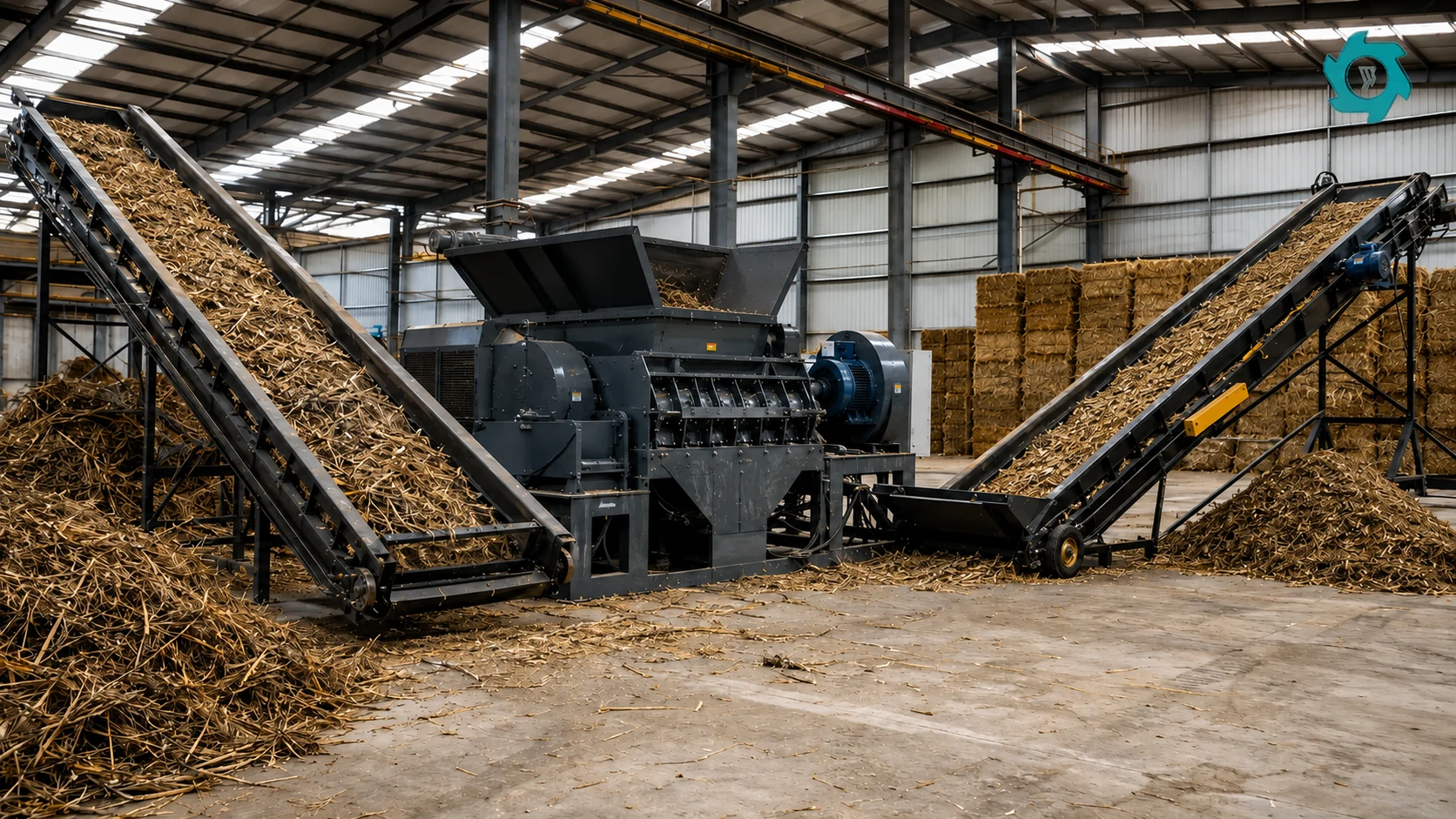
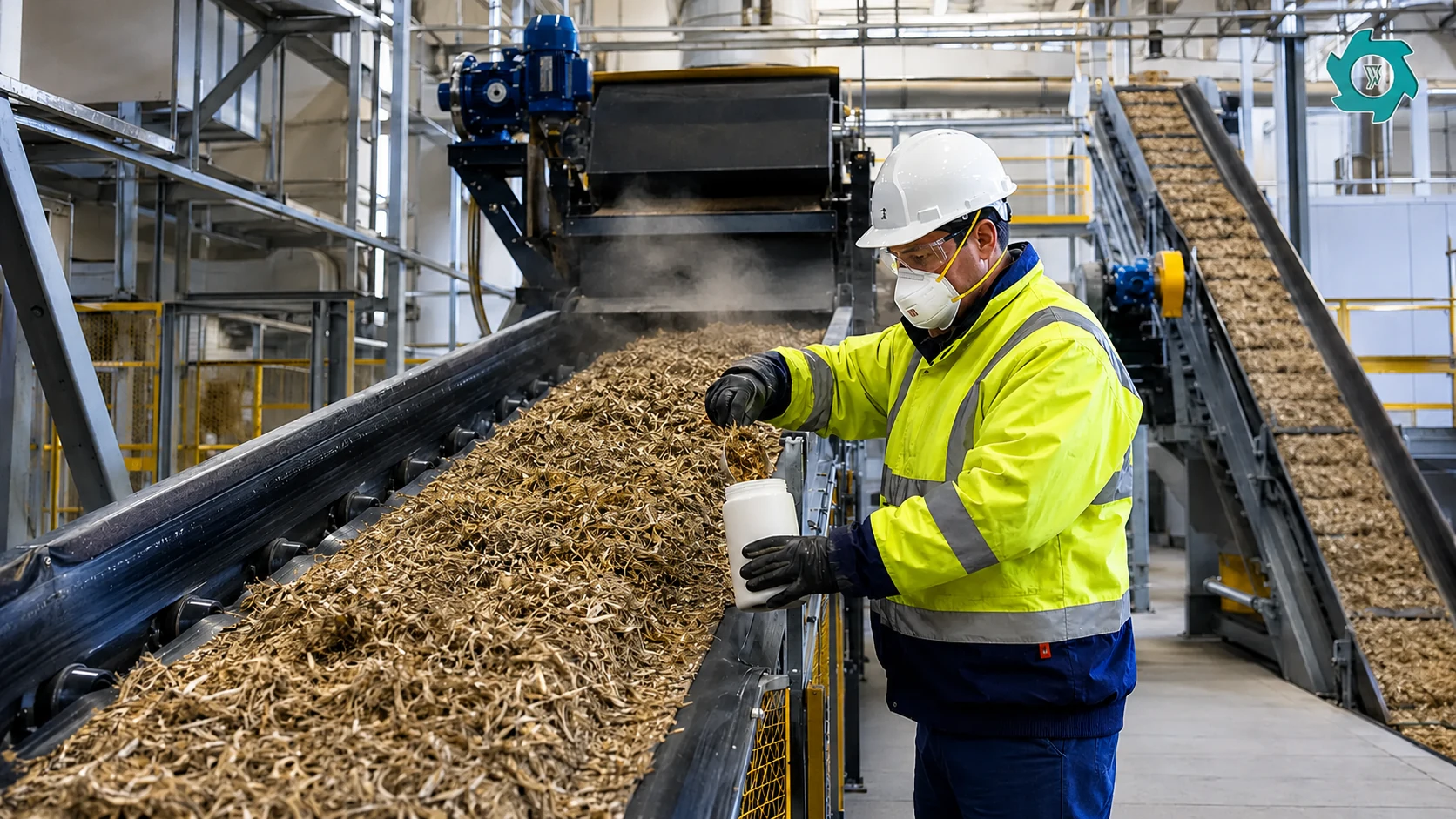
The current YUXI biomass shredding and recycling line mainly includes feeding and primary shredding, with separation, secondary processing, screening, dust control, and storage added as needed based on the feed material and final product requirements. It does not imply that a shredder alone produces pellets, briquettes, fertilizer or certified animal feed.
Design rule: use the coarsest prepared size that the receiving process accepts. Smaller is not automatically better; it usually means more energy, more wear, more fines and a greater dust-control duty.
Not Every Ton in the Field Is Available Feedstock
Keeping some crop residue in the field can reduce soil erosion caused by wind and rain, add organic matter to the soil, and help maintain nutrient cycling. USDA NRCS cautions that a sustainable removal rate is site-specific and changes with crop yield, soil type, climate, slope, tillage and other conservation practices.2
Ask feedstock suppliers to distinguish four quantities: residue produced, residue required to remain for soil protection, residue lost during collection and storage, and material actually delivered within the plant specification. The line should be sized from the last quantity and its seasonal delivery pattern—not from a regional headline tonnage.
Usable annual feed = sustainably collectable residue − collection/storage loss − rejected or off-spec deliveries
Define the Feed Before Selecting Equipment
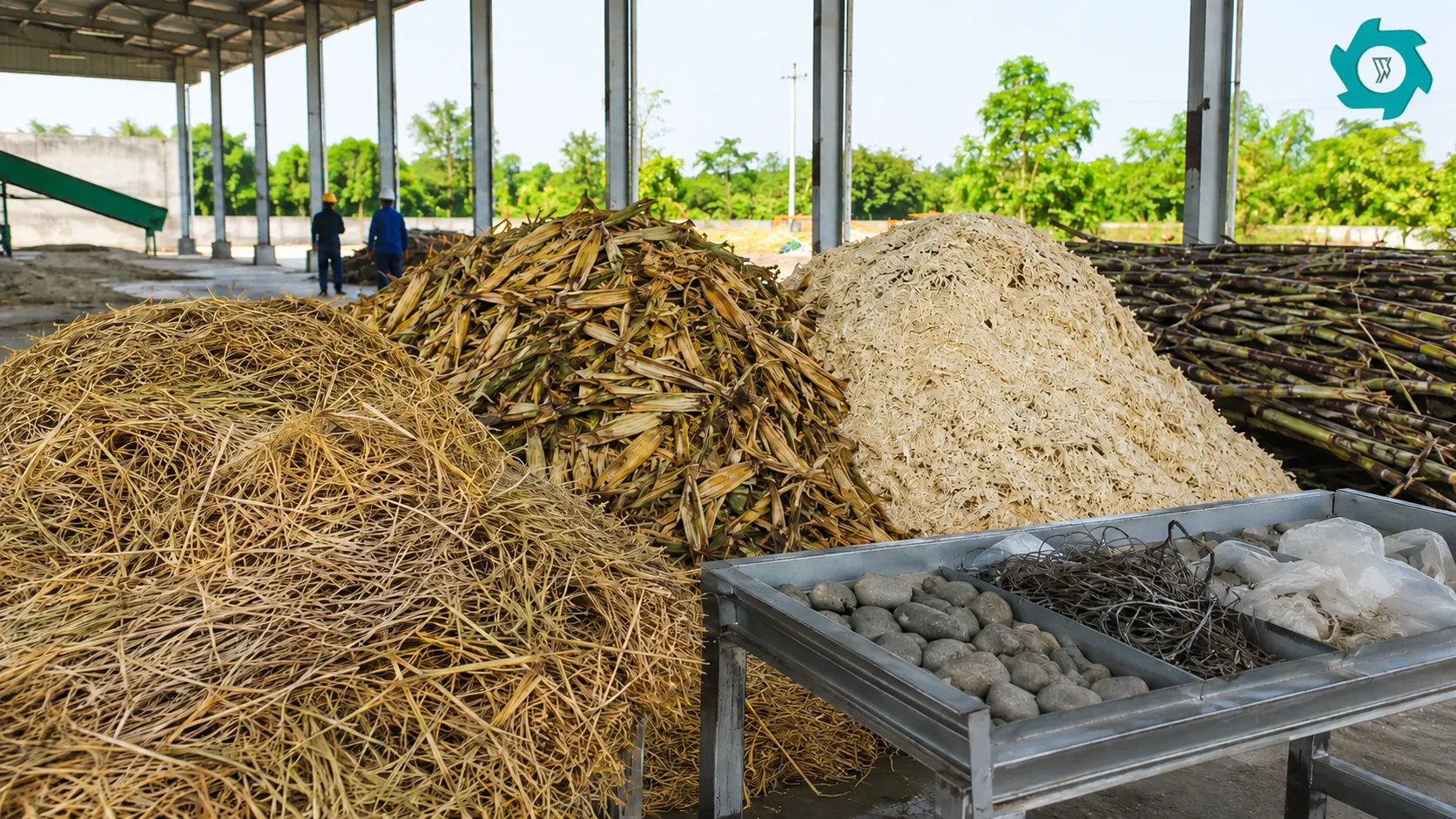
“Crop residue” is too broad for equipment selection. A useful specification describes the residues by physical behavior, not only by crop name. Corn stalks can arrive at the processing line in very different conditions. Some are freshly collected, soft, and relatively moist, while others have dried in the field and become more brittle. Feed material may also come loose, baled, or pre-cut, and some loads can carry soil or pieces of baling wire. These differences directly affect feeding, conveying, and where blockages or unplanned stops are most likely to occur.
| Feed variable | Why it changes the line | Evidence to supply |
|---|---|---|
| Presentation | Loose fiber, tied bales and compacted residue require different receiving and opening methods. | Bale dimensions and mass; photos and video of normal unloading. |
| Moisture range | Wet fiber bends, smears and compresses; dry fiber breaks readily and produces more airborne fines. | Normal, low and high moisture results with the stated test basis. |
| Bulk density | A conveyor can look full while moving little dry mass. Volume may limit capacity first. | Several measured loads, not a handbook value for the crop. |
| Fiber length and toughness | Long stems bridge across hoppers and can wrap around rotating components. | Length distribution plus the largest recurring bundles. |
| Foreign material | Soil and stones accelerate wear; wire and metal can damage machines; film can wrap and contaminate output. | Sorted contamination samples and mass percentage by type. |
| Downstream requirement | Compost structure, dryer feed and densification feed do not require identical particle distributions. | Allowed material size range, oversize limits, and contaminants that must be kept out. |
A U.S. Forest Service review of woody biomass logistics reports that feedstock moisture can change substantially with season, climate, species and time between harvest and delivery; crop-residue projects face the same practical need to test their own supply rather than adopt a single assumed value.3
Turn Feed Variability Into an Operating Window
A single guaranteed value hides the conditions that operators will actually face. Build an operating-window table during trials and attach it to the control philosophy.
| Variable | Normal zone | Conditional zone | Hold / alternate route |
|---|---|---|---|
| Moisture | Run validated recipe and normal screen route. | Reduce feed, open the discharge path or bypass moisture-sensitive fine sizing. | Quarantine material that cannot pass safely or meet the next-process limit. |
| Bale or bundle size | Fits receiving and opening equipment without manual intervention. | Use an approved pre-opening method and inspect ties. | Reject recurring oversize that exceeds the documented opening and lifting plan. |
| Soil / ash-forming contamination | Within the downstream specification and wear allowance. | Segregate, clean or blend only under an approved recipe. | Hold loads likely to damage equipment or make output off-spec. |
| Metal, wire and film | Normal removable contamination within the test envelope. | Increase inspection and verify magnetic/quality-control performance. | Stop feed that presents an entanglement, damage or product-safety risk. |
| Fiber length / toughness | Stable metering and cutting at validated settings. | Reduce burden depth or use the tested alternate cutter/speed recipe. | Hold material that repeatedly bridges or wraps outside safe clearing controls. |
The U.S. Department of Energy describes feedstock quality as a combination of physical, mechanical and chemical characteristics, including particle size and shape, bulk density, moisture, ash and problematic contaminants.4
Create a feedstock passport for each approved residue
Keep a one-page record with source region, harvest method, storage form, moisture distribution, bulk-density method, expected soil and foreign material, particle or stalk dimensions, seasonal window, approved line recipe and downstream acceptance criteria. Update it when the supply chain changes. This allows an operator to identify whether a poor run came from equipment drift or an unrecognized feed change.
Typical Agricultural Waste Recycling Process
- Receive and quarantine. Identify the lot, weigh it on the agreed basis and hold loads with unknown chemicals, excessive soil, wire or prohibited material.
- Open and pre-sort. Remove bale ties under a controlled procedure, reject large stones and expose compacted material before it reaches the metering conveyor.
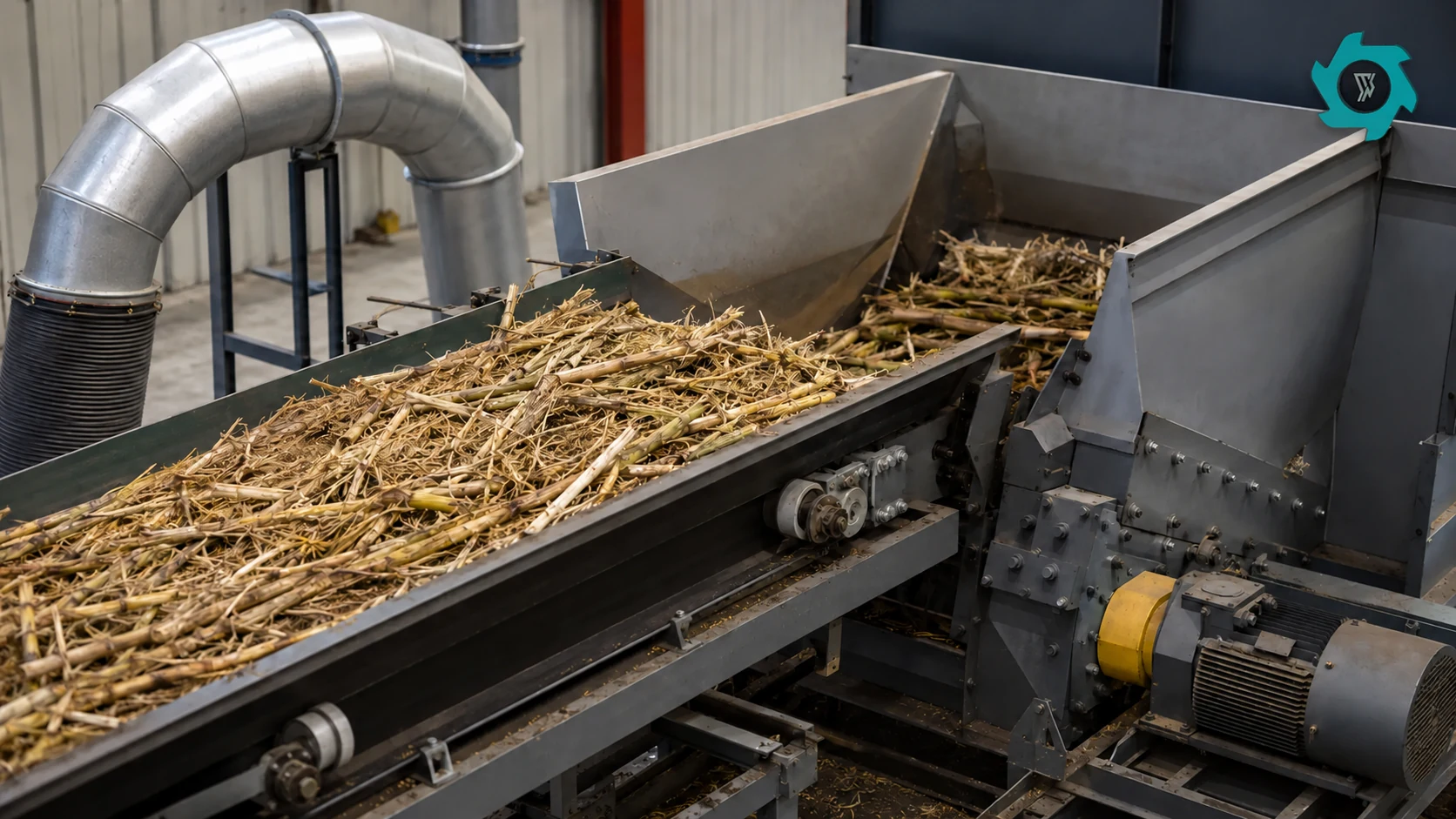
- Meter the feed. A chain conveyor, belt, walking floor or loader-fed hopper creates a steady burden. The objective is stable mass flow, not a completely full hopper.
- Primary size reduction. A low-speed, high-torque shredder opens bales, shortens stalks and reduces bulky pieces while tolerating normal feed variation.
- Remove contaminants. Magnets can recover liberated ferrous items. Screens, manual quality points or other controls depend on the actual contamination risk.
- Apply secondary sizing only if needed. Fine crushing may be justified for a defined downstream specification, but wet or dirty material can make a small-aperture stage unreliable.
- Screen and recirculate. The accepted fraction moves forward; oversize returns to the appropriate reduction stage. Screen reject is not automatically waste or acceptable product.
- Buffer, sample and transfer. A discharge conveyor or bunker decouples the line from the next process and provides a repeatable sampling location.
For projects that combine different recycling streams, the broader recycling solution overview helps keep separate process families from being treated as interchangeable.
What Equipment Belongs in the Line?
| Module | Primary duty | Questions to settle |
|---|---|---|
| Receiving floor or bunker | Separate lots and absorb delivery peaks. | How many feed types must remain segregated? How long may wet material wait? |
| Bale opener / tie station | Release compacted residue and control binding material. | Are bales wire- or twine-bound? Who removes ties and where are they collected? |
| Metering conveyor | Limit surges and maintain a consistent shredder load. | Does it handle the largest bale, longest stalk and lowest bulk density? |
| Primary shredder | Open, shorten and reduce irregular residues. | What cutter action, reversal logic, access and wear protection suit the feed? |
| Magnetic separator | Remove liberated ferrous wire and fragments. | Is metal expected, and is it sufficiently liberated before the magnet? |
| Secondary crusher | Produce a finer distribution when required. | What value does the smaller output create? Can the normal moisture range pass? |
| Screen and return | Separate accepted product and recirculate oversize. | What aperture, open area and cleaning method prevent blinding? |
| Dust extraction | Capture dust near transfer and reduction points. | Which materials generate combustible dust, and where can it accumulate? |
| Buffer / discharge | Decouple upstream and downstream equipment. | How long must the buffer run, and how is bridging prevented? |
Before a factory visit, buyers can review the supplier’s stated manufacturing and testing capability, then ask which facilities, instruments and test materials will actually be assigned to their project.
Configure the Line Around the Residue
Dry rice straw and wheat straw
Low density and long fiber make receiving volume, bale opening and anti-bridging measures central. Dry fines also increase housekeeping and extraction duties. A screen should be installed only when the product specification needs it; otherwise the extra transfer points may create dust without improving value.
Corn stalks and tougher stems
Confirm stalk diameter, root balls, field soil and whether the crop is fresh or dry. A configuration that cuts brittle stalks cleanly may draw higher torque and produce a different length distribution on green material. Include both normal and difficult seasonal material in trials.
Sugarcane bagasse and wet fiber
Bagasse can compress in the hopper and smear over small screen openings. Favor positive feeding, an open discharge route and enough torque margin for compacted pockets. If final sizing is needed after drying, a bypass around the fine stage may be more reliable than forcing wet material through it.
Mixed crop residues
Set limits for each component, moisture band and contamination class. If operators change between campaigns, store validated recipes for belt speed, allowable cutter settings, screen route and sampling frequency, then verify the first production lot after every changeover.
Close the Mass Balance Before Accepting Capacity
“Five tons per hour” is incomplete. The contract must say whether tons refer to incoming wet material, estimated dry matter, total discharge or accepted on-size output. It must also define the averaging period and how planned stops, blockages, oversize return and rejected feed are treated.
Recommended FAT record
- feed source, crop type, presentation and lot identity;
- moisture method and results before the run;
- contamination, bale dimensions and maximum recurring pieces;
- test start/stop time and a defined stable-run window;
- input mass, accepted product, oversize return and other separated fractions;
- particle-size sampling method and results;
- stops, reversals, blockages, manual interventions and their causes;
- electrical energy boundaries and measurement method;
- wear observations and clean-out condition after the test.
Accepted-output rate = accepted on-spec mass ÷ stable operating time
A capacity claim can look successful while hiding a large reject or fines stream. Reconcile every measured outlet over the same test boundary.
Mass-balance closure = (accepted product + oversize + recovered contamination + collected fines + measured losses) ÷ measured input
Agree an acceptable closure tolerance before testing; do not invent one after seeing the result. Investigate a poor closure through scale timing, material left in conveyors, dust collector discharge, floor spillage and moisture change. Keep internal recirculation separate from final output: counting oversize each time it passes a belt scale inflates production.
Do not prove a mixed-feed guarantee with a short run of clean, dry, pre-chopped material. The test batch should represent normal production and include the recurring difficult end of the agreed feed envelope.
Use a Sampling Plan That Can Detect Variation
Write the sampling plan before the FAT and use the same plan during production. At minimum, define the lot, sampling location, increment timing, increment mass, number of increments, compositing method, sample reduction, test method and retained-sample period.
- Choose a moving-stream point. Where safe and practical, take increments across a falling stream or another location that does not favor only light or coarse particles.
- Spread increments across time. Include early, middle and late stable production rather than collecting adjacent handfuls.
- Keep fractions together. Do not shake fines from the sample or pick out awkward pieces unless the written method requires separate reporting.
- Reduce without bias. Mix the composite and divide it with a suitable splitter or documented quartering method; do not simply scoop the top.
- Retain traceability. Label the sample with lot, time, line recipe and moisture basis, and keep a sealed referee portion when commercial acceptance depends on the result.
For a mixed stream, report more than an average particle length. Record the accepted band, oversize share, fines share and foreign-material result. Two products can have the same average while one contains far more troublesome oversize and dust.
Troubleshoot From the Symptom, Not the Motor
| Observed symptom | First evidence to collect | Likely process checks | Avoid this shortcut |
|---|---|---|---|
| Hopper appears full but output is low | Bulk density, belt loading profile, empty pockets and bridge frequency | Hopper geometry, live-bottom action, metering speed and bale opening | Assuming a larger shredder motor will fix volumetric starvation |
| Repeated wrapping at shafts or rollers | Fiber length, twine/film content and location of first wrap | Pre-sort, cutter/clearance suitability, scraper condition and exposed rotating points | Clearing wraps more often without removing the cause |
| Wet material blinds the screen | Moisture distribution, aperture condition and feed depth | Screen bypass, larger opening, cleaning action, lower burden or post-drying screening | Increasing vibration indefinitely while compacting a wet mat |
| Too many fines | Fines at each stage, number of recirculation passes and dry/brittle feed share | Coarser screen, lower secondary duty, reduced recirculation and fewer drops | Adding another crusher to improve apparent uniformity |
| Good short run, poor shift average | Stops by cause, feed-lot changes, bin changes and cleaning intervals | Buffer size, delivery consistency, preventive tasks and operator response rules | Quoting the best 15-minute period as sustained capacity |
| High wear after apparently clean feed | Soil/ash-forming fraction, stones, wear location and supplier lot | Receiving inspection, pre-cleaning, liner selection and source segregation | Changing wear material before identifying the abrasive input |
Change one controlled variable, allow the line to reach a new steady condition, then sample again. Simultaneously changing conveyor speed, cutter settings and screen route may improve the run, but it destroys the evidence needed to repeat the result.
Control Dust, Fire and Maintenance Exposure
Dry agricultural fibers can generate combustible dust during size reduction, conveying and storage. OSHA notes that agricultural and food-processing facilities need to assess combustible-dust hazards and control factors such as ignition sources, dust accumulation and inadequately protected equipment.5 Wood dust should generally be captured as close as possible to where it is generated. Local exhaust ventilation can be used with collection hoods placed near the release point and suitable air-cleaning equipment to help keep the dust from spreading into the surrounding area.6
- Commission dust collection as part of the process, including duct balance and safe discharge—not as an accessory switched on later.
- Prevent bearings, slipping belts, tramp metal and electrical faults from becoming ignition sources.
- Provide guarded access, isolation points and a documented lockout/tagout procedure for jam clearing, screen cleaning and cutter service.
- Avoid compressed-air cleaning that simply suspends settled fines; define vacuuming or another suitable housekeeping method.
- Assess piles and storage for self-heating, wet-material degradation, leachate, pest and fire-access requirements.
For wet crop storage, USDA guidance on silage leachate illustrates why moisture control and containment must be considered before high-strength organic liquid reaches soil or water.7
Send Suppliers a Testable Buying Specification
A useful request for quotation should include representative photos and video, at least several moisture results, bale or maximum piece dimensions, contamination samples, normal and peak delivery rates, required operating hours, downstream acceptance limits, available utilities and a scaled layout. It should also identify exclusions: pesticide containers, treated wood, stones above a stated size, wire beyond a stated amount, or any material the site cannot legally accept.
Ask every bidder to return the same scope table: included conveyors, access platforms, controls, dust system boundary, magnets, screens, support steel, installation supervision, spares, commissioning material, performance test and documentation. This makes omissions visible before price comparison.
Build the Line Around Your Real Feed
Share crop type, moisture range, bale size, contamination, target output and required accepted-output rate.
Frequently Asked Questions
Can one agricultural waste recycling line process every crop residue?
A line can cover several residues only when the feed envelope is defined and the equipment can be adjusted safely. Dry straw, wet bagasse and woody stalks do not feed, cut or screen in the same way. Mixed campaigns may need different conveyor speeds, cutter settings, screen arrangements or even a bypass route.
What usually limits crop-residue line capacity?
Low bulk density, bridging and inconsistent feeding often limit dry-straw capacity before the shredder reaches its motor limit. Wet fibrous residues may instead be limited by compaction, smearing and blocked screens. Capacity should therefore be tested with representative material and reported on an agreed mass basis.
When is a secondary crusher necessary?
If the primary-shredded material already suits the requirements of the downstream process, there is no need to add a second shredding stage. As the material is reduced to a finer size, the equipment generally requires more power, and wear on cutters and other consumable parts tends to increase. At the same time, more fines are produced, and changes in feed moisture can have a greater effect on the stability of the entire processing line.
What should a crop-residue factory acceptance test record?
Record the feed identity, moisture range, contamination, bale or piece dimensions, test duration, input mass, accepted output mass, oversize return, downtime, energy use and samples from each required output.
Engineering References
- EPA, Composting — pre-processing context.
- USDA NRCS, Crop residue — sustainable removal.
- U.S. Forest Service, Biomass logistics — moisture and handling.
- DOE BETO, Feedstock technologies — quality factors.
- OSHA, Dust hazards — combustible dust.
- OSHA, Wood dust — ventilation context.
- USDA NRCS, Silage leachate — moisture control.