




 Request Quote



Content distillation: most application pages only list “metal, plastic, tire and waste.” This cluster article goes one step deeper: it connects each metal stream with the real processing problem, the shredder configuration focus, the downstream equipment and the buyer checkpoints that affect cost and output quality.
Quick navigation
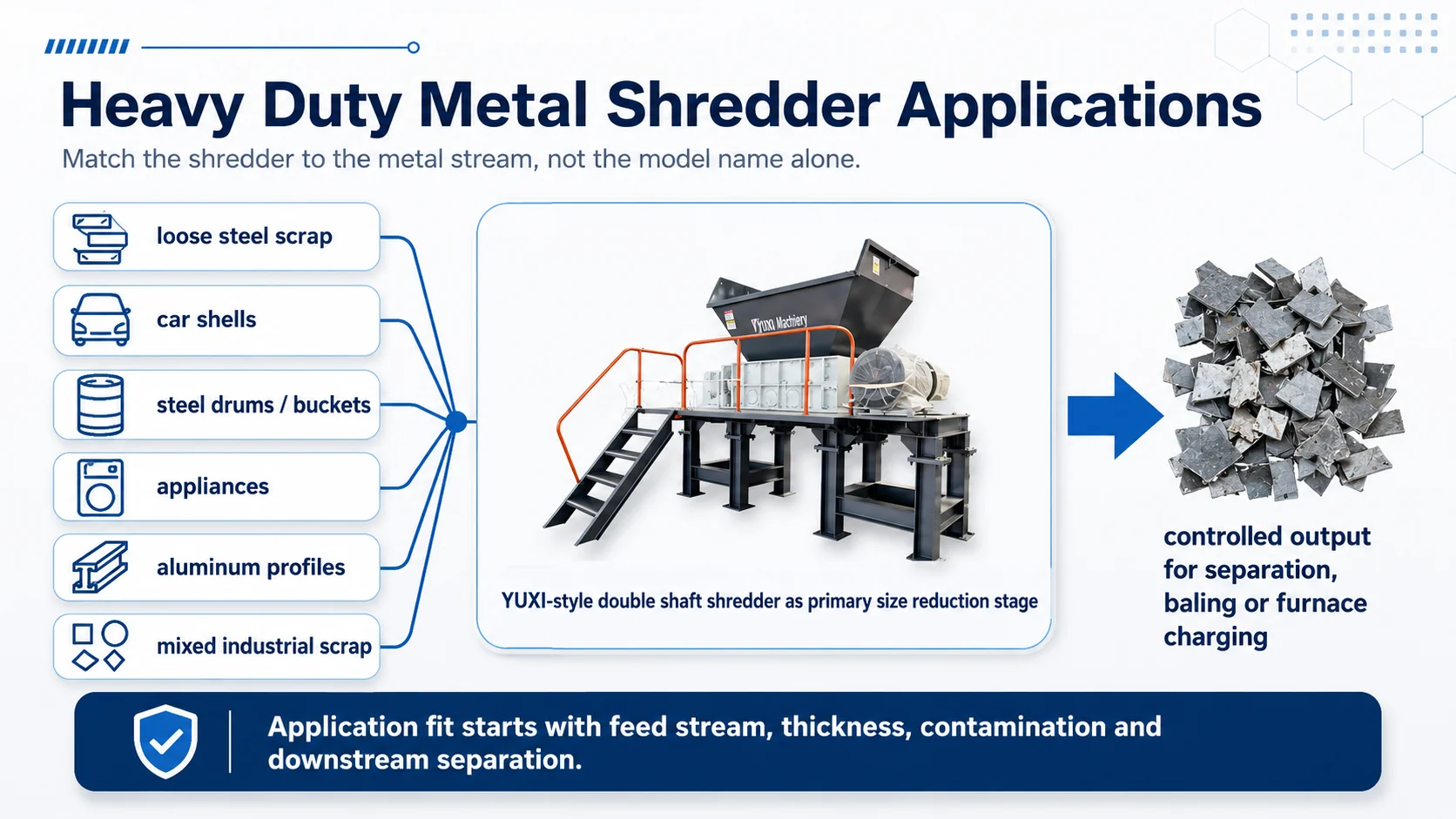
What a Heavy Duty Metal Shredder Actually Does
In metal recycling, the first problem is often not final particle size. The first problem is getting irregular scrap into a controlled, conveyable form. Loose sheet metal springs back. Drums roll. Appliance shells trap mixed materials. Aluminum profiles bend and bridge across the hopper. Unknown industrial scrap may include oversize, contamination and hidden dense pieces.
When a plant needs to grip, tear and reduce bulky metal-bearing material before magnetic separation, eddy current separation, hammer crushing, screening, baling or manual quality control, a heavy-duty metal shredder serves as the primary size-reduction stage. A double-shaft shredder uses two counter-rotating shafts, high-torque cutting force and automatic overload reverse protection to process large or mixed feed streams.
That is why “heavy duty” should not be reduced to motor power. For real applications, the better question is: what material is entering, what problem must the shredder solve, and what equipment receives the discharge?
Core Heavy Duty Metal Shredder Applications
1. Loose light steel scrap
Typical feed includes thin sheet offcuts, paint buckets, cans, light iron sheets and mixed workshop scrap. The goal is rough reduction before magnetic separation, metal crushing or baling. The selection focus is shaft strength, blade thickness, high torque and stable feeding.
2. Steel drums, buckets and containers
Drums and pails are bulky but thin-walled. They can bounce, roll or carry residue risk. Controlled feeding, forbidden-feed rules and enough hopper access are more important than simply choosing the largest model.
3. Car shells and appliance shells
End-of-life vehicle shells, white goods and appliance bodies create a bulky-feed problem. They may need staged size reduction, dust planning and separation of ferrous and nonferrous fractions. Motors, compressors and sealed parts should be handled according to site rules before shredding.
4. Aluminum profiles and light nonferrous scrap
Aluminum profiles, window frames and light nonferrous pieces require output that can be separated without excessive fines. The shredder should avoid uncontrolled wrapping and prepare the stream for eddy current separation, screening or secondary size reduction.
5. E-waste and small metal-bearing appliances
Hard drives, keyboards, small appliances and mixed electronics are not just “metal.” They contain plastics, boards, wiring and sometimes batteries. A low-speed shearing stage can open the material, but downstream screening, air separation and manual removal rules still matter.
6. Mixed industrial scrap
Unknown industrial scrap is the hardest category to size from photos alone. A practical recommendation usually needs material samples, largest feed size, density, contamination, expected capacity and whether the shredder is working alone or in a full line.
Application Matrix by Feed Stream
The same “metal shredder” name can hide very different engineering choices. A machine for light sheet metal is not configured the same way as a machine for drums, car shells or aluminum profiles. Use the table below as a first screening tool before asking for a formal quotation.
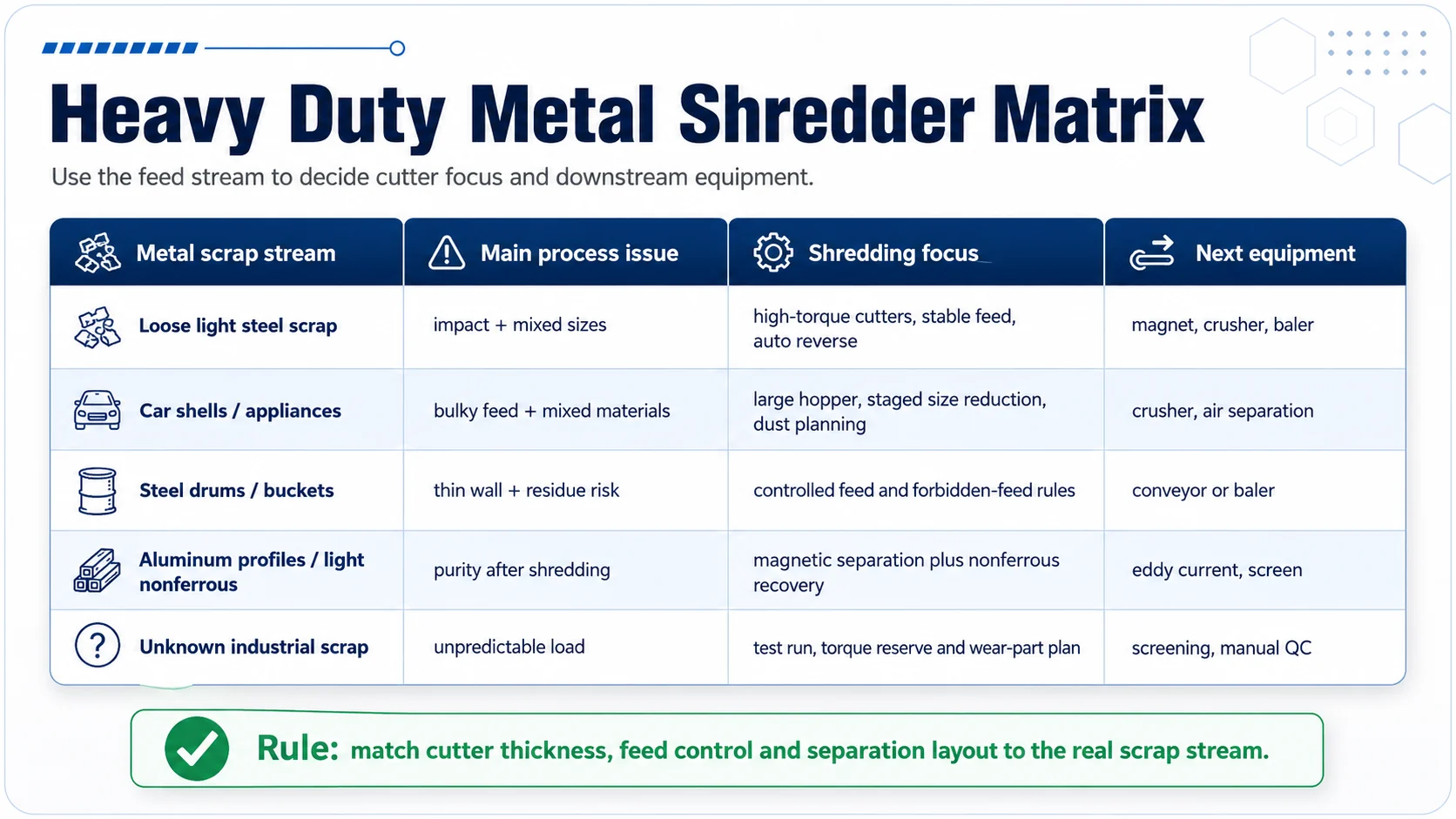
| Metal scrap stream | Main process issue | Shredding focus | Next equipment |
|---|---|---|---|
| Loose light steel scrap | Impact load and mixed sizes | High-torque cutters, stable feed and auto reverse | Magnet, crusher, baler |
| Car shells / appliances | Bulky feed and mixed materials | Large hopper, staged size reduction and dust planning | Crusher, air separation |
| Steel drums / buckets | Thin wall plus residue risk | Controlled feed and forbidden-feed rules | Conveyor or baler |
| Aluminum profiles / light nonferrous | Purity after shredding | Magnetic separation plus nonferrous recovery | Eddy current separator, screen |
| Unknown industrial scrap | Unpredictable load | Test run, torque reserve and wear-part plan | Screening, manual QC |
How the YUXI Double Shaft Shredder Fits These Applications
YUXI’s double shaft metal shredder is a good product match for the application layer of this cluster because it is positioned as a primary pre-shredder for bulky or mixed materials. It uses two counter-rotating shafts to grip, pull and shear material. The YUXI page also explains that output is rougher than a screen-controlled shredder, but the machine can accept larger, tougher and more mixed materials when the task is to prepare feed for the next process.
For metal recycling projects, the YUXI application information specifically mentions paint buckets, cans, light metals, aluminum profiles, iron sheets and thin drums, with selection focus on high torque, thick blades, strong shaft and anti-impact protection. Possible downstream equipment includes magnetic separator, eddy current separator, metal crusher and baler.
YUXI’s published model table covers YXS-600 through YXS-2600, with stated capacity ranges from 2–3 T/H up to 25–60 T/H and typical rough product size around 3–10 cm. Treat these as model-range references, not a guarantee for every scrap stream. Real output depends on feed thickness, density, contamination, blade thickness, cutter geometry, feeding method and downstream target.
Practical buyer note: for heavy steel scrap, dense bales, thick structural pieces or rebar bundles, do not assume a double shaft shredder is enough. Confirm allowable feed thickness, pre-cutting needs, hydraulic shear needs and whether a hammer crusher or complete metal recycling line is the better first specification.
Where the Shredder Fits in a Complete Metal Recycling Line
A heavy duty metal shredder rarely works alone in a serious recycling project. It is usually one stage in a line. YUXI’s metal recycling solutions describe processes that can include primary shredding, hammer crushing, magnetic separation, eddy current separation and dust collection. Its application notes include waste vehicles, motorcycles, bicycles, steel plate within stated limits, rebar within stated limits, packing blocks within density limits and household appliances with certain components excluded.
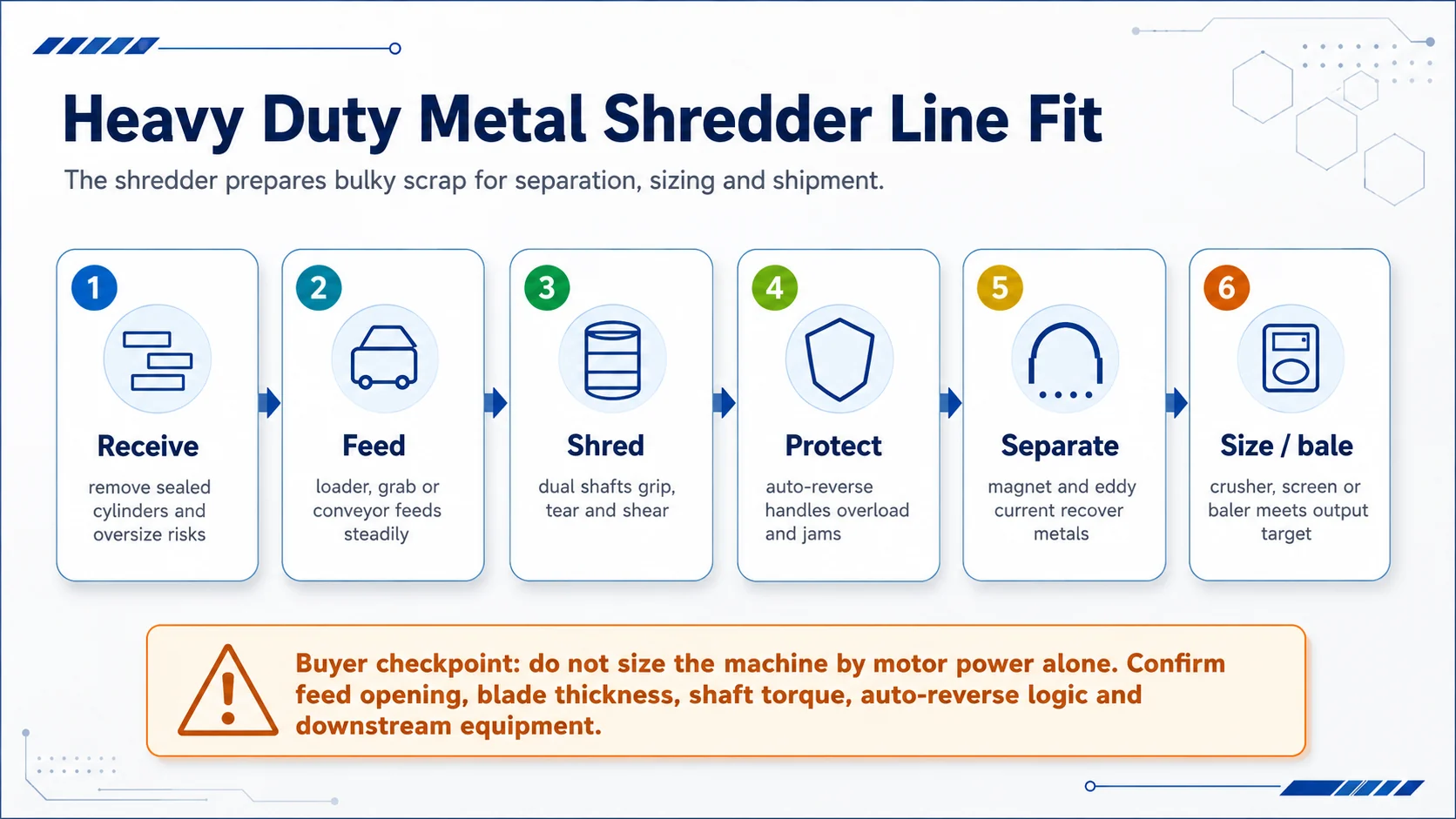
For additional process context, see the steel scrap shredding process guide and the broader industrial metal shredder machine guide. For many plants, the line logic looks like this:
- Receiving and inspection: remove sealed cylinders, batteries, explosive risks and nonconforming feed before shredding.
- Controlled feeding: use loader, grab or conveyor feeding according to the shape and weight of the scrap.
- Primary shredding: reduce bulky material into rough pieces that can move through conveyors and separators.
- Ferrous separation: use magnetic separation to recover iron and steel fractions.
- Nonferrous recovery: use eddy current separation where aluminum and other nonferrous value justify it.
- Secondary sizing or baling: add hammer crusher, screen, granulator or baler depending on the sales specification.
Safety and Quality Checkpoints for Metal Shredding Applications
Metal shredding combines stored energy, rotating cutters, pinch points, dust, flying fragments, noise and maintenance exposure. In the United States, OSHA’s lockout/tagout standard requires energy-control procedures for servicing and maintenance tasks such as shutdown, isolation, blocking, securing and verification. OSHA’s machine guarding requirements also emphasize guarding where machine operation exposes employees to injury, including point-of-operation hazards.
Dust and fire planning should not be added after layout approval. OSHA identifies combustible dust as an explosion hazard that can cause fatalities, injuries and major facility damage. In metal recycling, risk changes with aluminum content, dust-collection design, mixed residues, plastics, paints, rubber and electronic waste.
Do not treat safety as an add-on. Build access, isolation, guarding, dust control, noise control and maintenance space into the application specification before selecting the final model.
How to Choose a Heavy Duty Metal Shredder for Your Application
Before asking for price, prepare the information that actually changes the recommendation:
- Material name and photos or video of the real feed stream.
- Largest feeding size, wall thickness and whether the material is loose, bundled or baled.
- Hourly capacity target and daily working hours.
- Target output: rough reduction, furnace charging, baling, separation, or secondary crushing.
- Contamination: plastics, rubber, dust, oil, sealed containers, batteries, motors or compressor units.
- Downstream equipment: magnet, eddy current separator, hammer crusher, screen, baler, granulator or manual QC.
- Site conditions: power supply, space, foundation, dust collection, noise constraints and maintenance access.
The best heavy duty metal shredder application match is usually found by working backward from the final product. If the final goal is clean ferrous scrap for a steel mill, the separation and purity target matters. If the goal is volume reduction before transport, the baler or container loading method matters. If the goal is nonferrous recovery, eddy current performance and fragment size distribution matter.
FAQ: Heavy Duty Metal Shredder Applications
Can a heavy duty metal shredder handle every metal scrap application?
No. A double-shaft shredder can handle many bulky and mixed materials, but heavy steel, thick structural scrap, high-density bundles, sealed containers and hazardous components must be evaluated separately. Some projects require pre-cutting, hydraulic shears, hammer crushers or a complete processing line.
For metal, is a double-shaft shredder better than a single-shaft shredder?
For rough pre-shredding of bulky or mixed metal-bearing scrap, a double-shaft shredder is usually the better first stage because it can grip and tear large, irregular pieces. A single shaft shredder is more suitable when the project needs screen-controlled output and the feed can be metered into the rotor correctly.
What output size should I expect?
For YUXI’s published double shaft shredder model table, the listed product size is generally 3–10 cm. In practice, final size varies with blade thickness, cutter profile, feed material and whether downstream crushing or screening is used.
What downstream equipment is usually used after metal shredding?
Common equipment includes discharge conveyors, magnetic separators, eddy current separators, hammer crushers, screens, air separators, dust collectors and balers. The correct combination depends on whether the project prioritizes iron recycling, non-ferrous recycling, transport density, furnace charging or RDF preparation.
Send the Material Before Asking for the Model
For a practical YUXI recommendation, send material photos or video, largest feed size, estimated thickness, required capacity, target output size and downstream process. This gives the engineering team enough context to match hopper size, shaft torque, blade thickness, feeding method and separation layout instead of guessing from the machine name.
Contact YUXI Machinery · View Double Shaft Shredder Machine · View Waste Metal Shredding & Recycling System
Authority References
- OSHA 29 CFR 1910.147: control of hazardous energy during machine servicing and maintenance. Source
- OSHA 29 CFR 1910.212: baseline safety guard standards for all mechanical equipment. Source
- OSHA Combustible Dust: overview of combustible dust hazards. Source
- EPA Ferrous Metals Material-Specific Data: Ferrous metals are the largest metal category in municipal solid waste by weight. Source
- Bureau of International Recycling: Save resources and energy through ferrous scrap recycling. Source