




 Request Quote



Scrap Car Shredding Process: From Hull to Metal Output
Quick answer: what is scrap car shredding process?
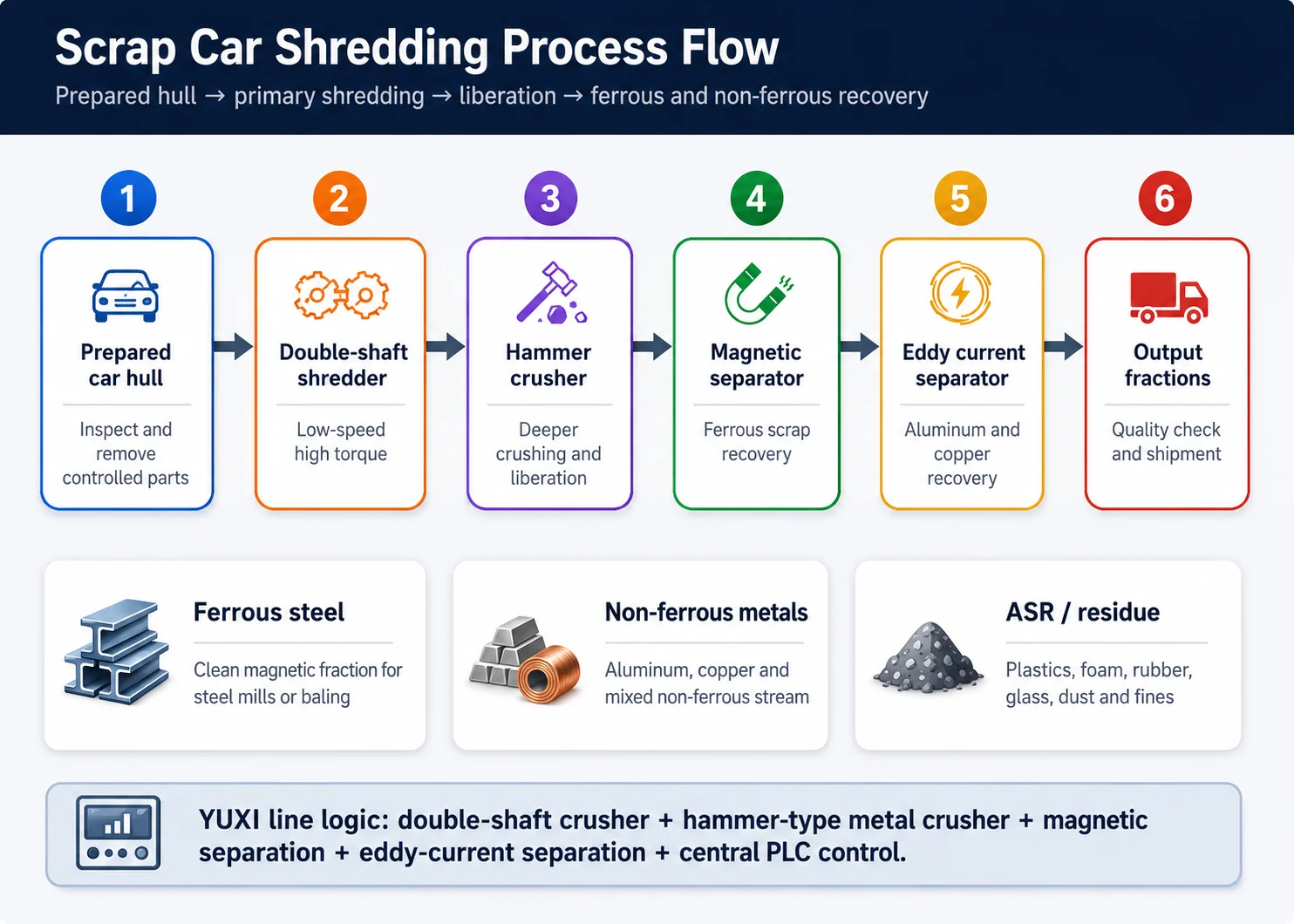
The scrapping process begins after the vehicle is inspected,decontaminated and stripped of controlled or reusable parts.The prepared car hull is sent to the main double-shaft shredder,and the low-speed,high-torque cutters shred,squeeze and cut the body into thick pieces.Then,the material can be moved to the hammer metal crusher for further size reduction and material liberation.Magnetic separation recycles ferrous steel,eddy-current separation recycles aluminum,copper and other non-ferrous metals,and the remaining residue of the car shredder is treated according to local requirements.
On the YUXI side, this process is in line with the released Scrap recycling line : double-shaft crusher, scrap hammer-type metal crusher, magnetic separator, eddy-current separator and central control system. The important point is that the shredder is not an isolated machine. It is the first heavy mechanical step in a controlled recovery line.
Why the process matters more than the shredder name
Many buyers ask for a “car shredder” when the real requirement is more specific: they need a repeatable process that can turn prepared car bodies into saleable ferrous scrap, non-ferrous metal and a managed residue stream. If the process is not designed first, the plant may buy enough power to break the body but still lose aluminum and copper, create dirty ferrous scrap, overload the discharge system or stop frequently because the incoming vehicles were not prepared correctly.
A scrap car is not a single clean material. Even after removing valuable parts,the body may contain steel plates,aluminum castings,copper wire,glass,rubber,plastic,seat foam,paint,dust and small pollutants. The goal of shredding is therefore not “destruction.” The goal is opening the structure and creating particle size and material liberation suitable for the next recovery stage.
This is also why the search intent behind “Scrap Car Shredding Process” is different from a general ELV recycling article. Users usually want to know what happens after decontamination,why a double-shaft shredder and a hammer crusher may appear in a line at the same time,the working principle of ferrous and non-ferrous separation,and what information the supplier needs before recommending equipment.
Before shredding: inspection, depollution and feed preparation
The best shredding process starts before the shredder. Incoming vehicles or car bodies should be checked for batteries, fuel tanks, free liquids, refrigerants, airbags, mercury switches, tires and uncertain mixed loads. The U.S. EPA notes that refrigerants must be removed before vehicle recycling and that automobile components such as fluids, batteries, tires, gas tanks, airbags and mercury switches should be removed and managed appropriately. This is the practical boundary between a vehicle dismantling operation and a shredding line.
For modern vehicles, extra care is needed when hybrid or electric vehicles enter the yard. Traction batteries and high-voltage systems should not be treated as ordinary car-shell feed. They require specialist identification, isolation and removal according to local rules and site procedures. A clean prepared hull gives the shredder a predictable load; an unsafe or unprepared vehicle turns the shredder into the first place where hidden risk becomes visible.
| Pre-shredding task | Why it matters | Plant-level control point |
|---|---|---|
| Receiving and inspection | Stops unsuitable loads before they reach the line. | Photo record, material category, obvious leaks, battery status and feed size. |
| Depollution | Removes fluids and controlled components that can create environmental, fire or handling risk. | Drainage rack, collection tanks, absorbent material and clear storage zones. |
| Dismantling / stripping | Recycle valuable reusable parts and reduce the burden of non-metals before shredding. | Remove engines, gearboxes, catalytic converters, wheels or plastics when required by the business model. |
| Size and shape control | Flattened or nested bodies may feed differently from loose shells. | Confirm maximum body size, feeding method, crane/grabber reach and hopper opening. |
Step 1: primary double-shaft shredding
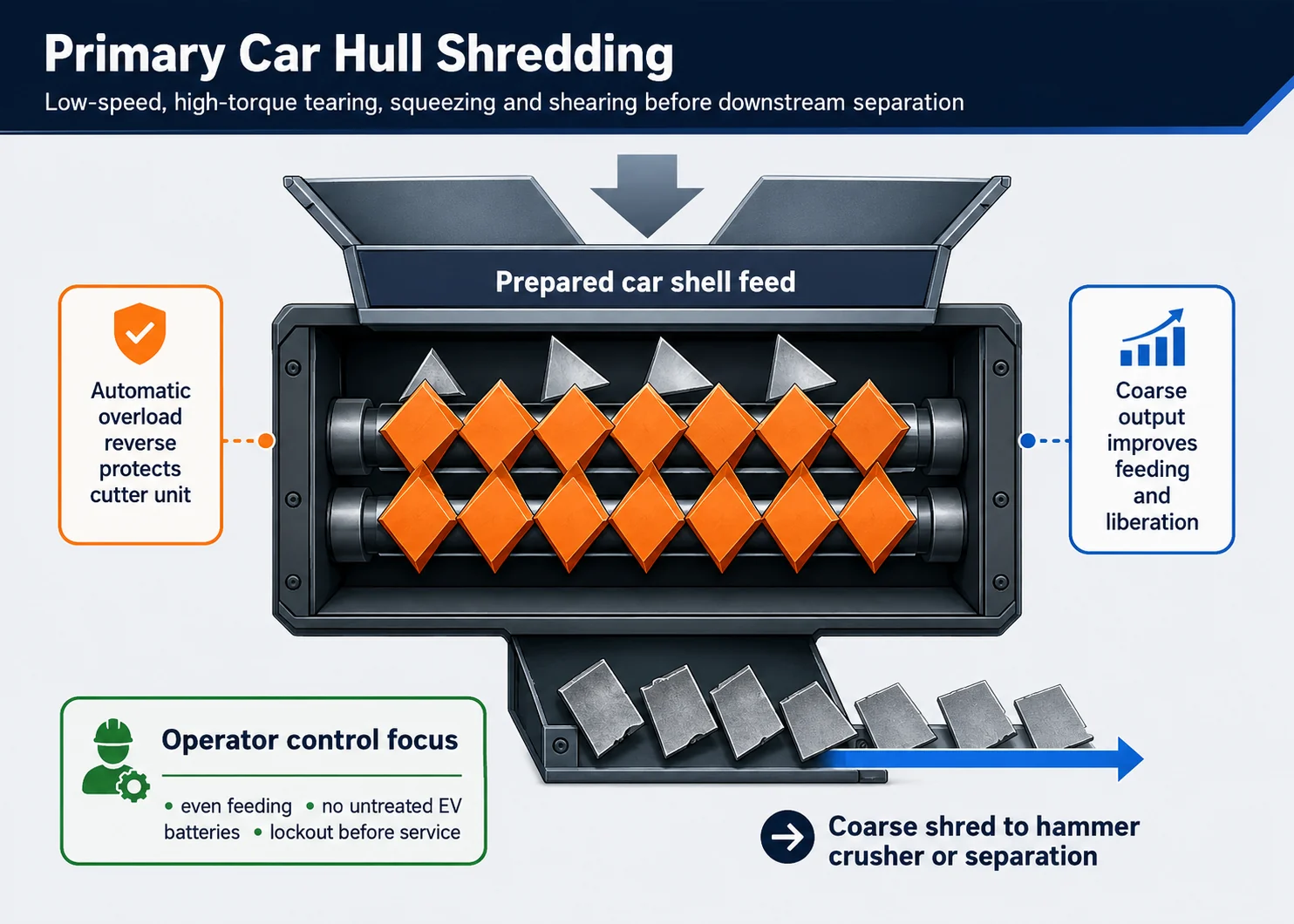
The first heavy mechanical stage is primary shredding. A prepared hull is fed into a slow-speed, high-torque cutting chamber. YUXI describes its Metal Shredder as a machine for light scrap metals such as car shells, refrigerators and metal drums; the material enters the shredding box and is reduced by tearing, squeezing and shearing before discharge.
For scrap car bodies, this stage has three jobs. First, it grips a bulky shell that a smaller crusher cannot accept easily. Second, it opens the structure so internal materials can be released. Third, it turns a large, awkward body into a controlled stream that conveyors, crushers and separators can handle. The output is usually coarse shred, not final clean furnace feed.
What operators should control at this stage
- Feed consistency: do not mix complete vehicles, stripped shells, motorcycles, engines and loose parts without defining the duty.
- Overload behavior: automatic stop and reverse protection are useful when irregular metal or unexpected hard pieces enter the cutting area.
- Discharge clearance: coarse pieces must leave the chamber smoothly or the line will choke even when the shredder itself has enough power.
- Maintenance access: cutter inspection, bolt checks and jam-clearing procedures should be designed into the layout, not improvised after installation.
Step 2: secondary hammer crushing and material liberation
Primary shredding can be enough when a buyer only wants coarse shred for transport or resale to another processor. However, if the plant needs better liberation before separation, a secondary hammer crusher becomes important. YUXI’s Hammer Mill Metal Crusher is positioned for processing scrap metal into smaller pieces or granules through hammering, tearing and shearing, helping separate metal and non-metal and improve recovery quality.
In a scrap car shredding process, the hammer crusher is not added just to make pieces smaller. It helps break attachments between metals and non-metals. Better liberation improves the following magnetic and eddy current stages because steel, aluminum, copper and residue need different trajectories. Poor liberation produces mixed pieces: steel still attached to plastic, aluminum mixed with rubber, or copper wire hidden inside fluffy residue.
The trade-off is wear and energy. Hammer crushing creates impact, dust, noise and maintenance demand. It should be selected when the output specification justifies it: cleaner ferrous, better non-ferrous recovery, finer downstream sorting or direct sale to a buyer that requires a specific size range.
Step 3: magnetic separation for ferrous recovery
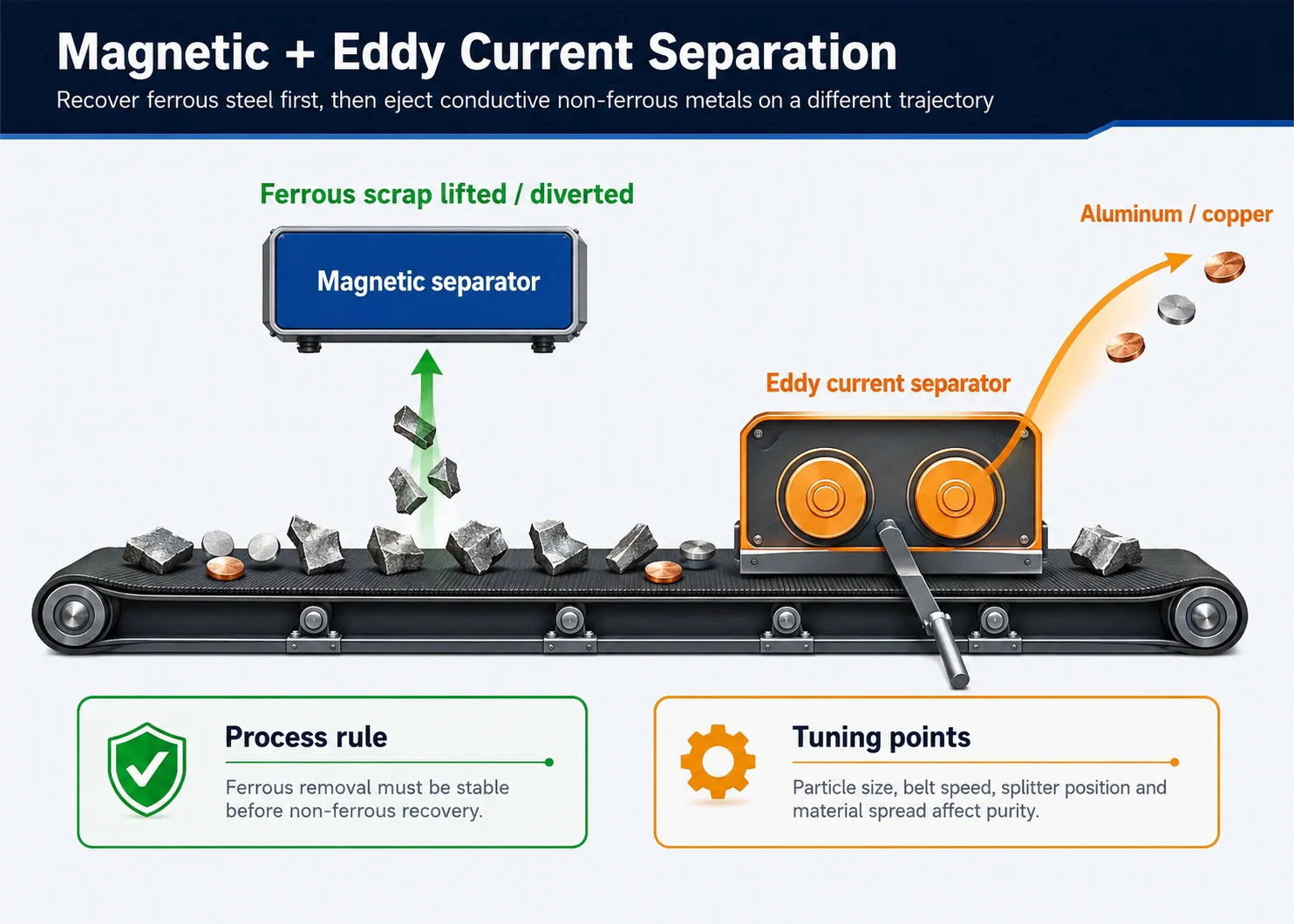
After size reduction, magnetic separation removes the largest metal fraction: ferrous steel. The separator must receive a reasonably even layer of material. If the belt is overloaded or the material is piled in peaks, steel can trap non-metal and non-ferrous pieces underneath it. This reduces both ferrous quality and downstream recovery.
Operators normally tune belt speed, magnet position, splitter setting, conveyor loading and return streams. The practical target is not only “steel removed.” It is steel recovered with low carryover of copper, aluminum, plastic, rubber, glass and dirt. This is where process control directly affects sales value.
Step 4: eddy current separation for aluminum and copper
Once the ferrous stream is removed, the remaining material can pass through an eddy current separator. YUXI’s Eddy Current Separator is designed to recover non-ferrous metals such as aluminum and copper from shredder material, municipal waste, e-scrap and scrap car dismantling applications. Its working principle uses a high-speed magnetic rotor to induce eddy currents in conductive non-ferrous metals, causing them to be repelled onto a different trajectory from non-metallic material.
In real operation, eddy current recovery depends heavily on particle size, material spread, moisture, belt speed and splitter position. Big aluminum pieces may eject well, while tiny wire fragments may need different downstream treatment. If a plant wants higher-grade non-ferrous output, it may add screening, air separation, density separation, hand sorting or further polishing depending on the local buyer’s requirements.
Output fractions: what should a scrap car shredding line produce?
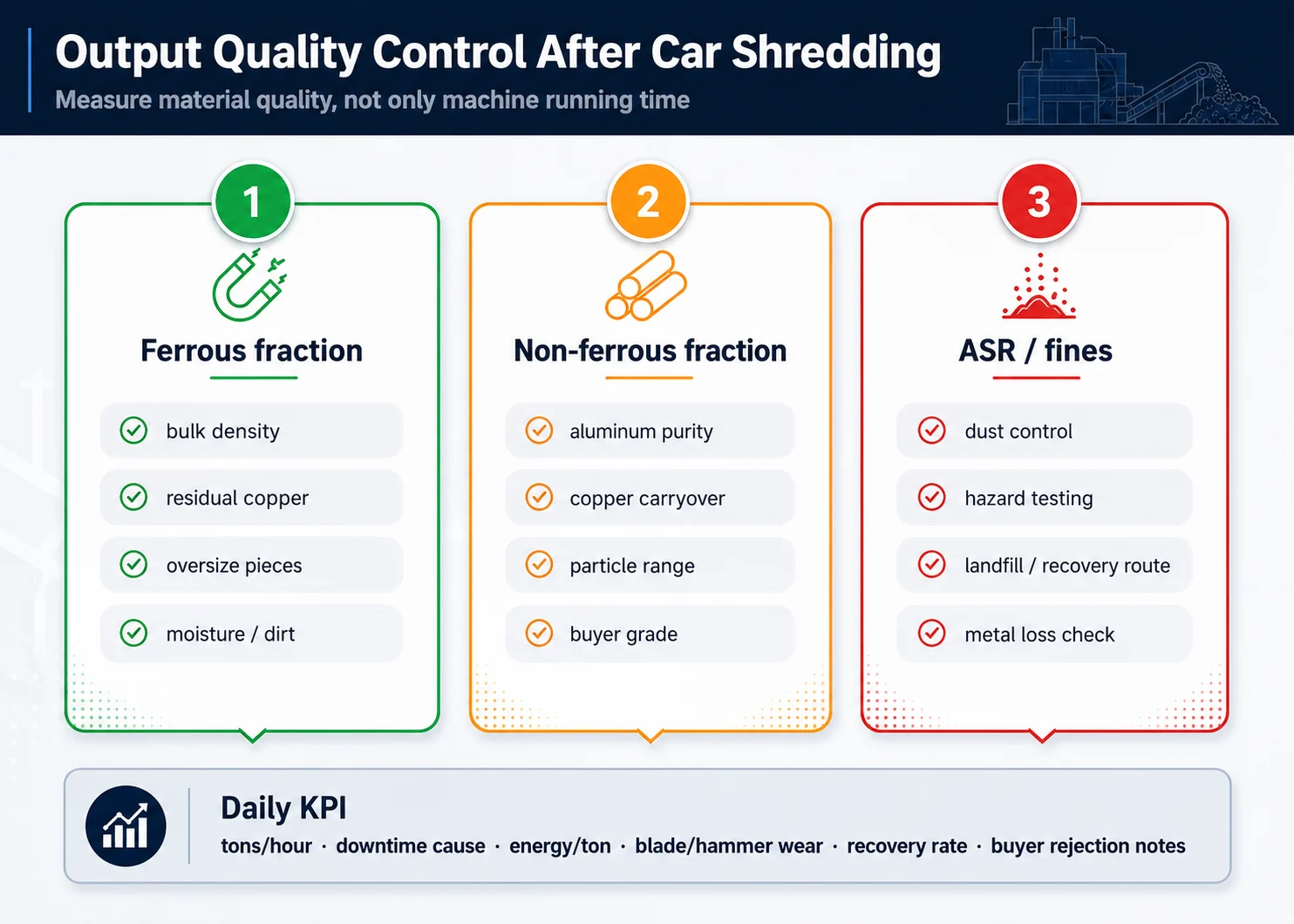
A properly planned line should produce more than “shredded material.” It should create named output fractions that can be checked, stored and sold or handled separately. The basic fractions are ferrous steel, non-ferrous metals and residue. Depending on the configuration, the plant may also create oversized return material, fines, stainless-rich streams or mixed heavy non-ferrous fractions.
| Output stream | Typical content | Quality checks | Common issue |
|---|---|---|---|
| Ferrous scrap | Steel body panels, chassis steel, magnetic metal pieces. | Bulk density, residual copper, non-metal contamination, oversize pieces. | Dirty steel caused by poor liberation or overloaded magnetic separation. |
| Non-ferrous metal | Aluminum, copper, brass and mixed heavy metal parts. | The purity of aluminum ,the transition of copper, particle size and moisture. | Good metal lost into residue because the splitter or feed spread is not tuned. |
| Automotive shredder residue | Plastic, rubber, foam, textiles, glass, fines, dirt and small unrecovered metal. | Metal loss, dust, hazardous content testing and disposal/recovery route. | Treating ASR as harmless waste without local compliance checks. |
The Bureau of International Recycling notes that steel is fully recyclable without losing its inherent physical properties and that recycling one tonne of steel saves raw materials and energy. That is the economic and environmental reason ferrous recovery receives so much attention. But in vehicle shredding, aluminum and copper recovery also matter because modern vehicles contain increasing amounts of non-ferrous metal.
How the YUXI waste car recycling line fits the process
YUXI’s published waste car recycling line is built around the same staged logic described above. The line is used for scrapped vehicles and waste metal parts, including car shells, bumpers, engine casings, carriage boards, oil filters, motors, wheels, motorcycles and bicycles. The working process combines the hydraulic-driven heavy duty double-shaft shredder for primary shredding, the scrap hammer metal crusher for deeper crushing, the magnetic separation of iron metal,the eddy-current separation of copper and aluminum, and the Siemens PLC central control system for real-time monitoring and operation.
This configuration is suitable when the buyer wants a complete production line instead of just a main shredder. The double-shaft shredder handles bulky car shells and opens the structure. The hammer crusher improves material liberation. Magnetic separation removes the ferrous stream. Eddy current separation recovers non-ferrous value. Central control helps the plant run the stages as one process instead of several disconnected machines.
Configuration note
Not every project needs every stage at the beginning. A dismantler selling prepared car hulks to a larger scrap processor may only need handling and compaction. A processor buying prepared shells by the ton may need primary shredding plus ferrous recovery. A plant targeting higher metal recovery should consider the complete shredding, crushing and separation sequence.
Information to send before requesting a quotation
Feed material
Photos and videos of prepared car shells, engines, wheels, motorcycles or mixed parts; maximum size; whether vehicles are flattened or loose.
Target capacity
Expected tons per hour, operating hours per day, peak feed rate and whether the line must support future expansion.
Output target
Coarse shred, smaller granules, ferrous scrap, aluminum-rich stream, copper-rich stream or buyer-specific fractions.
Site conditions
Available plant space, foundation conditions, power supply, dust control plan, storage bays and maintenance access.
Safety and compliance points in car shredding
Car shredding lines combine heavy rotating cutters, conveyors, crushers, magnets, dust and mobile equipment. OSHA’s lockout/tagout standard covers servicing and maintenance where unexpected energization or stored energy release could injure employees. OSHA’s machine guarding guidance also states that hazardous machines must be safeguarded to protect operators and other employees. These points should be reflected in the design of feeding platforms, access doors, emergency stops, jam-clearing procedures, maintenance lockout and operator training.
Environmental compliance is also part of process design. The EU vehicle reuse,recycling and recycling framework sets a minimum design threshold of 85% bulk reuse/recycling and 95% bulk reuse/recycling for new cars sold in the EU. Even if the factory operates outside the European Union,these goals will affect buyers and regulators’ views on ELV material recycling.Therefore,better shredding lines should recycle more metals while maintaining residue control and traceability.
Common mistakes in the scrap car shredding process
- Feeding untreated vehicles: batteries, fluids, refrigerants and gas tanks should be addressed before shredding, not discovered inside the cutting chamber.
- Choosing power before process: motor power alone does not define performance. Chamber size, cutter geometry, discharge, crusher stage and separation design all matter.
- Skipping liberation: if metal remains locked to non-metal, separators cannot recover it cleanly.
- Overloading separators: even a good magnetic or eddy current separator performs poorly when the layer is too thick or uneven.
- No output quality routine: without daily checks, operators may not notice copper loss, dirty ferrous scrap or rising ASR metal content until the buyer complains.
- Poor maintenance access: a layout that saves floor space but blocks safe inspection will increase downtime and risk.
Planning a scrap car shredding line?
Send YUXI your feed photos, target capacity, desired output size, available plant layout and local power conditions. The engineering discussion should start from the full material flow: preparation, primary shredding, secondary crushing, ferrous recovery, non-ferrous recovery, residue handling and maintenance access.
FAQ: Scrap Car Shredding Process
Can a scrap car shredder process a whole vehicle?
Professional plants should define “whole vehicle” carefully. Batteries, fuels, free liquids, refrigerants, airbags and other controlled components should be removed or managed before mechanical shredding. A prepared car shell or depolluted hulk is a more appropriate feed description for an integrated shredding line.
Is the double-shaft shredder enough for scrap car recycling?
It may be enough for coarse size reduction if the plant sells the material to another processor. For deeper metal recovery, the double-shaft shredder is usually followed by hammer crushing, magnetic separation and eddy current separation.
Why use a hammer crusher after primary shredding?
The hammer crusher improves size reduction and liberation. It helps separate metals from non-metal attachments so magnetic and eddy current separators can create cleaner fractions.
What data is needed to select a YUXI scrap car shredding line?
Provide feed photos, maximum car shell size, whether vehicles are depolluted and flattened, expected tons per hour, target output size, desired metal fractions, available plant space, power supply and downstream buyer requirements.
References and source notes
- U.S. EPA, “Automobiles, Tires, and Boats,” component removal and recycling notes.
- EUR-Lex, “Re-use, recycling and recovery of vehicle parts and materials,” EU 85%/95% thresholds.
- OSHA, 29 CFR 1910.147 lockout/tagout and OSHA machine guarding standards.
- Bureau of International Recycling, “Ferrous Metals,” steel recycling facts.