




 Request Quote

Product Center
-
- Biomass Shredding and Recycling Line
- OCC Paper Dry Pulping & Cardboard Recycling Line
- Scrap Aluminum Recycling Line
- Waste Car Recycling Line
- Waste Refrigerator Recycling Line
- Copper Aluminum Radiator Recycling Line
- Motor Rotor Recycling Line
- Copper Wire Recycling Line
- Waste Ink Cartridge Recycling Line
- Aluminum UBC Scrap Recycling Line
Get a Quote
Contact Us


Hammer Mill Working Principle: A Practical Guide
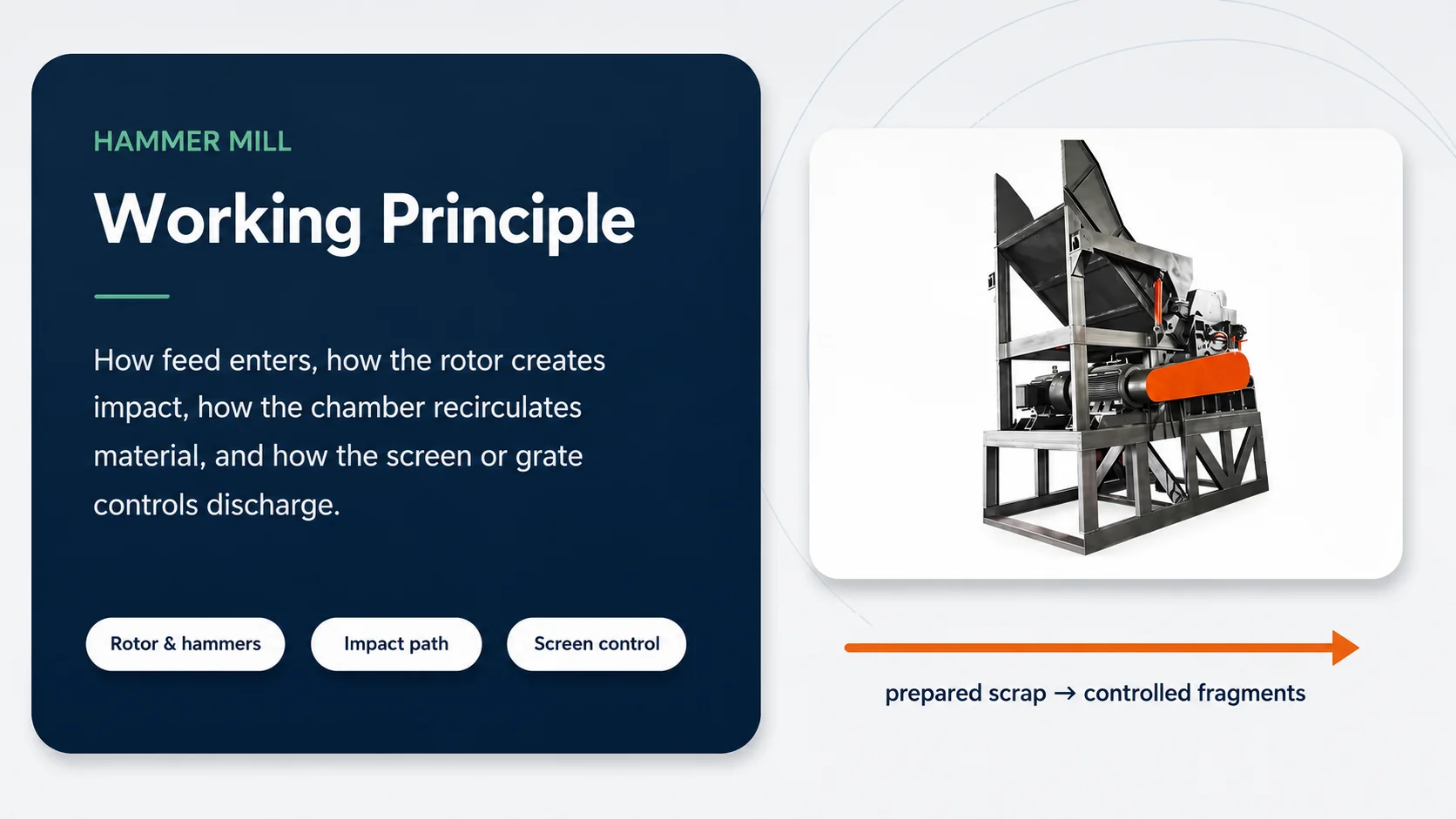
A metal hammer mill works by using fast moving hammers to hit prepared scrap again and again. The rotor supplies motion, the hammers transfer impact energy, and the chamber keeps larger pieces moving until they are small enough for the selected discharge path.
Quick answer
The principle is impact reduction. Material enters the chamber at a controlled rate, meets the rotating hammers, rebounds through the chamber, and receives more impacts before discharge. In metal recycling, the goal is not only a smaller piece. The goal is a stream that is easier to convey, sort, separate or send to the next recovery stage.
Working cycle
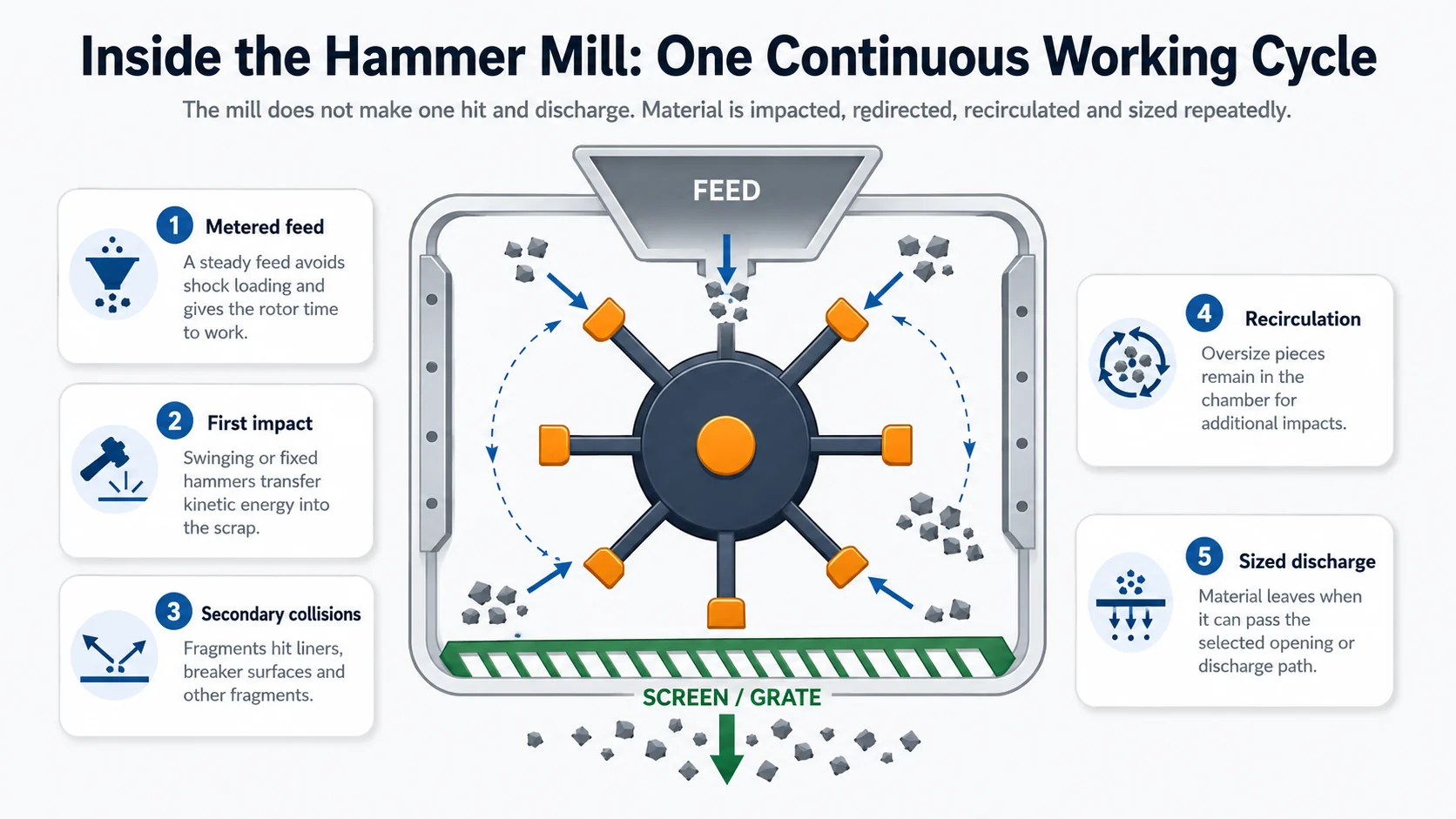
The cycle starts with stable feeding. The rotor reaches operating speed before the feed is increased. Hammers strike the incoming scrap, fragments hit chamber surfaces, and oversize pieces stay active until they can leave through the grate, screen or outlet. This cycle is continuous, so feed control and discharge control are just as important as hammer force.
Output control
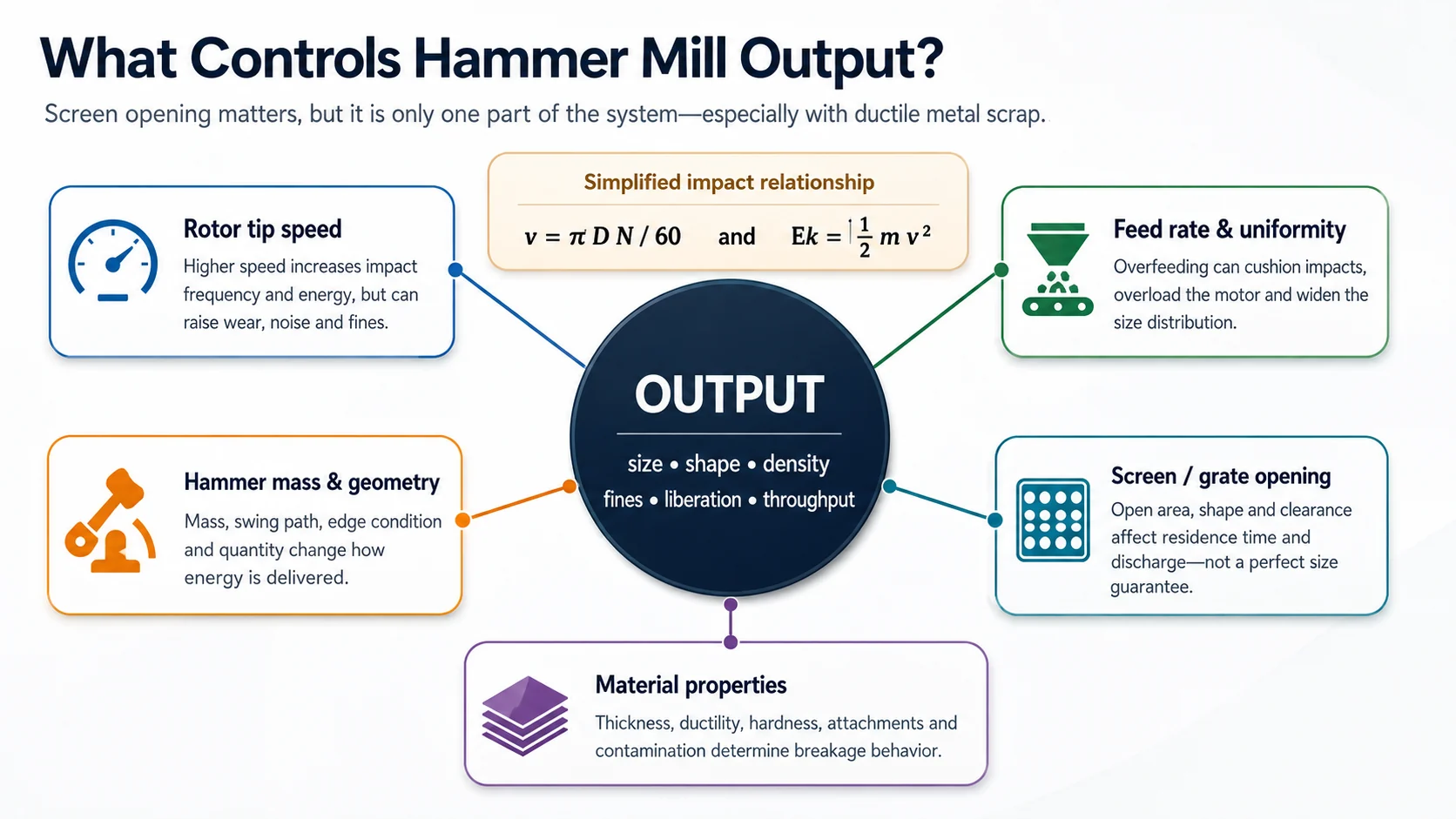
Output depends on hammer condition, rotor energy, feed rate, material thickness, screen or grate restriction, and the behavior of the scrap itself. Thin sheet, aluminum, motor parts and mixed assemblies do not break in exactly the same way. Buyers should describe target size distribution, oversize tolerance, fines tolerance and downstream separation requirements instead of relying on one nominal opening size.
Position in a recycling line
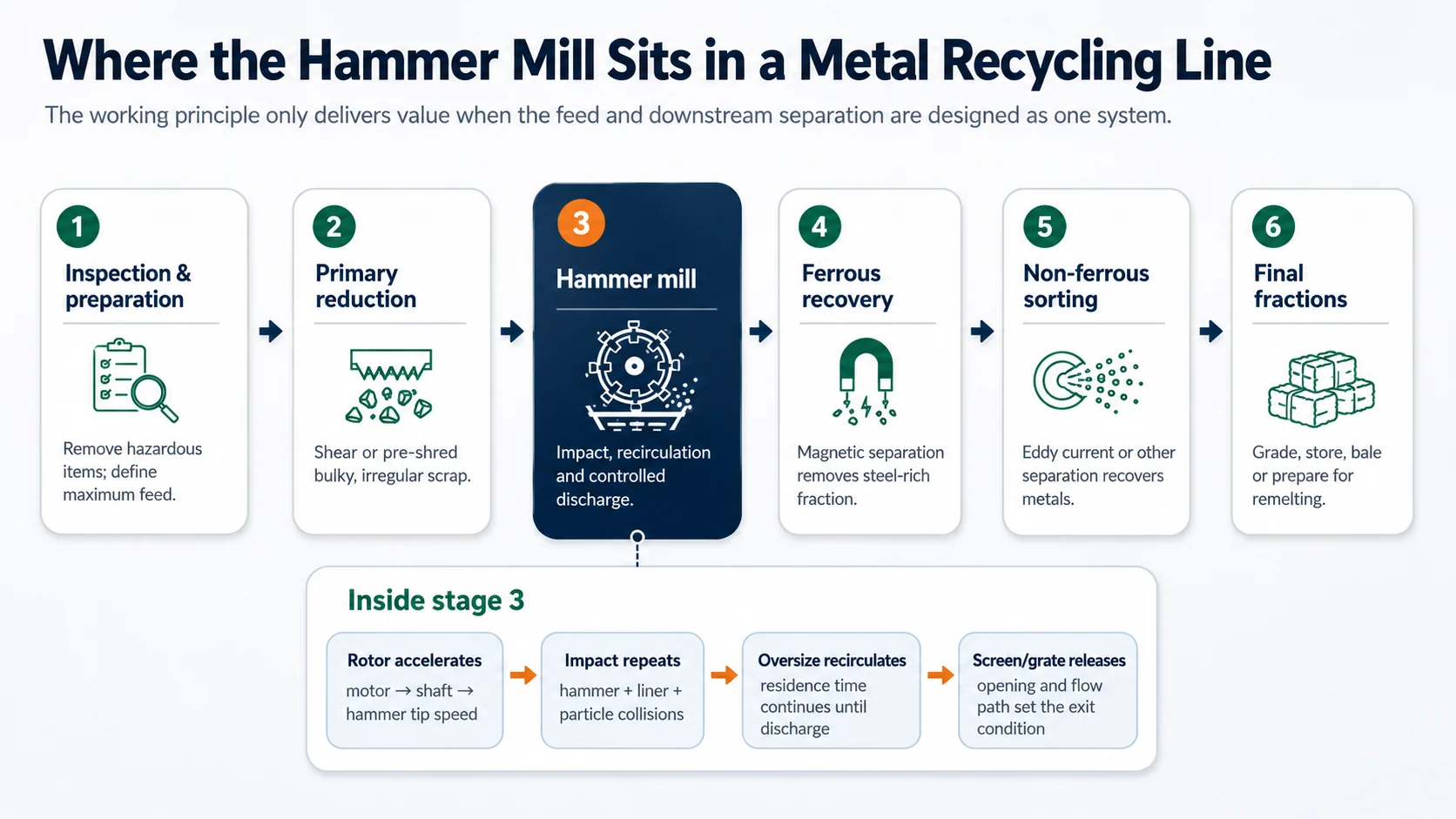
A hammer mill is usually not the first or last machine in a metal recycling plant. Material may need inspection, depollution, shearing or primary shredding first. After impact crushing, the stream may go to magnetic separation, screening, eddy current separation, storage or furnace preparation.
YUXI machine context
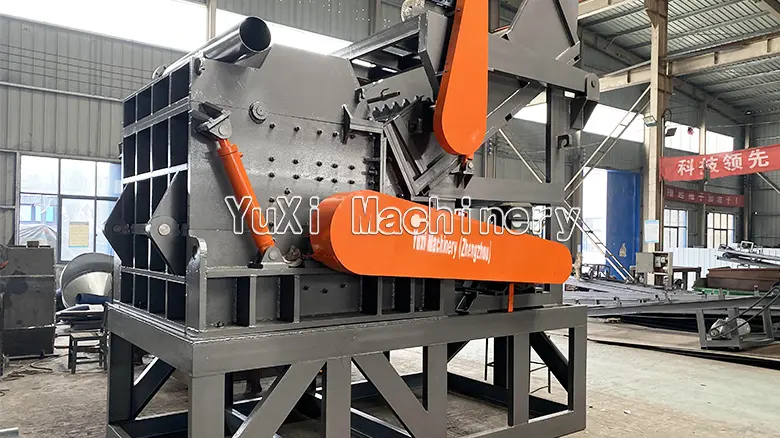
The YUXI Hammer Mill Metal Crusher is positioned for selected metal recycling projects where impact crushing is required after suitable feed preparation. Final selection should be checked against real scrap samples, required output and downstream process design.
Safety and maintenance notes
Hammer mills involve high speed rotating parts, stored energy, ejection risk, noise and dust. Guarding, access control, lockout procedures, dust control and maintenance inspection must be part of the project plan. Operators should watch vibration, bearing temperature, motor load, hammer wear, liner wear and discharge consistency.
RFQ checklist
Before asking for a quotation, prepare material photos, maximum feed dimensions, thickness, composition, hourly target, desired output condition, upstream preparation, downstream separation plan, power supply and workshop layout. For project review, send these details through Contact YUXI.
References and Source Notes
OSHA machine guarding requirements
Online Message