




 Request Quote


Does UBC need decoating before remelting? The coating has to be dealt with, but a separate decoating machine is not required in every plant. Some furnaces already preheat and delacquer the cans in the charging route. Other furnaces receive a better, steadier charge when the organics are removed beforehand.
The decision starts with the furnace feed specification and the condition of the cans coming from the sorting line. If prepared UBC still creates smoke peaks, unstable charging, extra dross or weak metal recovery, a controlled decoating trial is worth running. If the furnace already handles the same feed well, another thermal unit may add cost without adding much value.
A sorted UBC stream arrives at the melt shop only after the physical preparation work is done. The UBC recycling line may open bales, take out steel and loose non-metal material, and control the form of the remaining cans. None of those steps removes bonded lacquer. That job, if required, belongs to the downstream thermal system. Confusing these two parts of the plant can lead to buying equipment for the wrong problem.
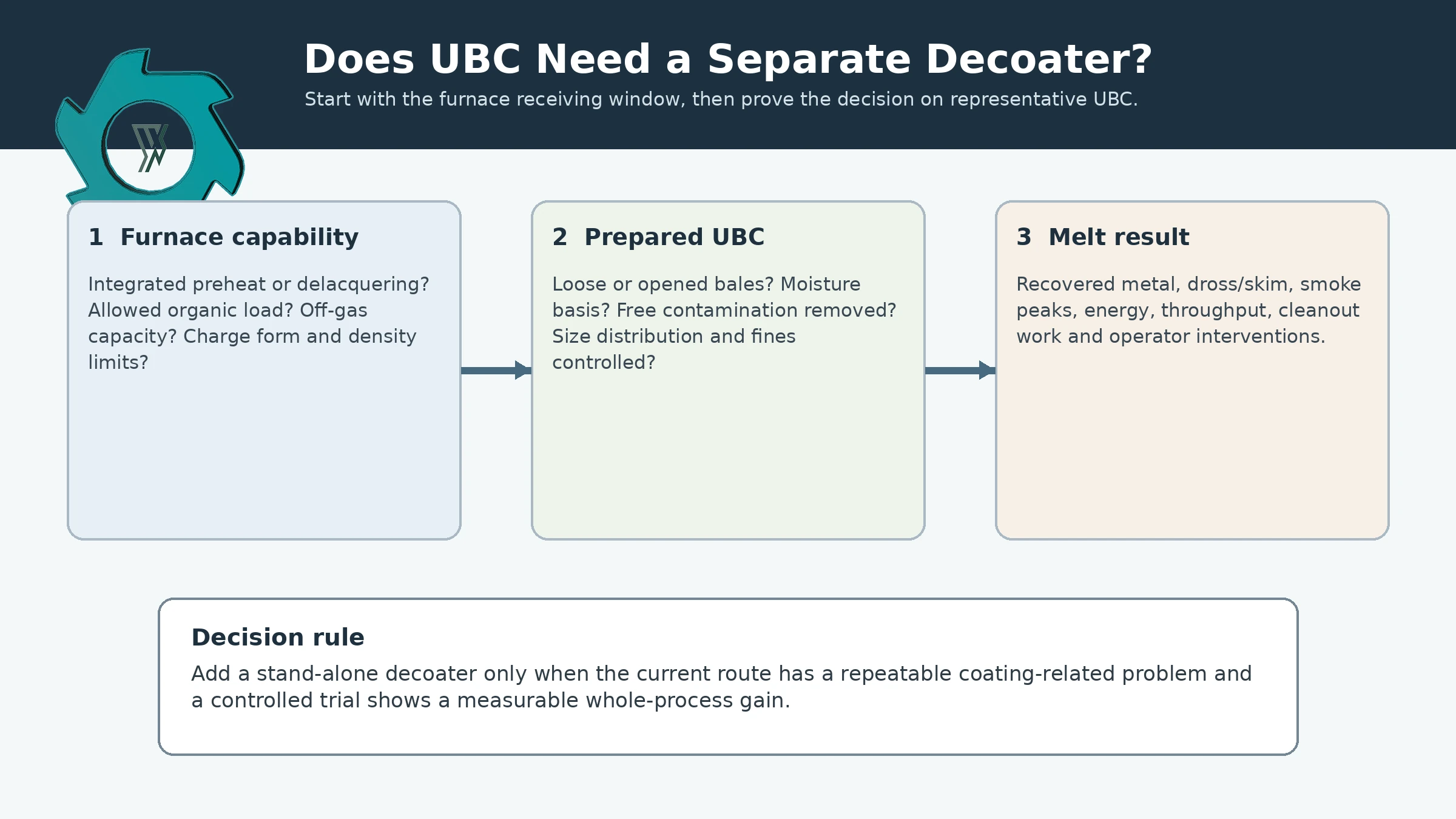
Figure 1. Whether a separate decoater is useful depends on the prepared UBC, the furnace route and the melt results.
What Decoating Actually Does to UBC
Look closely at a used drink can. The printed outside is only part of the coating. There is normally a protective film inside as well, and the scrap yard may have added its own unwelcome extras: drink residue, labels, sand, plastic and dirt. A magnet can take out a stray steel can; sorting can remove pieces of packaging. Neither operation strips a cured coating bonded to the aluminum.
Decoating, sometimes called delacquering, tackles that bonded layer with heat before the main melt. The material is heated under controlled conditions so the organic compounds break down or leave the metal. It is not a matter of running the cans through a magnet or choosing a smaller screen. The EPA describes roasting and drying in secondary aluminum pretreatment and documents a UBC delacquering and preheating process.[1] That distinction helps when comparing what a mechanical supplier offers with what a melt-shop contractor must supply.
Two loads can leave the same decoater looking quite different, even with an identical temperature setting. Loose, opened cans allow hot gas to reach surfaces that a tightly pressed bale hides. Residence time and oxygen availability matter as much as the setpoint. A rushed cycle may leave char; excessive heat or oxidizing conditions may consume valuable aluminum. Ask what happens inside the thickest part of the charge, not just what the panel shows.
When a Stand-Alone Decoater Makes Sense
Before pricing a separate decoater, ask the furnace supplier a basic question: where, in this particular design, do the coatings break down? Some charging systems pass hot gas through UBC before it touches the molten bath. If the existing arrangement consistently handles the plant’s real scrap, another heated vessel can simply repeat the same work.
A dedicated unit earns attention when the present melting route is struggling with prepared UBC. The clues are practical: the furnace exhaust surges as a new charge enters, operators keep trimming the feed rate, the dross pile grows, or recovered metal drops as organic loading rises. None of those observations alone proves that a decoater is the answer. They do, however, justify comparing a controlled pretreatment run against the current route. Published work describes how compaction and the heating atmosphere can affect coating removal and remelting behavior.[3][4] The worthwhile result is a better melt, not merely a cleaner-looking piece of scrap.
| What the plant is seeing | What it may mean | What to verify next |
|---|---|---|
| The furnace already has a proven preheat or delacquering section | Another decoater may duplicate a job that is already being done. | Confirm allowed organic load, feed density, gas-cleaning capacity and metal recovery over normal production. |
| Prepared UBC still brings a heavy organic load into the furnace | More upstream treatment may help. | Check first whether loose plastic, paper, dirt or wet residue can be removed mechanically. |
| Coated cans are linked with smoke spikes, more dross or lower recovery | A controlled comparison is justified. | Run untreated and pretreated material on the same accepted-feed basis. |
| Bales enter the thermal section with a dense, closed core | The outside may heat much faster than the middle. | Measure or infer the core temperature and test whether opening the bale improves treatment. |
| The current furnace route handles prepared UBC without instability | A new thermal stage needs a clear business reason. | Look for a measurable gain in yield, energy, throughput or emissions control before adding equipment. |
What Published Recovery Figures Can—and Cannot—Tell You
It is tempting to compare two decoater quotations using a single claimed recovery rate. That misses the larger system. The International Aluminium Institute and Innoval published a 2025 can-to-can factsheet comparing complete UBC processing routes. Their reported recovery ranges below include changes to preparation and furnace arrangement, not just a change of decoater.[2]
| Compared route | Reported overall UBC recovery | How to use the number |
|---|---|---|
| Direct charge to reverberatory furnace | 70–80% | Baseline route in the source comparison, not a universal furnace guarantee. |
| Direct charge to rotary salt furnace | 75–83% | Shows that furnace architecture alone changes the result. |
| Shredded, sorted and delacquered UBC to reverberatory furnace | 85–92% | Preparation and furnace route both differ from the first baseline. |
| Shredded, sorted and delacquered UBC to vortex sidewell furnace | 95–97% | Highest range in that process-route comparison; it should not be read as a stand-alone decoater specification. |
In the same publication, the authors discuss a potential improvement of up to 18% in metal recovery and about 15% lower energy use and emissions in remelting and casting for appropriate sorting and delacquering routes.[2] Read those figures with the route descriptions beside them. They are not promised gains from installing one stand-alone machine; they are not YUXI test results either. Furnace type, charging method, sorting and operating control all change between the examples.
When investigating your own losses, separate the causes. How much is linked to organic coating? How much comes from small aluminum fines, contamination, poor charging or the furnace itself? Unless those contributions are understood, the difference between two published recovery ranges cannot tell you what a new decoater would do at your site.
Where the Coating Creates Trouble
A coating does not vanish when a can enters a furnace. It heats, decomposes and releases gases. With a large charge of thin coated UBC, much of that release can happen over a short interval. The exhaust system must cope with the resulting load, whether decomposition occurs upstream or inside an integrated preheater. This is one reason a promising laboratory run can look less convincing during a full shift.
There is a second, quieter loss mechanism. A beverage can has very little thickness relative to its exposed area. That is useful for heating, but less useful in an oxidizing atmosphere. The batch may appear well treated while some aluminum has already turned into oxide. For this material, coating removal and metal preservation need to be checked together.
When It Is Worth Testing a Separate Decoater
1. Incoming loads change from clean to dirty
A truck of dry, familiar UBC is followed by a load of wet cans, loose wrappers and grit. To the receiving team both are “used beverage cans”; to the furnace they can behave quite differently. Start by separating removable debris from the paint and lacquer attached to the metal. The UBC contamination guide deals with loose contaminants and customer rejection limits. It should not be mistaken for an instruction to burn those contaminants off.
Then look at what survives sorting. If smoke peaks and recovery problems remain connected to the residual organic load, thermal treatment becomes a reasonable trial. If the trouble largely disappears after better sorting and draining, adding a decoater may not address the real bottleneck.
2. Tonnes per hour look fine, but recovery slips
A furnace can keep its feed conveyor busy while making less saleable aluminum than expected. Dross and skim can carry metal out of the usable product stream. Without a proper yield balance, a tonnage display may give everyone the impression that production is on target. The UBC recovery guide looks more closely at where recoverable aluminum is lost in the mechanical section; a melt trial must keep those upstream losses separate from furnace yield.
For the trial, weigh the metal that actually comes out, measure the dross and—where possible—check how much recoverable metal remains in that dross. Keep the feed basis the same. Faster charging is not an improvement if an even larger proportion of the accepted UBC ends up in the residue.
3. The exhaust system sees short, heavy peaks
An upstream unit can smooth the burden seen at the main furnace by releasing organics earlier in a controlled part of the line. The emissions duty does not disappear. The upstream installation needs suitable gas collection and treatment, which may include thermal oxidation or other controls determined by the engineer and local requirements. EPA guidance on secondary aluminum processing describes emissions from hot scrap treatment and relevant control systems.[1]
That gas-handling scope should be on the first equipment drawing, not added after a quotation is accepted. Who supplies the ducting, fans, afterburner or other treatment, monitoring points and controls? A hot drum without an agreed exhaust system is not a complete proposal.
4. The furnace supplier gives a narrow feed window
The receiving specification of the chosen furnace should settle several arguments before they begin. It may limit organic content, free water, incoming density or allowable piece form. If the furnace needs opened bales, a bale opener belongs upstream. If it can use a coarser, cleaner feed, more cutting is not automatically useful.
Begin at that receiving point and design backward. Two mills handling the same collection grade can legitimately need different equipment because they charge the metal differently and use different furnaces and off-gas systems. Copying a tidy process diagram from another plant ignores those differences.
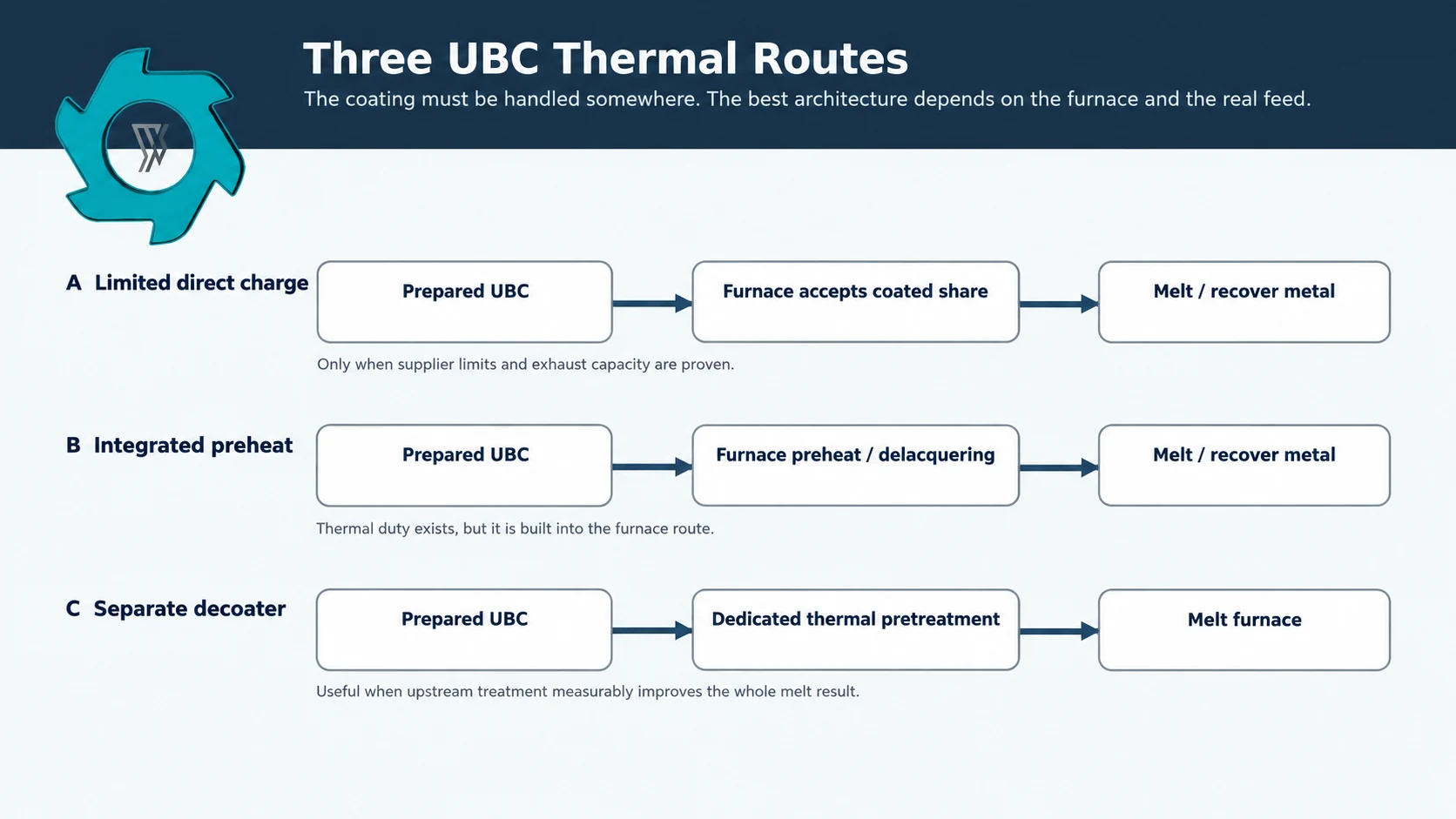
Figure 2. UBC can reach the melt through several thermal routes. The furnace receiving condition should decide which route is practical.
When the Furnace Already Does the Job
An integrated preheater may already be removing the coating before UBC reaches the bath. When the mill has demonstrated reliable results on ordinary loads and the difficult ones, adding a second thermal stage increases handling, maintenance and floor-space demands. First identify a loss that the existing system cannot manage.
Another route is to charge a controlled proportion of coated UBC with other scrap, where the furnace manufacturer allows it. The word “controlled” matters. A quiet run with a few clean bales does not prove that the same route will behave well with wetter loads, higher UBC percentages or faster charging. Check those conditions before calling the arrangement proven.
The Risk of Over-Treating Thin Aluminum
The purpose of the heating stage is to remove unwanted organic material, not aluminum. Yet the metal is thin and easy to expose to hot gas. Push treatment too hard and the apparent coating-removal benefit can be offset by additional oxide. A stripping percentage, on its own, is a poor purchase criterion.
Not enough treatment
If a charge passes through too quickly, or the atmosphere does not support adequate decomposition, the coatings may leave behind carbon-rich residue. Research on coated aluminum scrap connects incomplete treatment with difficulties during subsequent melting and metal recovery.[3] Turning the drum faster to raise throughput can therefore transfer a problem to the furnace.
Too much heat or oxygen
At the other end of the operating window, higher temperatures and oxygen exposure can oxidize the metal before it reaches the melt. Experimental decoating work makes clear that heat treatment must be matched to the material and atmosphere.[4] There is no single “best temperature” that can safely be copied from one bale, furnace and equipment design to another.
A bale that is hot outside and cold inside
A compact bale can be hot at its outer face and cooler at the center. Compaction changes how gas and heat move through the charge; studies of decoating have examined that effect.[3][4] It is possible to get attractive-looking material at the surface while the core is still carrying residual coating.
Where that pattern repeats, opening the bale may be a better experiment than increasing the heat. Turning up the temperature punishes the already-treated outside and may leave the center problem unresolved.
Shredding finer than the next process needs
Cutting a can open can help gas reach its coated surfaces. Cutting it far smaller than the receiving equipment needs is a different matter. Extra fines are harder to retain, and new exposed metal surface is another oxidation opportunity. The UBC size guide discusses that mechanical trade-off in detail.
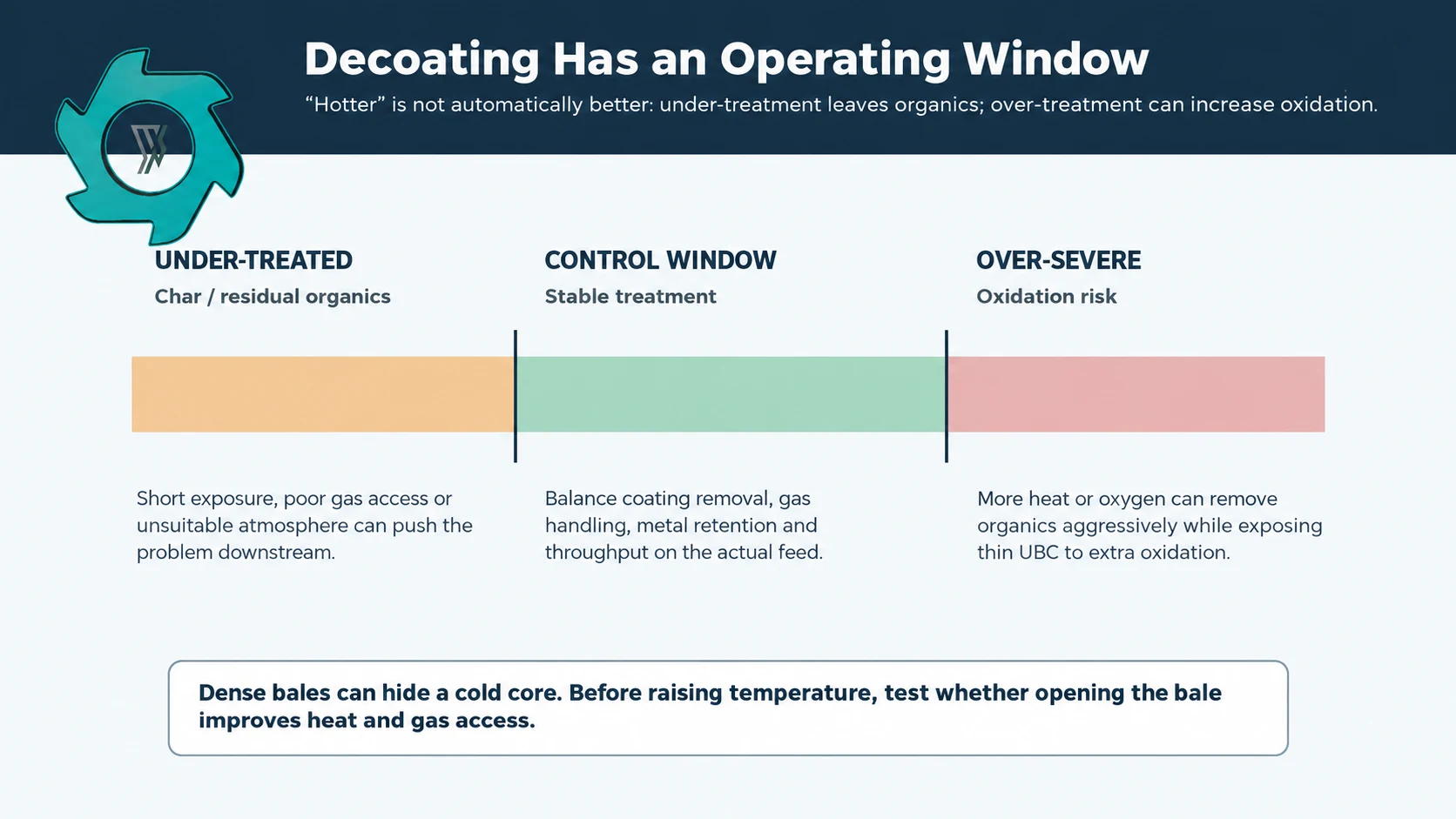
Figure 3. Too little treatment leaves organics behind. Too much thermal severity can consume aluminum through oxidation.
Start With a Feed the Furnace Can Actually Accept
Do not expect the thermal unit to make poor receiving practice acceptable. Steel straps, wet dirt, mixed plastic and glass consume capacity or create residue; they do not help remove lacquer from aluminum. The sensible sequence is to clean the feed mechanically as far as practical, then assess what the furnace still requires.
A meaningful thermal quotation starts with a feed description. It should tell the supplier at least the following:
- How the cans arrive: loose UBC, intact bales, opened bales or shredded material.
- Particle-size spread: the main fraction, oversize and fines, including how much aluminum is ending up in the fines.
- Ferrous carryover: steel cans, bale wire or other magnetic material remaining after separation.
- Loose non-metal material: plastic, paper, glass and dirt, kept separate from bonded coatings.
- Moisture: water and residual beverage on an as-received basis.
- Feed rate and bed condition: enough information to understand residence time and heat transfer.
Keep moisture separate from the organic-coating figure. Free water and leftover drinks alter purchasing weight, storage and heat duty, while lacquer is an attached organic layer. The UBC moisture guide covers those upstream issues. Drain and handle the material properly rather than using a decoater to cover for wet feed.
The Melt Trial That Can Settle the Decision
A melt trial should be designed to settle the investment question, not to produce an impressive photograph. Run the current route on representative material, then run comparable UBC through the proposed pretreatment and melt it under a defined set of conditions. Record both the gains and the penalties.
Ask for a sample that resembles a normal production week, including its awkward loads. If the same lot cannot be divided between the two routes, document the difference between lots: moisture, compaction, contaminants and size. Otherwise the numbers may reflect feed variation rather than a better process.
- Accepted UBC mass, using the same moisture basis in both runs.
- Feed form, density or compaction, size distribution and visible contamination.
- Organic load, measured or estimated with one agreed method.
- Temperature history and residence time through the thermal unit.
- Fuel or electricity used in pretreatment and melting.
- Recovered metal from a clearly defined melt boundary.
- Dross or skim mass, plus metal remaining in that residue where it can be measured.
- Relevant exhaust indicators collected by the plant’s process or environmental team.
- Actual sustained throughput, stoppages, cleanout work and operator intervention.
Use accepted input tonnes as the common denominator and keep the melt boundary consistent. A trial that gains metal but consumes substantially more fuel is not an automatic winner. Nor is a route that lowers exhaust peaks but needs frequent cleanouts. Those trade-offs should be visible in the trial sheet.
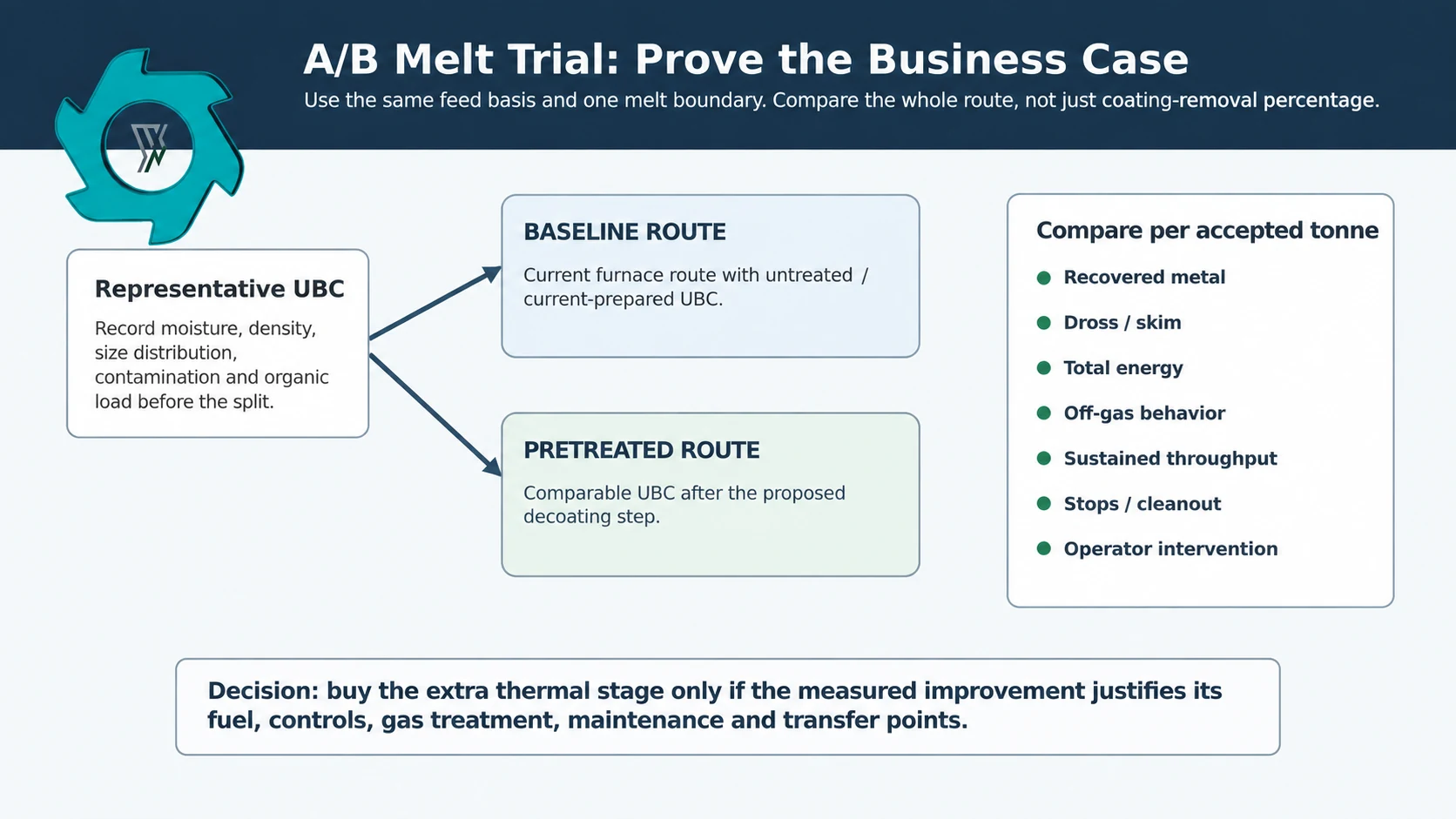
Figure 4. Judge the route by the full melt result, not by how clean the cans look after pretreatment.
Questions a Thermal Supplier Should Answer
A detailed price schedule can still omit the conditions that decide whether the equipment works. Ask the thermal supplier which feed characteristics were actually tested, which measurements the design depends on, and which points remain assumptions until commissioning.
- What UBC form has this thermal route processed: loose cans, opened bales, shredded cans or compacted pieces?
- What organic-load range was present in that feed?
- Is there a density window for stable operation?
- Where are feed temperature, discharge temperature and residence time measured?
- How is oxygen availability controlled or monitored in the coating-removal zone?
- What changes when the feed becomes wetter, dirtier or more compacted?
- Which exhaust, afterburner, dust-collection and stack items are included in the supplier’s scope?
- How will the acceptance test calculate recovered metal, dross and unexplained loss?
- Which seals, flights, refractory areas or cleaning points need routine inspection?
- Can the supplier test representative plant UBC rather than prepared sample pieces?
- If the furnace already preheats the scrap, what additional result is the separate decoater expected to deliver?
Where YUXI Fits in the Process
YUXI works on the mechanical side of the handoff. An intact bale may have to be opened before trapped dirt and steel can be removed. Separation and size control then prepare the aluminum fraction for whichever thermal route the buyer chooses. There is little value in cutting farther merely because the line has room for another machine.
The handoff guide explains where mechanical UBC processing finishes. For a new project, obtain the decoater or furnace receiving specification first. Limits for density, size, moisture and carryover contamination then become practical targets for the bale-opening, sorting and conveying stages.
That approach guards against two costly extremes: generating extra aluminum fines through needless shredding, and delivering dense, dirty bales that cannot be heated or charged consistently downstream.
The Decision at the End of the Trial
A separate decoater is worth evaluating when a repeatable melt-shop problem remains after sensible mechanical preparation, and controlled tests show that thermal pretreatment improves the overall result. The improvement might be higher recovered metal, less dross, steadier exhaust behavior or fewer furnace interventions.
Where the furnace already includes proven delacquering or preheating, insist on a measurable reason for installing another unit. Before ordering equipment, write down the incoming feed range, operating assumptions, exhaust boundary and metal-balance test. An unknown is an item for the trial protocol—not a number to invent in the quotation.
Frequently Asked Questions
Can UBC be melted without a separate decoating machine?
Some furnaces strip the coatings as part of preheating or charging. Others are approved to handle a restricted share of coated UBC. A separate machine is therefore not always required; the furnace specification, gas capacity and achieved recovery decide.
Does shredding remove lacquer from aluminum cans?
No. Shredding opens the material and can release free dirt or labels. Lacquer bonded to the aluminum stays there until an appropriate thermal step breaks it down or removes it.
Should UBC bales be opened before thermal decoating?
It often helps. A compact bale can heat unevenly and restrict gas access. The necessary degree of opening has to match the feed-density window of the decoating equipment.
What can go wrong if decoating temperature is too high?
The metal may begin oxidizing more heavily even as the coating disappears. Thin UBC is sensitive to excessive heat and oxygen, so the final recovery must be checked alongside coating removal.
How should a plant judge decoating ROI?
Run comparable untreated and pretreated lots through a common melt boundary. Compare useful metal output, dross, combined energy consumption, throughput, exhaust load, stoppages and total cost per accepted tonne.
Is moisture the same as coating contamination?
No. Water and leftover beverage affect weight, storage and heating demand. The lacquer, paint and ink are organic coatings. Measure both so the thermal supplier knows what the furnace is really receiving.
References
- U.S. EPA, EPA AP-42.
- International Aluminium Institute & Innoval, IAI can-to-can, 2025.
- Vallejo-Olivares et al., Dross study, Journal of Sustainable Metallurgy, 2024.
- Vallejo-Olivares et al., Decoating study, Journal of Sustainable Metallurgy, 2022.
Define the Furnace Feed Before Sizing the UBC Preparation Line
Send the UBC form, bale size and weight, contamination level, moisture condition, required tons per hour and the downstream furnace or decoater feed specification. YUXI can use those limits to configure bale opening, separation and size control without adding reduction steps the process does not need.